
Western barn owl
Tyto alba
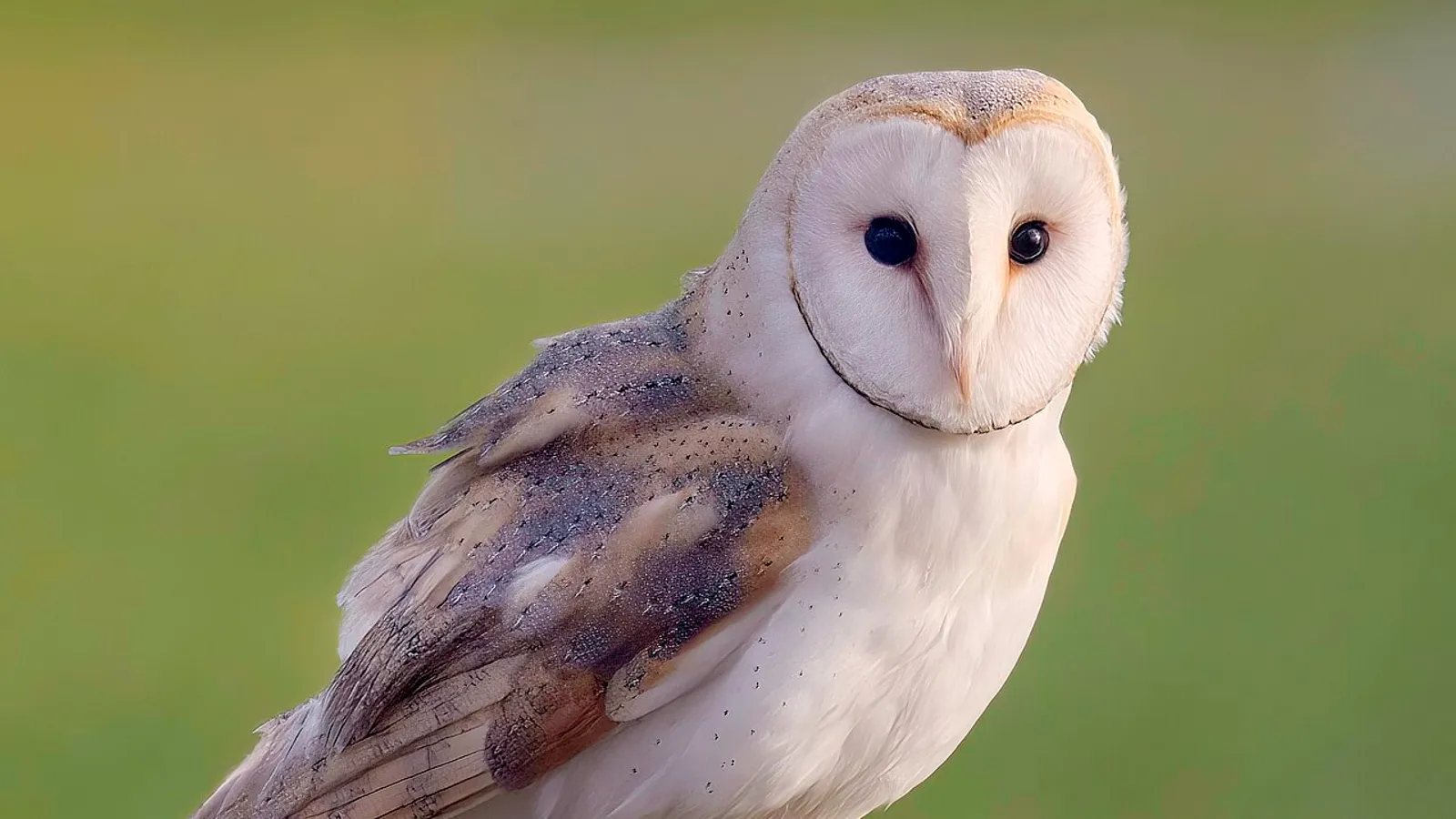
— Where the name comes from
Tyto is Greek for “owl”, another onomatopoeic word; alba is Latin, “white”. The Italian barbagianni is perhaps “John’s beard”, a popular nickname for the bird’s pale, human face, or a garbling that joins the idea of a beard to a given name. Its white facial disc is one of the most spectral apparitions of the night.
— Facts
- Group
- Birds · Aves
- Order
- Owls
- Habitat
- Open countryside, farmhouses, barns, ruins
- Range
- Every continent but Antarctica: among the most widespread land birds
- Size
- 33–39 cm, wingspan 80–95 cm
- Diet
- Carnivore — mostly small rodents
- Lifespan
- 4–10 years
— Characteristics
- 01
The heart-shaped facial disc funnels sound to the ears like a dish.
- 02
The ears are asymmetrical, one higher than the other, to place prey in three dimensions.
- 03
It hunts in pitch darkness on hearing alone, with no need to see.
— What sets it apart
The barn owl hears well enough to catch a mouse in total darkness, guided by sound alone. Its ears are offset in height: a sound reaches each at an imperceptibly different instant, and from that difference the brain reconstructs the exact position of the prey, horizontally and vertically. It is one of the most precise acoustic locating systems known, and has been studied as a model for artificial sensors.
