
Southern brown bandicoot
Isoodon obesulus
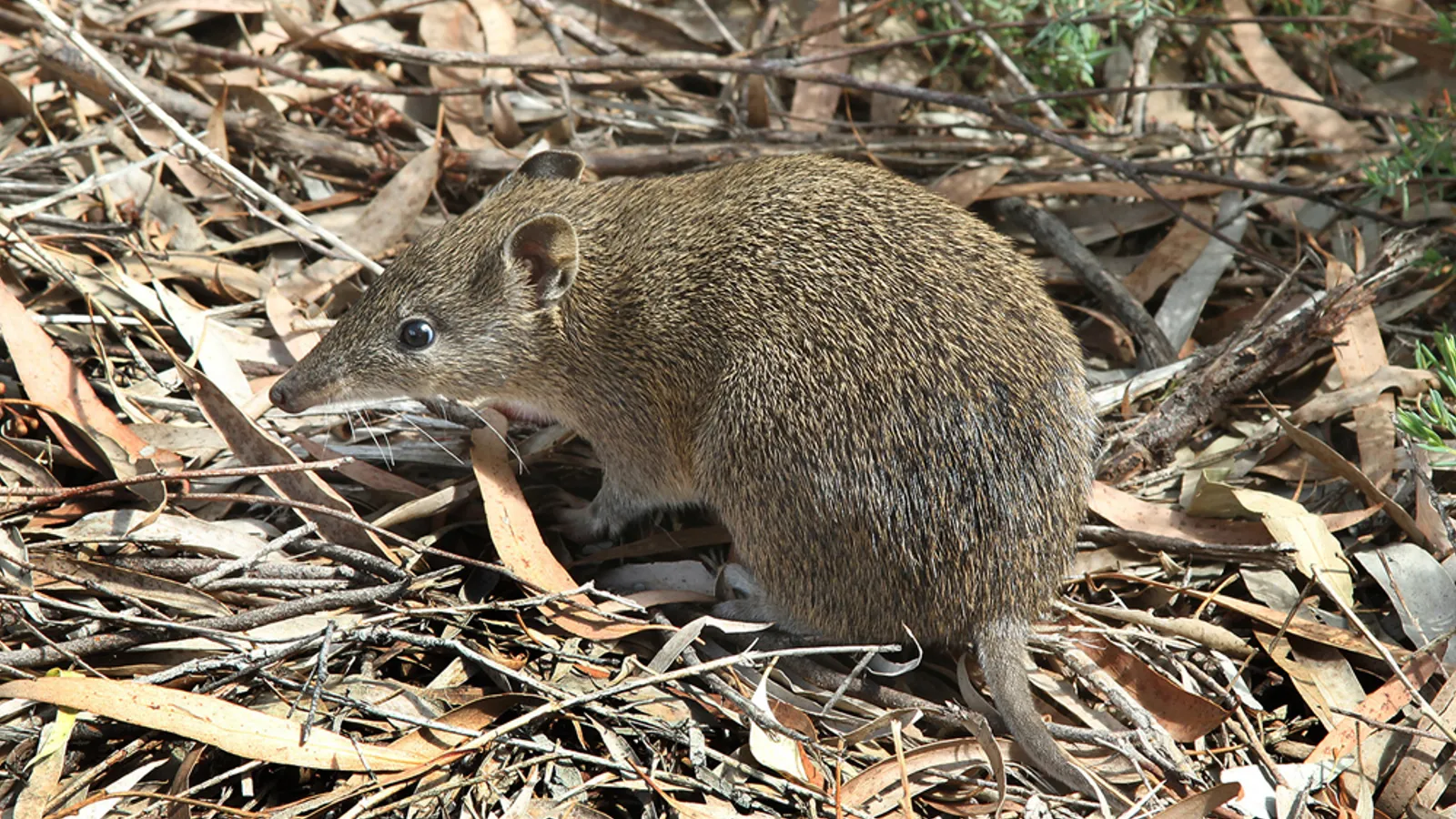
— Where the name comes from
Isoodon is “equal teeth”, from the Greek ísos and odoús, because the molars are all of much the same shape; obesulus is “somewhat plump”. Bandicoot is instead an improper transfer: it comes from the Telugu pandi-kokku, “pig-rat”, which in India names a large rat. British colonists, arriving in Australia, reused the word for a marsupial that has nothing in common with that rat.
— Facts
- Group
- Mammals · Mammalia
- Order
- Bandicoots
- Habitat
- Dense undergrowth, heath, coastal scrub with ground cover
- Range
- Southern and eastern Australia, Tasmania
- Size
- 28–36 cm of body, 0.4–1.9 kg
- Diet
- Omnivore — insects, grubs, underground fungi, roots, tubers
- Lifespan
- 2–4 years in the wild
— Characteristics
- 01
It has the shortest gestation of any mammal: twelve and a half days.
- 02
The pouch opens backwards, so it does not fill with earth while digging.
- 03
It digs small conical pits looking for food, unmistakable in the bush.
— What sets it apart
It is a plough with fur. Digging dozens of conical pits every night in search of fungi and grubs, a single animal shifts between two and four tonnes of soil a year: it turns the litter, buries seeds and leaves, improves water infiltration and spreads the spores of the mycorrhizal fungi that eucalypts depend on. Where bandicoots have disappeared the soil compacts and forest regeneration slows — and this has been used as an argument for bringing them back.
