
White wagtail
Motacilla alba
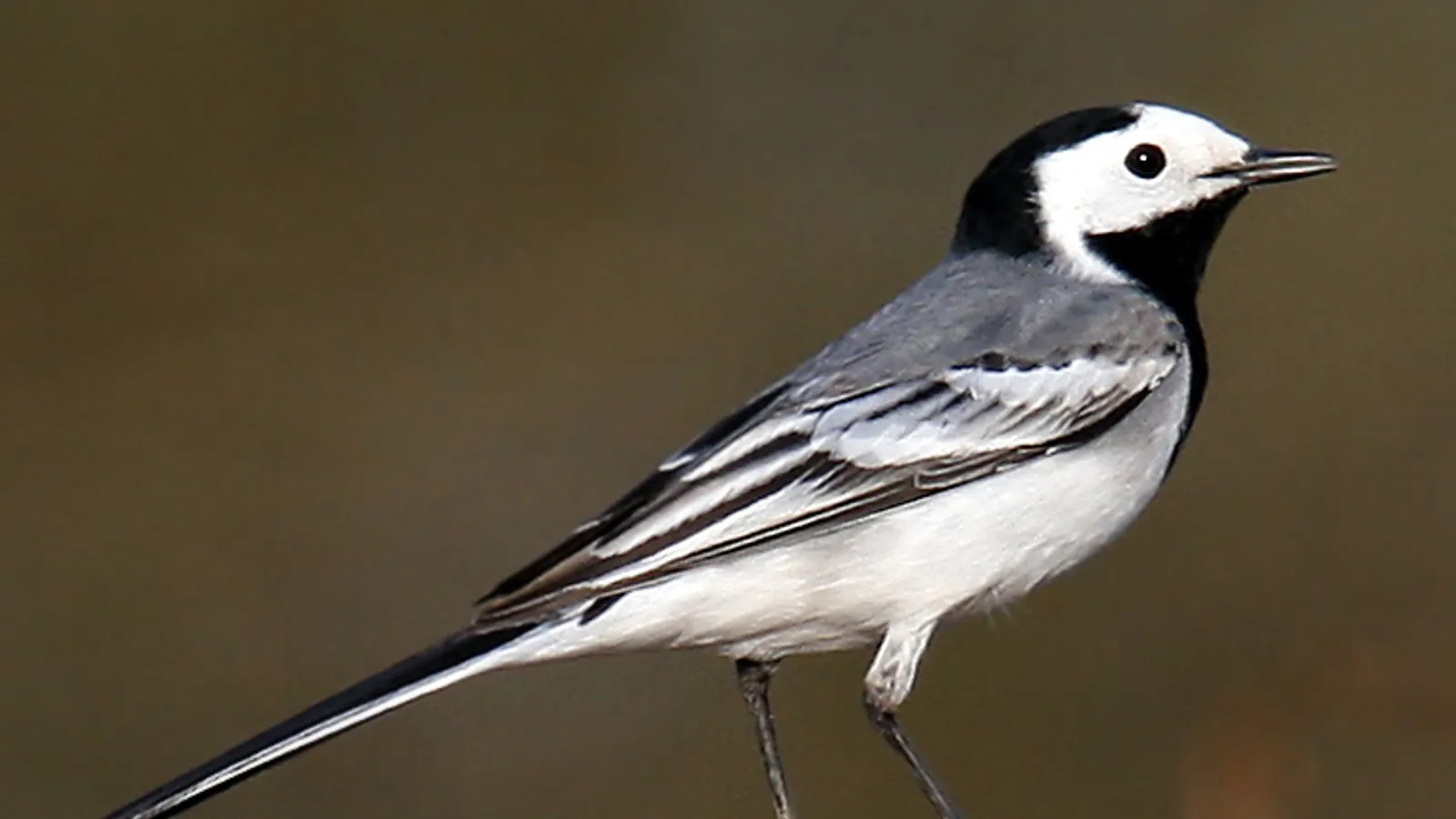
— Where the name comes from
Motacilla is a Latin diminutive the ancients explained as “little tail-mover”, believing that cilla meant tail. It did not: the word occurs nowhere else, and was born of the mistake. The error describes the animal perfectly, though — the tail never stops moving — and the common names across half of Europe repeat the same gesture: ballerina, wagtail, bergeronnette.
— Facts
- Group
- Birds · Aves
- Order
- Passerines
- Habitat
- Shorelines, mown grass, yards, roofs, car parks
- Range
- Europe, Asia, North Africa
- Size
- 16–19 cm, wingspan 25–30 cm, 20–27 g
- Diet
- Insects caught while running or in flight
- Lifespan
- 3 years in the wild
— Characteristics
- 01
It walks at a run and darts sideways to snatch insects.
- 02
It nests in wall crevices, under tiles, in idle machinery.
- 03
It follows tractors and flocks to take the insects they disturb.
— What sets it apart
In winter it gives up solitude and goes to sleep in town, all of it together. Thousands of wagtails gather at dusk in the trees of an avenue, above a lit sign or inside a glasshouse, choosing the warmest and brightest places they can find — that is, exactly the ones we built. In some European cities the roost has been the same tree for decades, and under that tree, every winter evening, there is a chattering that seems to come from nowhere.
