
Gray whale
Eschrichtius robustus
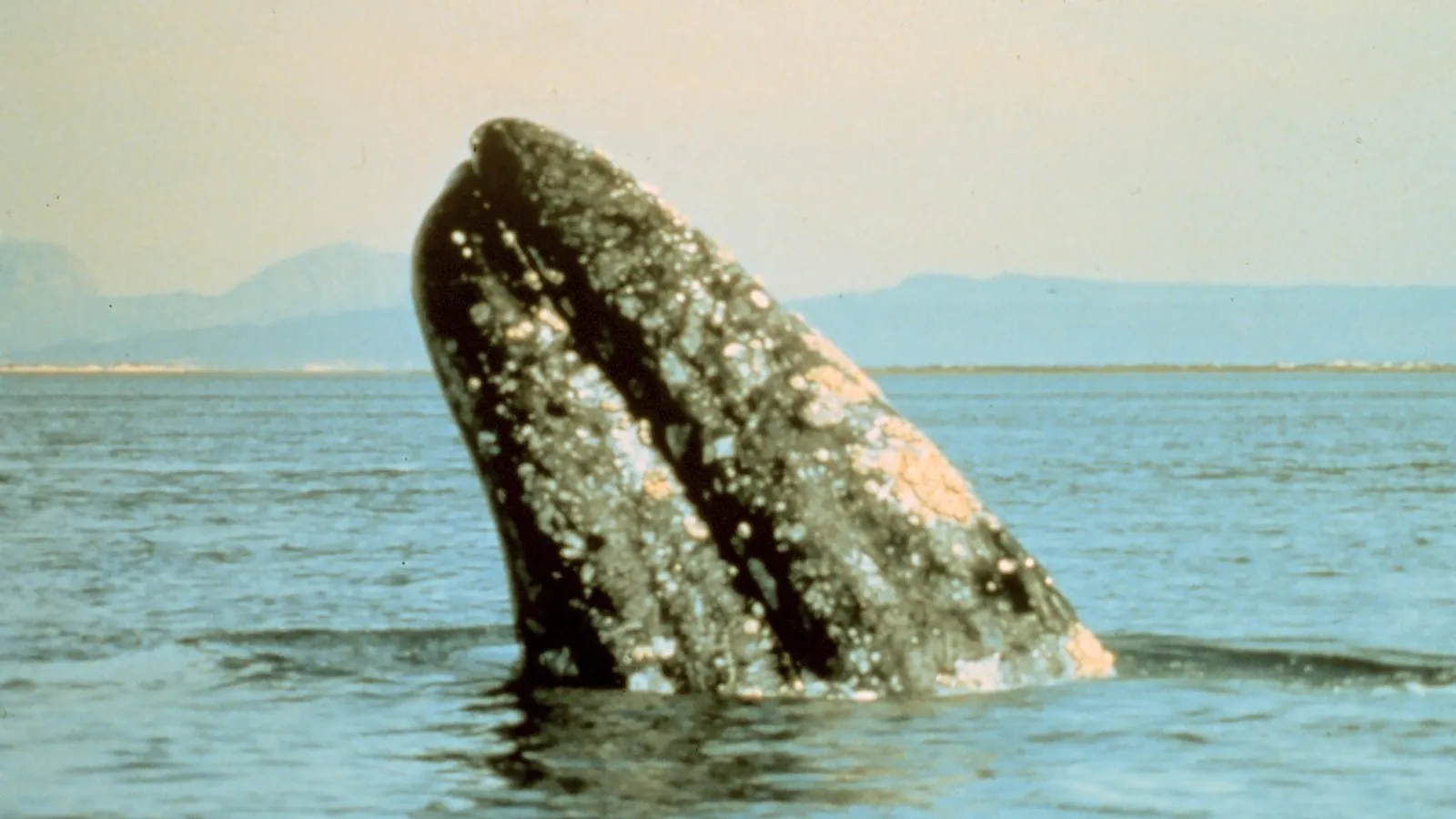
— Where the name comes from
Eschrichtius honours Daniel Frederik Eschricht, the Danish zoologist who studied northern cetaceans in the 19th century; robustus is the Latin for “sturdy”. American whalers called it instead the devil fish, for the ferocity with which the females defended their calves in the Mexican lagoons where they were slaughtered — a name that says more about the behaviour of the hunters than of the animal.
— Facts
- Group
- Mammals · Mammalia
- Order
- Cetaceans
- Habitat
- Shallow coastal waters, sandy and muddy bottoms
- Range
- The North Pacific; the Atlantic population has been extinct for centuries
- Size
- 13–15 m, 15–35 tonnes
- Diet
- Bottom filter feeder — amphipods scraped from the seabed
- Lifespan
- 55–70 years
— Characteristics
- 01
It makes the longest migration of any mammal: up to 20,000 km a year.
- 02
It feeds lying on one side, sucking up bottom mud and straining it.
- 03
It has no dorsal fin but a row of small knuckles along the tail.
— What sets it apart
It feeds lying on its right side, vacuuming the seabed, and this has two visible consequences: the baleen on the right side is far more worn than on the left, and the clouds of sediment it raises lay on a banquet for the seabirds that follow it. In the Bering Sea its trails of mud plough the bottom, stir up nutrients and sustain the whole benthic ecosystem. It is a thirty-tonne animal that works like a plough.
