
Bowhead whale
Balaena mysticetus
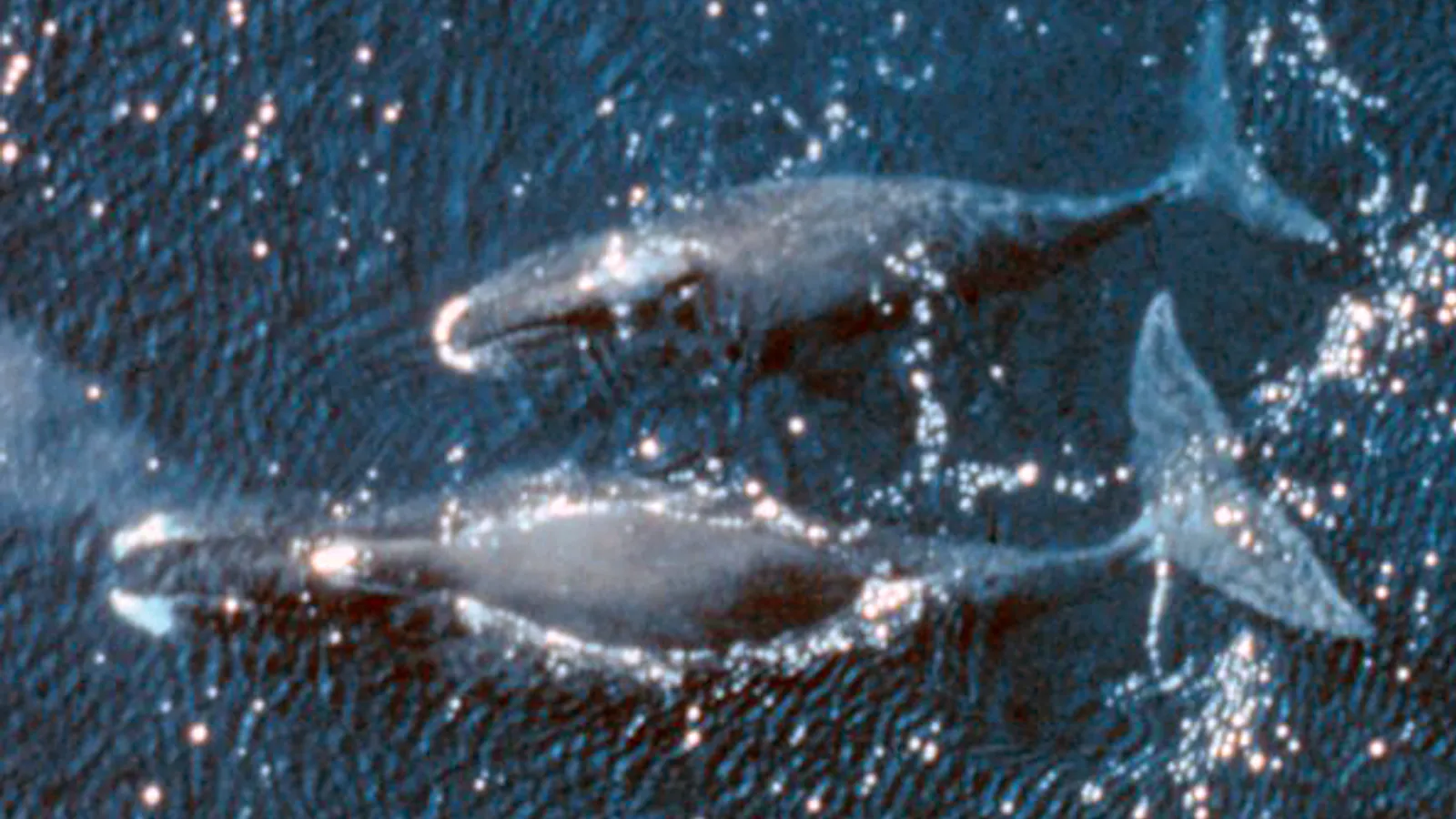
— Where the name comes from
Balaena is the Latin for whale, from the Greek phálaina. Mysticetus arises from a misreading of Aristotle: the philosopher wrote ho mŷs to kêtos, “the mouse, the whale”, for a species he named so, and Renaissance translators read it as a single word, mystikētos, then reinterpreted it as “moustached whale” from mýstax, “moustache”, for the baleen. A mistake of syntax that became an official name.
— Facts
- Group
- Mammals · Mammalia
- Order
- Cetaceans
- Habitat
- Arctic waters, the edges of the pack ice
- Range
- Circum-Arctic: the Bering Sea, northern Canada, Greenland, the Barents Sea
- Size
- 14–18 m, 75–100 tonnes
- Diet
- Filter feeder — Arctic copepods and krill
- Lifespan
- Over 200 years
— Characteristics
- 01
It has the longest baleen of any cetacean, up to four metres.
- 02
Its blubber reaches half a metre in thickness, the thickest in the animal kingdom.
- 03
It breaks ice up to sixty centimetres thick with its head, to breathe.
— What sets it apart
It is the longest-lived of mammals, and we know it because of the weapons it carries in its body. In the 1990s and 2000s, several animals taken by Inuit hunters in Alaska had stone and ivory harpoon points lodged in the blubber, and explosive lance heads patented around 1880: those whales were already adults when the Eiffel Tower was built. Dating of the amino acids in the lens has since confirmed ages over two hundred years, and in one case close to 211.
