
North Atlantic right whale
Eubalaena glacialis
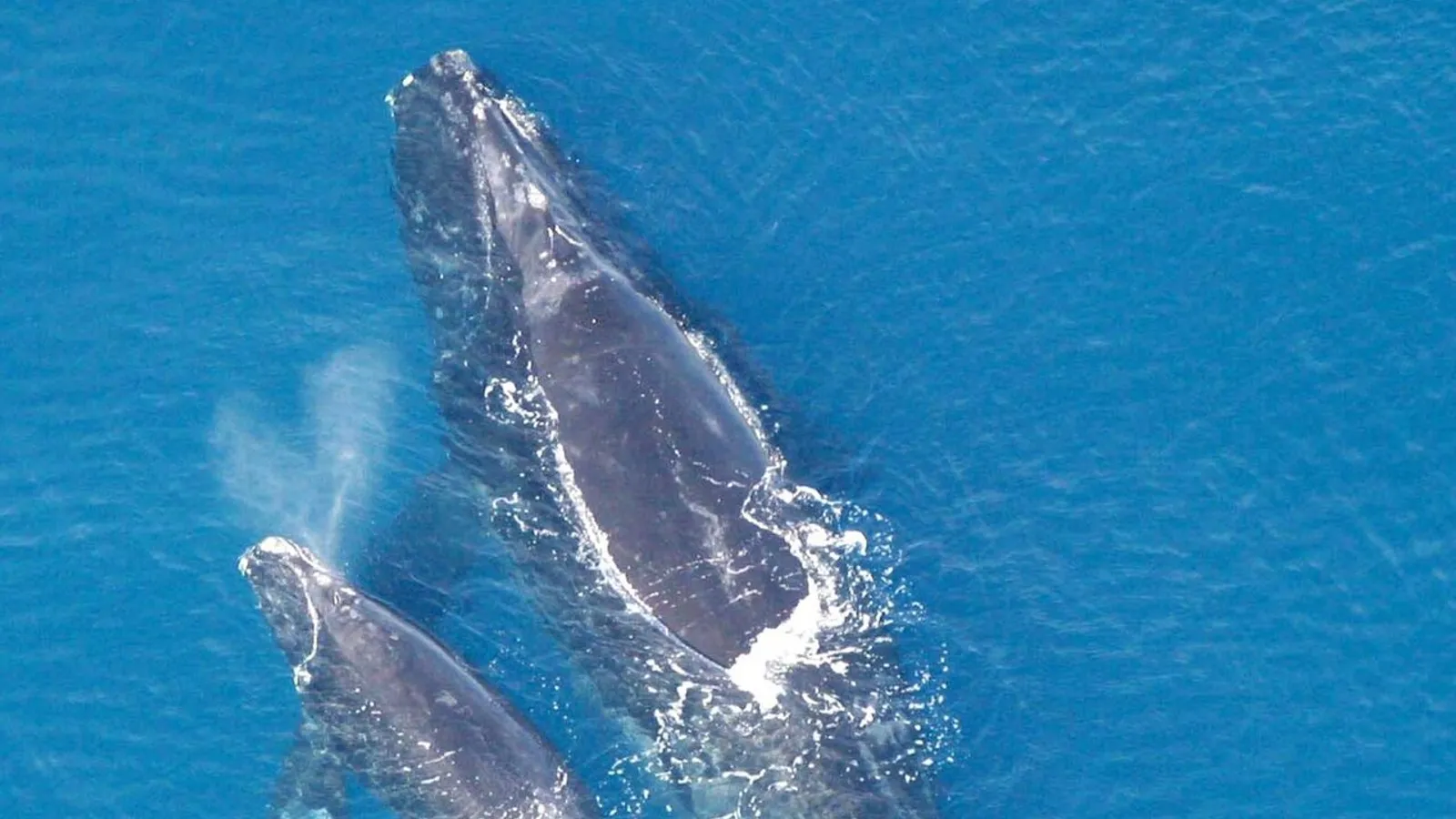
— Where the name comes from
Eubalaena is “true whale”, from the Greek eu- and the Latin balaena; glacialis is “of the ice”. But the common name is a death sentence written in two languages: in English it is the right whale, because it was the right one to kill — it swims slowly, comes close inshore and, alone among the great whales, floats when dead instead of sinking. The Italian franca comes from the French baleine franche, with exactly the same commercial meaning.
— Facts
- Group
- Mammals · Mammalia
- Order
- Cetaceans
- Habitat
- Temperate and cold coastal waters, the continental shelf
- Range
- The north-western Atlantic, from Florida to the Gulf of St Lawrence
- Size
- 13–16 m, 40–70 tonnes
- Diet
- Filter feeder — copepods and krill, strained while swimming with the mouth open
- Lifespan
- An estimated 70 years, perhaps far longer
— Characteristics
- 01
It has horny callosities on the head, different in every individual: they let each one be identified.
- 02
Fewer than 400 remain, and fewer than 70 breeding females.
- 03
The two leading causes of death are ship strikes and fishing gear.
— What sets it apart
It is probably the most closely monitored large mammal on the planet: every individual has a number, a file and a history, because the callosities on the head are as unique as fingerprints and researchers know them all by sight. Knowing exactly who has died and how has changed the rules of the sea: ships now slow down in certain seasons, fishermen’s buoys are being redesigned, routes shifted. There are fewer than four hundred animals, each with a name, and the whole eastern American seaboard arranges itself around them.
