
Axolotl
Ambystoma mexicanum
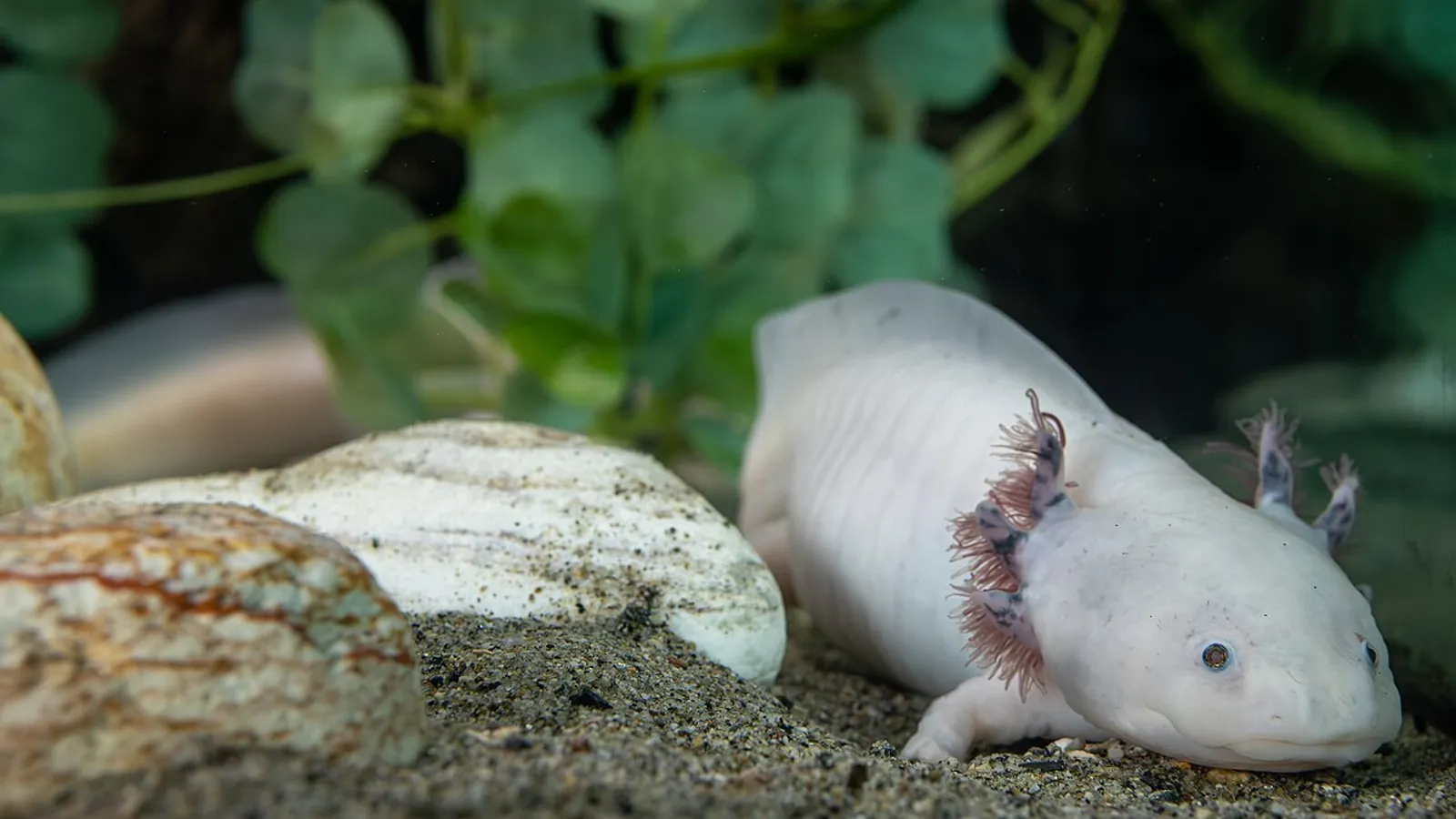
— Where the name comes from
From the Nahuatl āxōlōtl: ātl, water, joined to Xolotl, the dog-headed Aztec god who escorted the dead and who, to escape sacrifice, turned himself into a salamander in the lake. “The water monster” is the hidden god.
— Facts
- Group
- Amphibians · Amphibia
- Order
- Salamanders
- Habitat
- Highland canals and lakes
- Range
- Only the lake system of Xochimilco, Mexico City
- Size
- 15–30 cm
- Diet
- Carnivore — worms, larvae, small crustaceans
- Lifespan
- 10–15 years
— Characteristics
- 01
It stays larval all its life: external gills, a swimming tail.
- 02
Reaches sexual maturity without ever metamorphosing.
- 03
Regrows limbs, heart, brain and spinal cord.
— What sets it apart
The axolotl is neotenic: it becomes an adult by staying a child. It is among the most widespread laboratory animals in the world and, at the same time, critically endangered in the wild — the last published survey counted very few individuals per square kilometre at Xochimilco. A species that will never die out in captivity, and that is vanishing from the only place it has ever existed.
