
Red-backed shrike
Lanius collurio
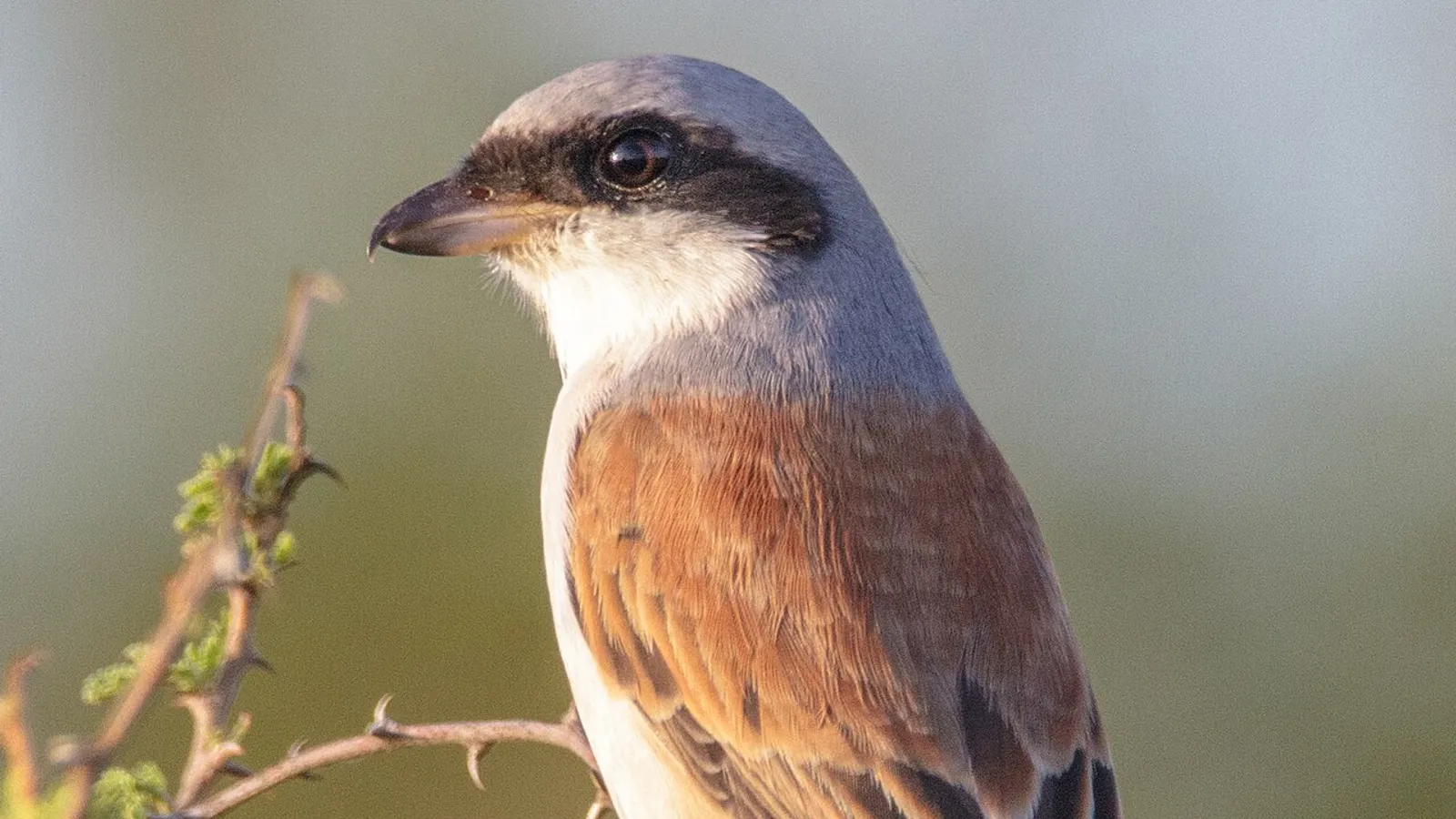
— Where the name comes from
Lanius in Latin is the butcher, and no better word could have been chosen: this sparrow-sized bird kills lizards and mice and butchers them hanging up. Collurio comes from the Greek kollyriōn, the name of a bird in Aristotle that nobody has ever confidently identified. The Italian averla comes from late Latin, probably from avicula, little bird.
— Facts
- Group
- Birds · Aves
- Order
- Passerines
- Habitat
- Thorny hedges, scrubby pasture, waste ground, clearings
- Range
- Europe and western Asia; winters in southern Africa
- Size
- 16–18 cm, wingspan 24–27 cm, 25–35 g
- Diet
- Beetles, grasshoppers, lizards, small mammals and birds
- Lifespan
- 4 years in the wild
— Characteristics
- 01
The male wears a black bandit’s mask across the eyes.
- 02
It hunts from an open perch, dropping onto prey on the ground.
- 03
The bill is hooked like a bird of prey’s in miniature.
— What sets it apart
It impales its prey on bramble thorns and barbed wire and leaves it there, and the larder that results does two things at once: it stores food for the rainy days when hunting fails, and it advertises. Females inspect the males’ skewers before choosing, and the ones with the richest stores pair up first. Some toxic prey, certain grasshoppers among them, are left hanging for days until the poison breaks down: this is the decision to wait for something to become edible.
