
European lobster
Homarus gammarus
— Where the name comes from
The scientific name says “lobster” twice in two different languages: Homarus comes from the Norman homard, the same word as in French today, and gammarus from the Greek kámmaros by way of the Latin cammarus. The Italian astice arrives from a third branch, the Greek astakós. Three languages for an animal none of them could describe better than by naming it.
— Facts
- Group
- Crustaceans · Malacostraca · Maxillopoda
- Order
- Crabs, lobsters and shrimps
- Habitat
- Rocky bottoms with dens and crevices, between 0 and 50 metres
- Range
- Eastern Atlantic from Norway to Morocco, Mediterranean
- Size
- 23–50 cm, up to 6 kg
- Diet
- Molluscs, crabs, worms, carrion
- Lifespan
- Over 50 years
— Characteristics
- 01
The two claws differ: one crushes, the other cuts.
- 02
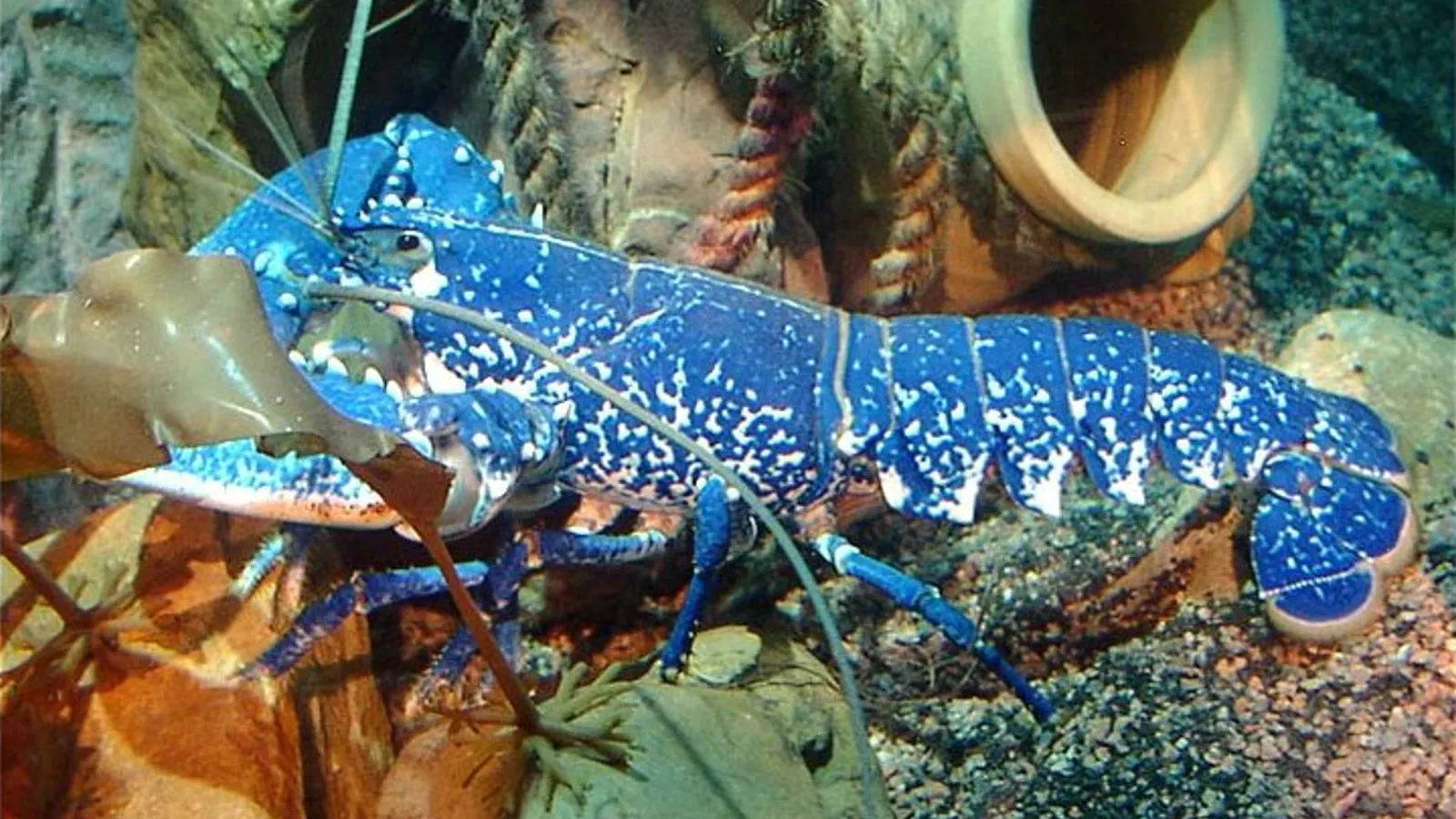
Alive it is dark blue; the red appears only with cooking.
- 03
It grows by shedding its shell, and stays soft and defenceless for weeks after.
— What sets it apart
The red everyone pictures is a colour the living animal never has. The shell contains a red pigment, astaxanthin, held prisoner by a protein that distorts it and makes it look blue: heat denatures the protein, the pigment is freed and the colour snaps to red. It is an irreversible chemical change, and it happens at a precise temperature. As for longevity, there is no known limit: it keeps growing and moulting all its life, and the oldest individuals caught are over half a century old.
