
Brine shrimp
Artemia salina
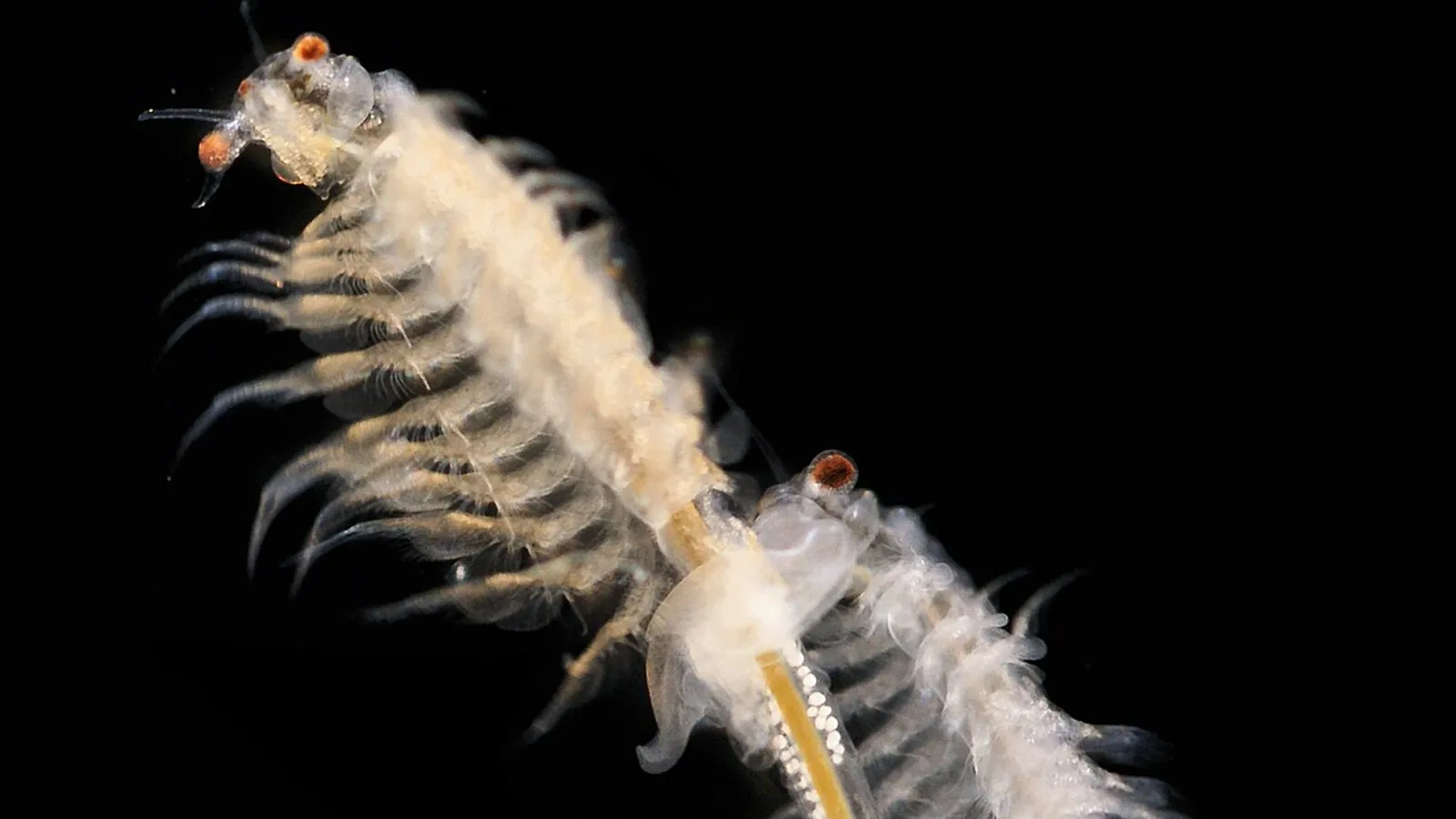
— Where the name comes from
Salina says everything that matters: it lives where the water is so salty that almost nothing else survives, in salt pans and hypersaline lakes. The name of the order, Anostraca, means “without shell”, from an- privative and óstrakon, the potsherd: they are the only branchiopod crustaceans with no carapace protecting them at all.
— Facts
- Group
- Crustaceans · Malacostraca · Maxillopoda
- Order
- Fairy shrimps
- Habitat
- Salt pans, hypersaline lagoons, salt lakes
- Range
- Cosmopolitan, wherever hypersaline waters occur
- Size
- 8–15 mm
- Diet
- Microscopic algae and bacteria, filtered
- Lifespan
- A few months
— Characteristics
- 01
It swims upside down, rowing with eleven pairs of legs.
- 02
The eggs survive years of drought and hatch as soon as they are wetted.
- 03
In the saltiest water it turns pink from the carotenoids it stores.
— What sets it apart
The eggs are not eggs but cysts: embryos halted midway through development, dried to almost no water, that withstand vacuum, temperatures near absolute zero and years of drought, and resume living within hours of being rehydrated. They are sold in sachets and hatch in a glass of salt water, which is why in the 1960s they were marketed as Sea-Monkeys, pets to raise at home. The same trick has taken them into space: they have been flown into orbit and beyond the Van Allen belt to study the effect of cosmic radiation on embryos.
