
Barbary sheep
Ammotragus lervia
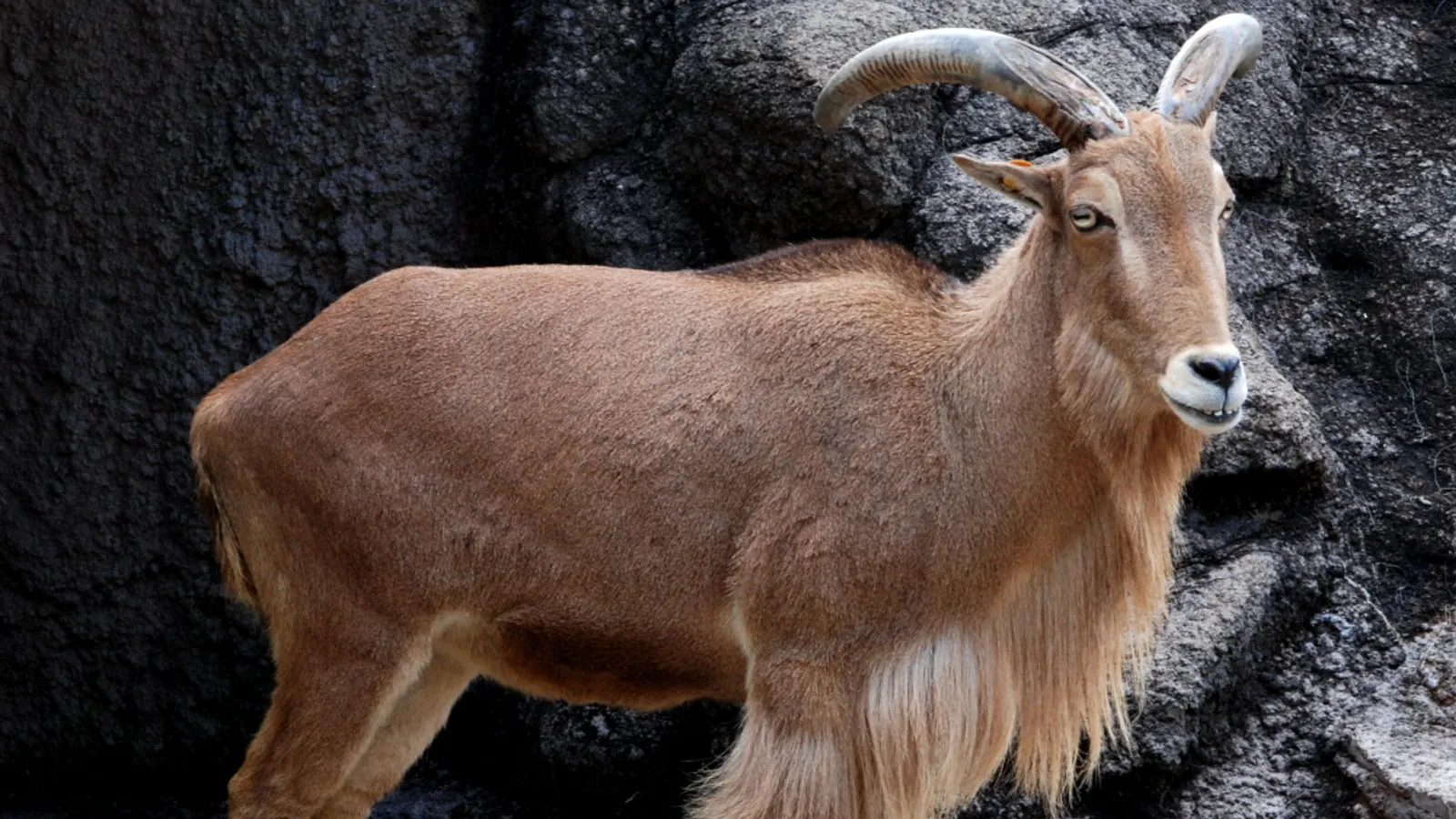
— Where the name comes from
Ammotragus is “sand goat”, from the Greek ámmos and trágos. Lervia comes from lerwa, a name Shaw brought back from his travels in Barbary. The Italian and Spanish common name, arrui, is Berber; the English one, Barbary sheep, calls it a sheep. And genetics says it is neither sheep nor goat: it sits in a genus of its own, exactly halfway, and is one of the reasons the systematics of the caprines is a puzzle.
— Facts
- Group
- Mammals · Mammalia
- Order
- Even-toed ungulates
- Habitat
- Arid rocky mountains, desert gorges
- Range
- North Africa; introduced to Spain, the south-western United States and Mexico
- Size
- 130–165 cm of body, 40–145 kg
- Diet
- Herbivore — grasses, shrubs, lichens
- Lifespan
- 10–20 years
— Characteristics
- 01
It has a long fringe of hair hanging from throat, chest and forelegs.
- 02
It has no need to drink: dew and the moisture of plants suffice.
- 03
It leaps over two metres from a standstill onto vertical rock.
— What sets it apart
It is endangered at home and considered a scourge elsewhere. In North Africa hunting and war have reduced it to fragmented populations and the IUCN classes it as vulnerable; but animals released for sport hunting in Texas, New Mexico and Spain have multiplied into an invasive species, competing with native bighorn and with the Iberian ibex. The same species, in the same years, needs protecting on one continent and culling on another.
