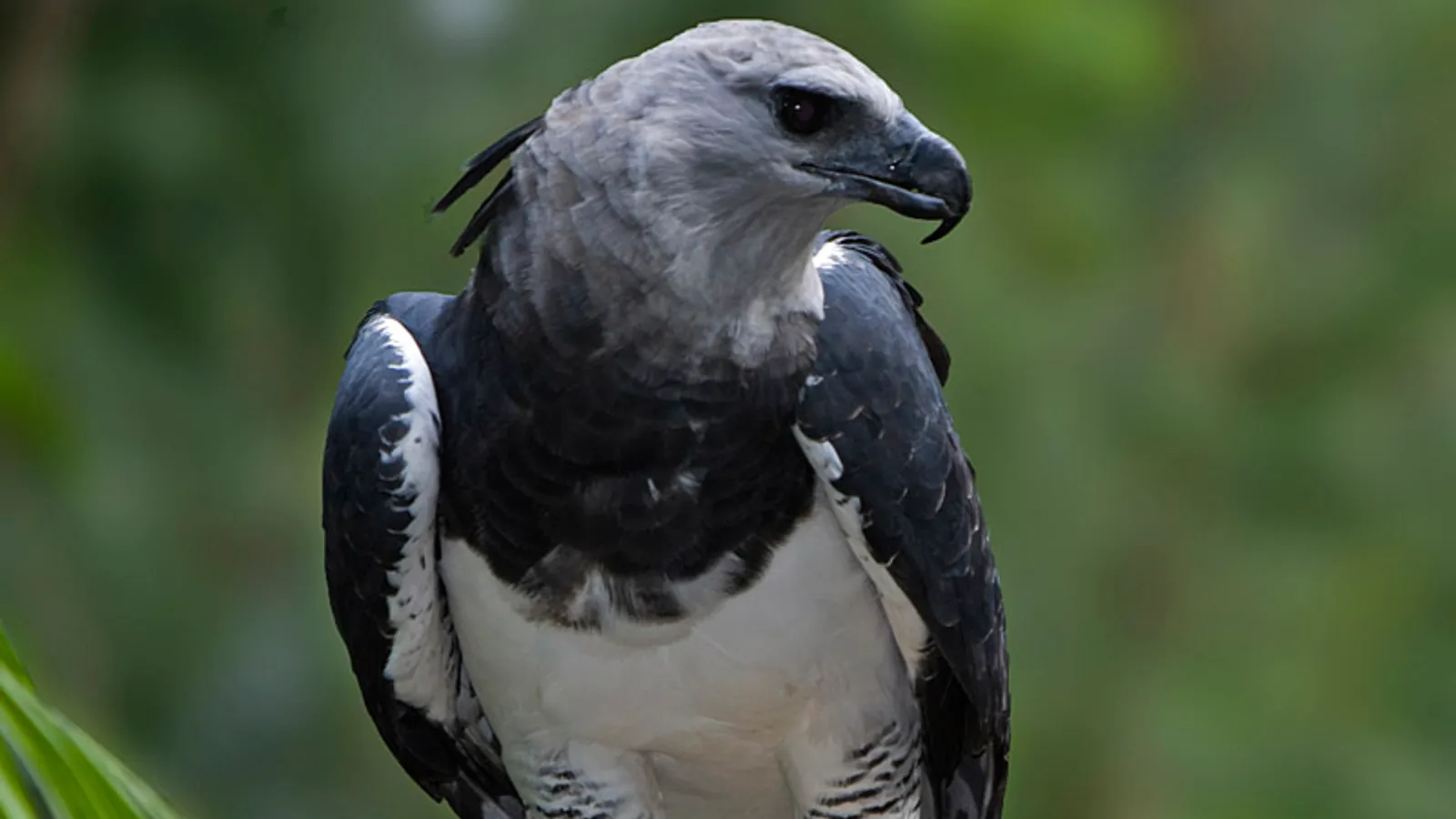
Harpy eagle
Harpia harpyja
— Where the name comes from
The Harpies were the winged monsters of Greek myth, with the faces of women and the talons of birds of prey, and their name, Hárpyiai, comes from harpázō, “to snatch, to carry off”. Linnaeus described the bird in 1758 as a vulture, Vultur harpyja; when it later got a genus of its own, the genus repeated the same name, as if no other word were needed.
— Facts
- Group
- Birds · Aves
- Order
- Diurnal birds of prey
- Habitat
- Tall, unbroken lowland rainforest
- Range
- From southern Mexico to northern Argentina
- Size
- 89–105 cm, wingspan 176–224 cm; female 6–9 kg, male 4–5 kg
- Diet
- Mainly sloths and monkeys; also opossums, tree porcupines, large birds
- Lifespan
- 25–35 years
— Characteristics
- 01
Its hind talons reach 12 centimetres, longer than a grizzly bear’s claws.
- 02
A crown of feathers on its nape fans out when it is agitated.
- 03
Despite its size it flies nimbly between branches, beneath the forest canopy.
— What sets it apart
It breeds more slowly than almost any other bird. The pair lays two eggs but raises a single chick, which depends on its parents for more than a year, and a new clutch comes only every two or three years. An animal that grows so slowly cannot withstand the loss of its forest, and the harpy was the first to disappear from much of Central America. The disc of feathers around its face works like an owl’s: it channels sound towards the ears and helps it locate a monkey hidden in the foliage.