Hyacinth macaw
Anodorhynchus hyacinthinus
— Where the name comes from
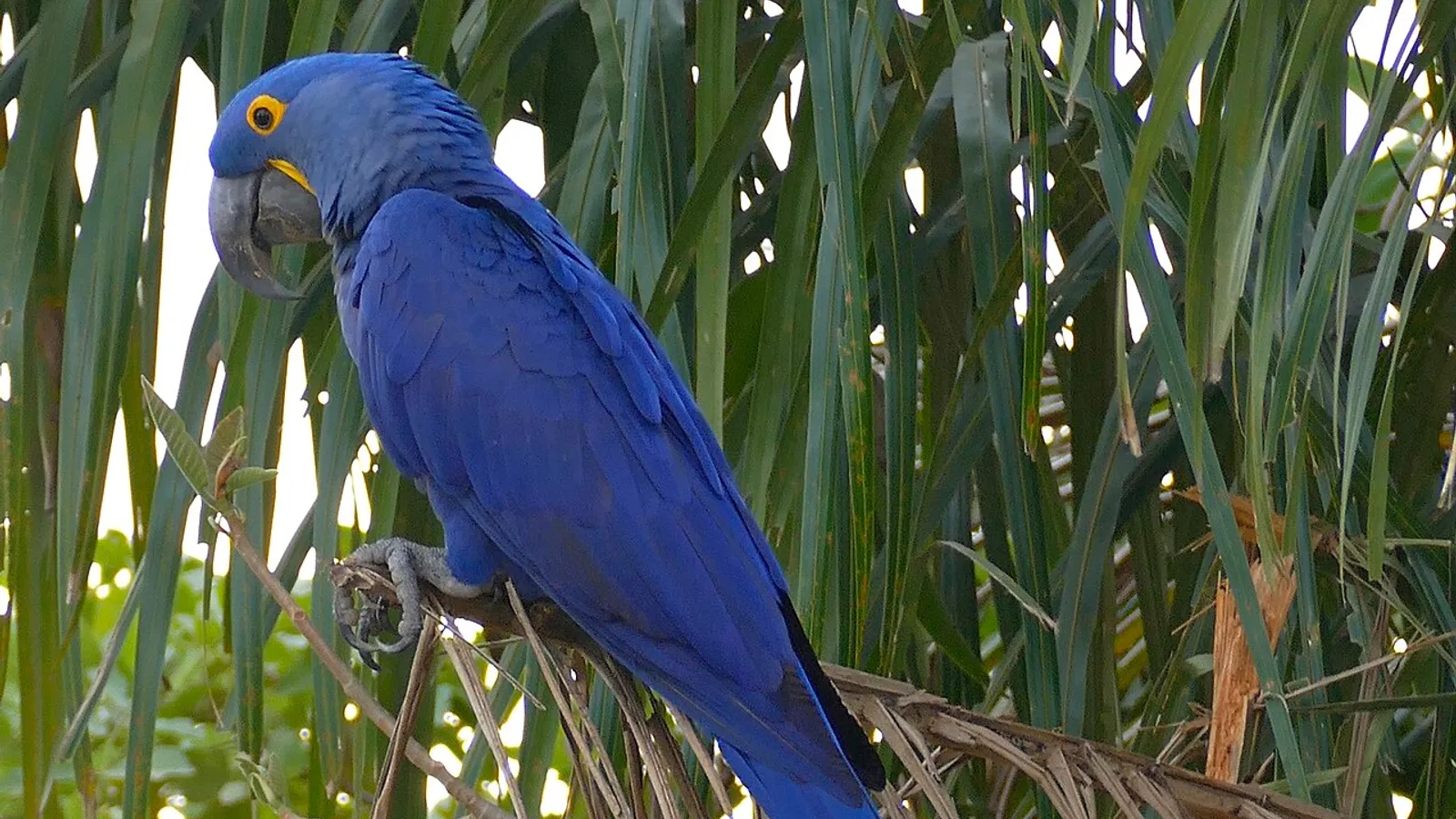
Anodorhynchus is “toothless beak”, from the Greek anódous and rhýnchos: the upper mandible lacks the tooth-like notch other macaws have. Hyacinthinus means “hyacinth-coloured”, and the hyacinth of the ancients was not the flower but a gemstone of deep blue: the colour that covers the bird from head to tail.
— Facts
- Group
- Birds · Aves
- Order
- Parrots
- Habitat
- Palm savannah, open woodland and the swamps of the Pantanal
- Range
- Central and eastern Brazil, eastern Bolivia, northern Paraguay
- Size
- Up to 100 cm long, 1.2–1.7 kg
- Diet
- The very hard nuts of certain palms, fruit
- Lifespan
- Over 50 years in captivity
— Characteristics
- 01
It is the largest flying parrot in the world.
- 02
It has a ring of bare yellow skin around the eye and at the base of the beak.
- 03
Its beak opens nuts a person can only crack with a hammer.
— What sets it apart
Its life depends on a paradox involving the toco toucan. In the Pantanal the macaw nests almost only in the hollows of one large tree, the manduvi, and manduvi seeds are dispersed mainly by the toucan, which by eating the fruit in effect plants the macaws’ future homes. Yet the same toucan is also the chief predator of macaw eggs. In the Pantanal the macaws have found another shortcut too: they pick palm nuts out of cattle dung, where the animals have digested the flesh and left the seed clean.