
Violet carpenter bee
Xylocopa violacea
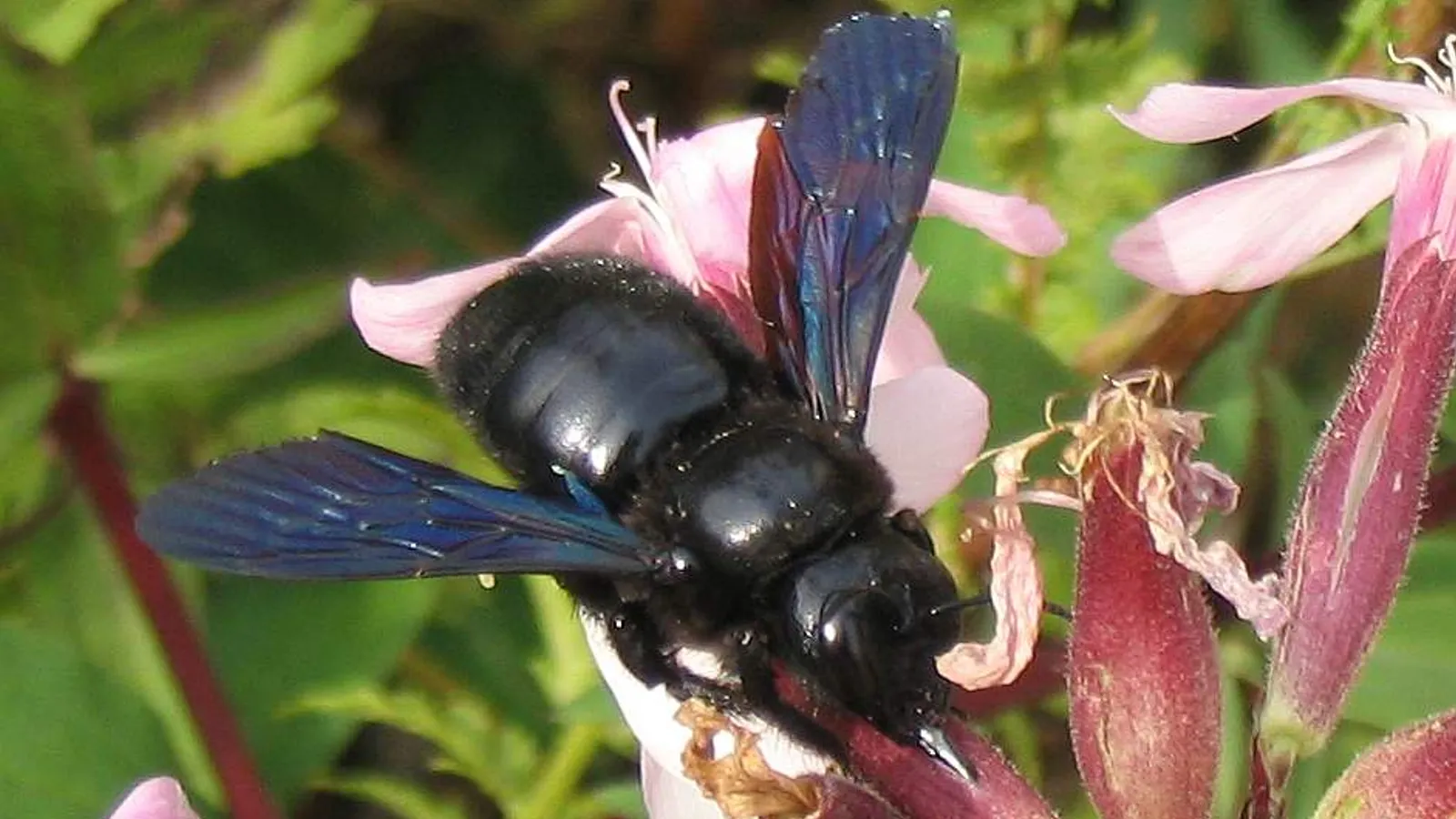
— Where the name comes from
Xylocopa is “wood-cutter”, from xýlon, wood, and kóptō, to cut: the female bores perfectly cylindrical galleries in dead beams and dry trunks with her mandibles. Violacea is the violet sheen of the wings, almost metallic in sunlight. The Italian name says the same as the Greek, with the word for the trade: a legnaiolo was one who worked wood.
— Facts
- Group
- Insects · Insecta
- Order
- Bees, wasps and ants
- Habitat
- Dead wood: beams, posts, dry branches; gardens and clearings
- Range
- Southern and central Europe, western Asia
- Size
- 20–28 mm, the largest European bee
- Diet
- Nectar and pollen
- Lifespan
- 1 year; the adult overwinters and reappears in March
— Characteristics
- 01
It is solitary: each female digs and provisions her own nest.
- 02
The gallery is straight, smooth and divided into cells by sawdust partitions.
- 03
It sometimes pierces the flower at its base to steal nectar without pollinating.
— What sets it apart
When a flower’s corolla is too long or too narrow for its tongue, it does not give up: it bites a hole in the base of the tube and drinks the nectar through it, skipping pollination altogether. Botanists call this nectar robbing, and other bees then learn to use the same holes. It is a solitary bee — no workers, no castes — but related females sometimes share the entrance of a gallery and take turns on guard, a sketch of sociality that biologists study as a model for the passage from solitary life to that of the social bees.
