
European eel
Anguilla anguilla
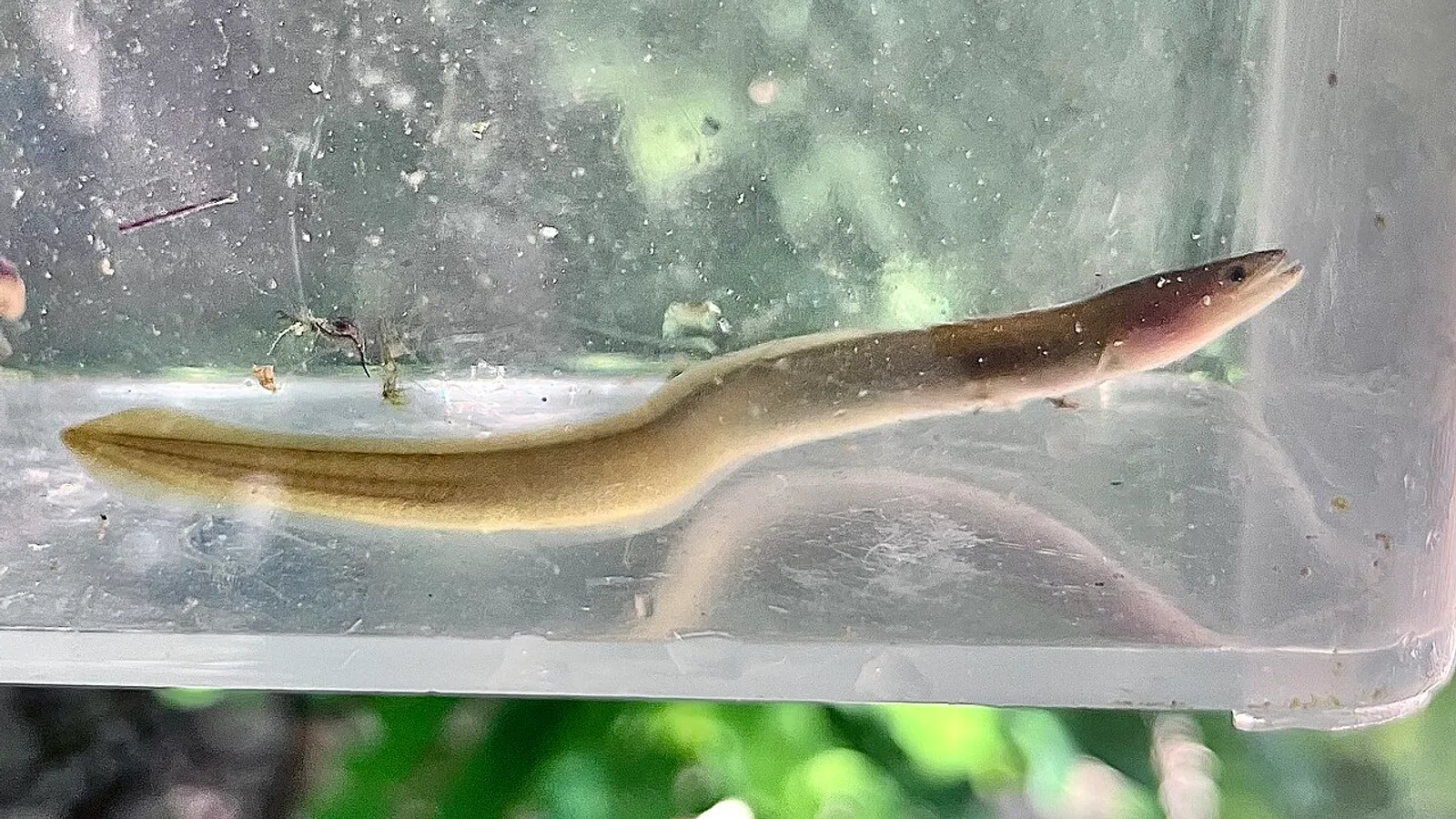
— Where the name comes from
A diminutive of the Latin anguis, “snake”: “little snake”. The same Indo-European root *angʷ(h)i- gives the Greek ékhis and the German Unke. To antiquity the eel was a serpent that had chosen the water.
— Facts
- Group
- Fish · Actinopterygii · Chondrichthyes
- Order
- Eels
- Habitat
- Rivers, lagoons, ponds; it breeds in the open sea
- Range
- Europe and North Africa; born in the Sargasso Sea
- Size
- 60–150 cm
- Diet
- Carnivore — invertebrates, fish
- Lifespan
- 15–20 years, up to 85 in captivity
— Characteristics
- 01
Catadromous: it lives in fresh water and breeds at sea.
- 02
It passes through distinct stages: leptocephalus, glass eel, yellow eel, silver eel.
- 03
Before the migration the gut withers away and the eyes double in size.
— What sets it apart
Aristotle, never finding eggs or gonads, concluded that eels were born from mud. Freud, at twenty, dissected hundreds of them in Trieste looking for the testes, and did not find them. Only in the 20th century was it understood that they breed in the Sargasso Sea, 6,000 km away — and no human being has ever watched two European eels mate in the wild. The “eel question” is still, in part, open.
