
Electric eel
Electrophorus electricus
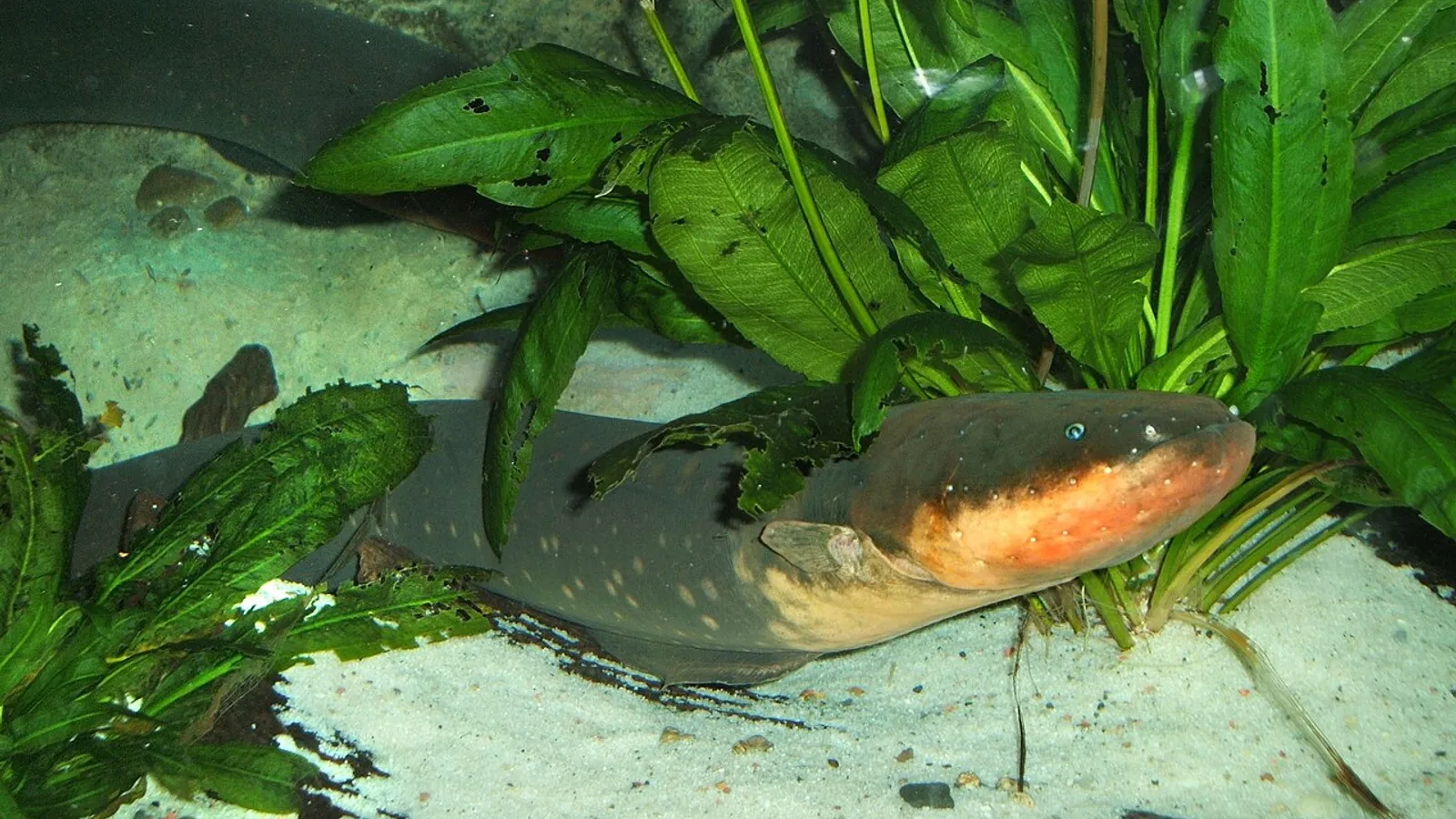
— Where the name comes from
Electrophorus is Greek and Latin for “bearer of electricity”, from ḗlektron, the amber that attracts when rubbed, the root of the word “electricity”. Despite the name it is no true eel, but a South American knifefish. It is the animal that literally inspired the first studies of biological electricity.
— Facts
- Group
- Fish · Actinopterygii · Chondrichthyes
- Order
- Knifefishes
- Habitat
- Turbid, still waters of Amazonia
- Range
- The Amazon and Orinoco basins, South America
- Size
- 1.5–2.5 m, up to 20 kg
- Diet
- Carnivore — fish, invertebrates, amphibians
- Lifespan
- 15 years
— Characteristics
- 01
It generates discharges of up to 860 volts, the most powerful in the animal kingdom.
- 02
It uses weak pulses to navigate and “see” in muddy water, strong ones to hunt and defend itself.
- 03
It must breathe air at the surface: it would drown if it could not come up.
— What sets it apart
The electric eel is a living battery: most of its body is taken up by thousands of specialised cells stacked like the cells of a battery, which discharged together release up to 860 volts, enough to stun a horse. Studying these organs in the 18th century, scientists understood for the first time that nerves run on electricity: Volta’s electric pile was itself born in imitation of their structure. A river fish taught humanity what current is.
