
Yellow anaconda
Eunectes notaeus
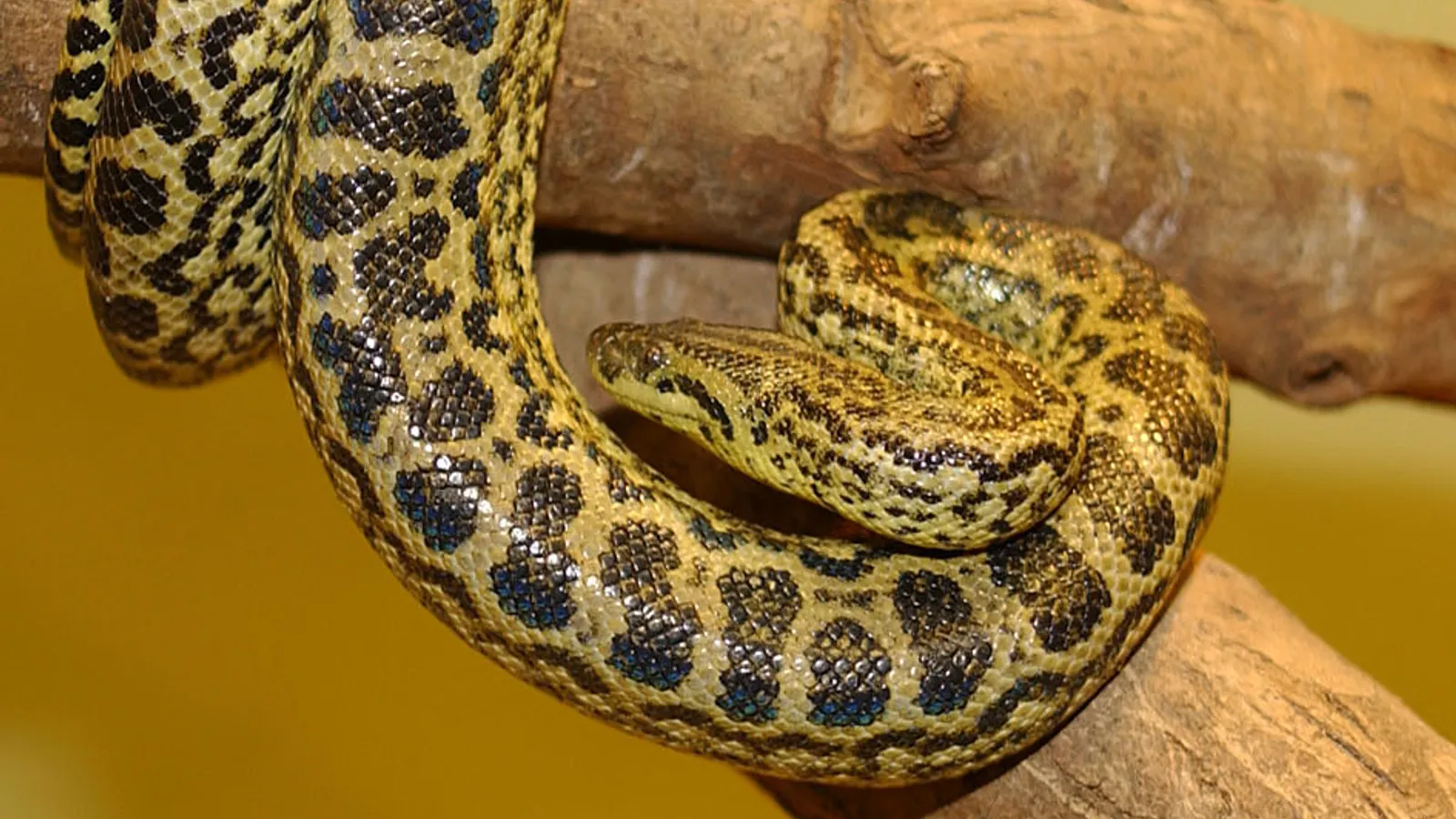
— Where the name comes from
Eunectes is “good swimmer”, from eu and nēktēs, and in a snake that spends its life in water that is a description rather than a compliment; notaeus comes from nôton, the back, for the pattern along it. Anaconda is a word of uncertain origin, perhaps Sinhalese, applied to the South American snakes by mistake by a naturalist who had read it in an account of Sri Lanka.
— Facts
- Group
- Reptiles · Reptilia
- Order
- Squamates
- Habitat
- Marshes, slow rivers, flooded grassland of the Pantanal and Chaco
- Range
- Bolivia, Paraguay, southern Brazil, northern Argentina
- Size
- 300–400 cm, 25–35 kg
- Diet
- Fish, young caimans, capybaras, waterbirds
- Lifespan
- 20 years
— Characteristics
- 01
Females are far larger than males, sometimes twice the size.
- 02
It hunts underwater with nostrils and eyes on top of the head.
- 03
It kills by constriction, stopping the prey’s circulation.
— What sets it apart
In Argentina, since 2002, the harvest of its skins has been governed by a scheme that pays hunters in Formosa only for animals above a set size and in a precise season, requiring every animal to be registered. The idea is that a resource which earns money will be defended by the very people who exploit it, and checks made twenty years on suggest the populations are holding. It is one of the few sustainable-use programmes for a reptile with data gathered over long enough to say anything at all.
