
Alpaca
Vicugna pacos
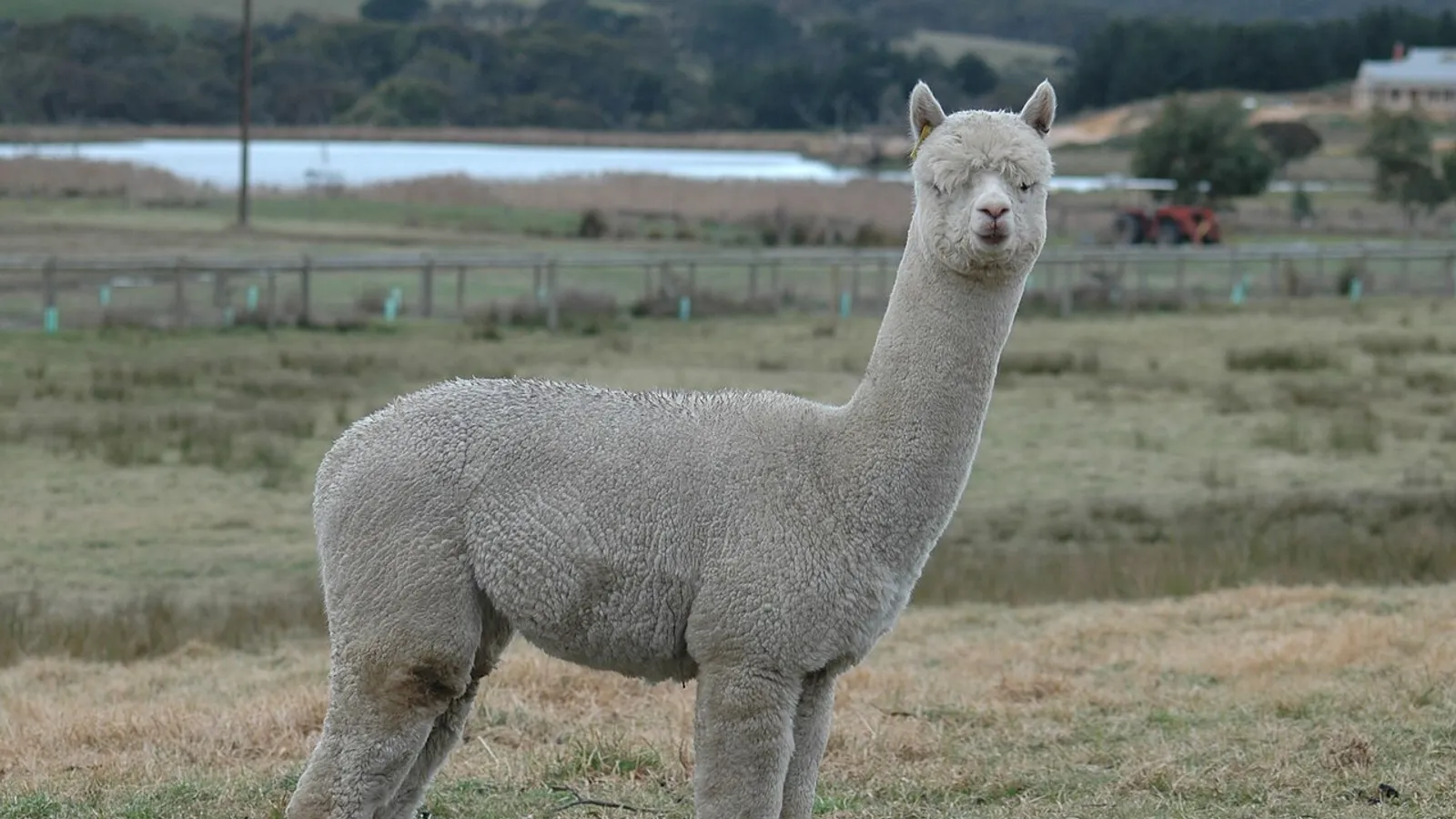
— Where the name comes from
Alpaca goes back to the Aymara allpaqa, perhaps crossed with the Quechua p’aku, “tawny, fair”, the commonest colour of the fleece; the epithet pacos latinises the same root. For over two centuries the species was classed as Lama pacos, that is a kind of llama, until in 2001 genetic analysis showed it descends from the vicuña and not the guanaco: the genus name thus became Vicugna, from the Quechua wik’uña. Few species have changed surname so late, and for a mistake that had lasted since Linnaeus.
— Facts
- Group
- Mammals · Mammalia
- Order
- Even-toed ungulates
- Habitat
- High-altitude grassland and wet peat meadows (bofedales) between 3,500 and 5,000 m
- Range
- The central Andes of southern Peru, western Bolivia, northern Chile and Ecuador; farmed on every continent
- Size
- 120–150 cm long, 80–100 cm at the shoulder, 45–85 kg
- Diet
- Herbivore — fine grasses and tender stems of highland pasture
- Lifespan
- 15–20 years, up to 25 in husbandry
— Characteristics
- 01
The fleece, 20–30 microns thick, is free of lanolin and comes in over twenty recognised natural shades, from white to black.
- 02
The two breeds, the huacaya with crimped compact fleece and the suri with locks hanging like cords, differ in little but the fibre.
- 03
The lower incisors grow all life long and, pressing against an upper dental pad, cut grass without uprooting it.
- 04
It deposits its droppings in communal latrines, which on the altiplano are collected as fertiliser and fuel.
— What sets it apart
In the blood of alpacas, as in all camelids, circulate unusual antibodies: they lack the light chains that in other mammals complete the classic Y-shaped molecule. They were noticed almost by chance in the late 1980s in a Brussels laboratory, during a student exercise on camelid plasma. From those “heavy-chain” antibodies a minute and extraordinarily stable fragment can be derived, the nanobody, which by its size reaches molecular targets conventional antibodies cannot; the first drug derived from them was approved in Europe in 2018. Many laboratories now keep small herds of alpacas for immunisation. The animal bred for the finest fibre in the Andes has become, without knowing it, an instrument of molecular medicine.
