
Eurasian skylark
Alauda arvensis
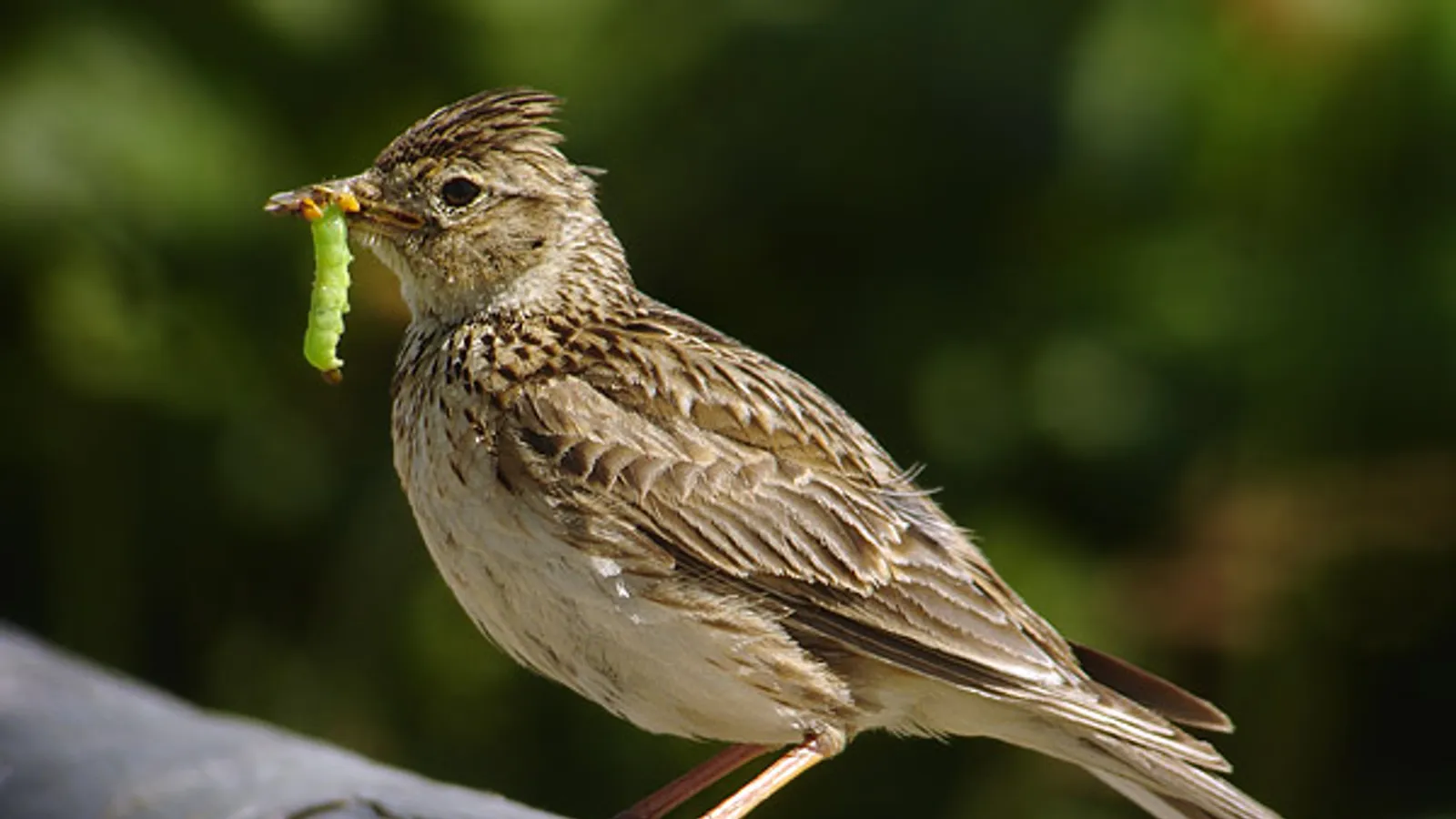
— Where the name comes from
Alauda is one of the very few Gaulish words to enter Latin, and Pliny says so outright: the Romans took it from the Celts along with the bird. In Gaul, Caesar raised a legion of local men and called it the Alaudae, the larks, because they wore that plume on the helmet. Arvensis means “of the ploughed fields”, which is the only place this species lives.
— Facts
- Group
- Birds · Aves
- Order
- Passerines
- Habitat
- Arable fields, hay meadows, steppe, dunes
- Range
- Europe, North Africa, temperate Asia; introduced to Australia
- Size
- 16–18 cm, wingspan 30–36 cm, 25–45 g
- Diet
- Seeds, shoots, insects in spring
- Lifespan
- 3 years in the wild
— Characteristics
- 01
It sings while climbing vertically and hangs in the air for up to five minutes.
- 02
It nests on the ground, in a hollow between the clods.
- 03
It runs rather than hops: its hind claw is extremely long.
— What sets it apart
It is the barometer of European farming, and the needle is falling. In Britain the population has dropped by over seventy per cent since the 1970s, and the cause has been isolated with unusual precision: the shift from spring-sown to autumn-sown cereals. By May, winter wheat is already too tall and too dense for a ground-nesting bird to raise more than one brood in it. It was not a poison and not a predator: it was a change of calendar.
