
Pea aphid
Acyrthosiphon pisum
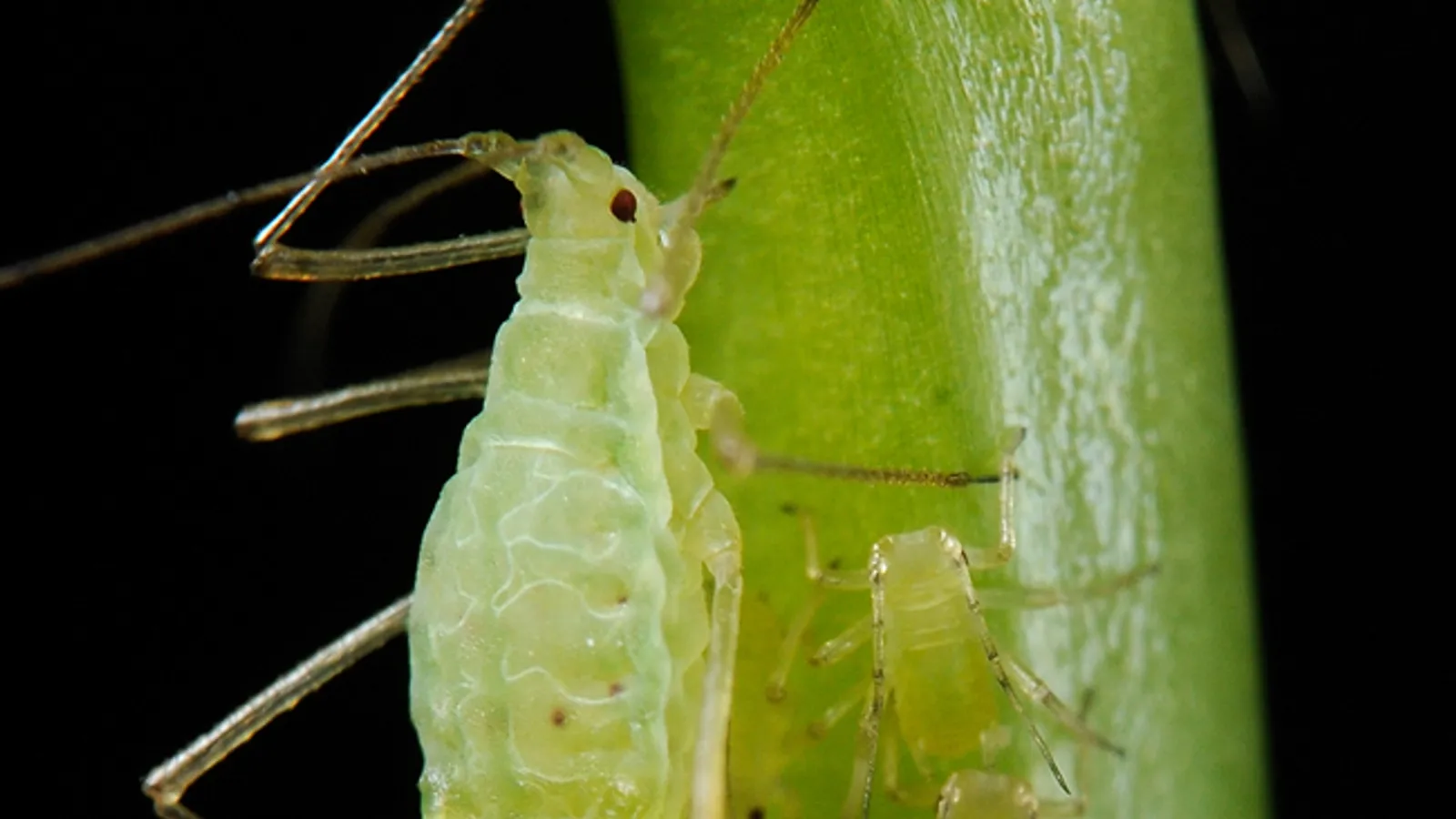
— Where the name comes from
Acyrthosiphon describes the two small tubes an aphid carries at the end of its abdomen, the siphunculi, by saying that they are not curved: from a- privative, kyrtós, curved, and síphōn, the tube. Pisum is the pea. It is a technical name without poetry, stuck onto an animal with one of the strangest biologies in the kingdom: it is born already pregnant.
— Facts
- Group
- Insects · Insecta
- Order
- True bugs
- Habitat
- Cultivated and wild legumes: pea, lucerne, broad bean
- Range
- Palaearctic in origin; today the whole temperate world
- Size
- 2.5–4.5 mm
- Diet
- The phloem sap of legumes
- Lifespan
- 3–4 weeks; a generation every week
— Characteristics
- 01
Summer females give birth to live daughters without mating.
- 02
Inside a female is already the daughter, which already contains the granddaughter.
- 03
It harbours in its cells a bacterium without which it cannot survive.
— What sets it apart
In summer there are no males: the females give birth to live daughters, already fertile in their turn — inside a female is the embryo of the daughter that itself contains the embryo of the granddaughter, three generations one within another like nesting dolls. It serves to multiply at the greatest possible speed while the plant holds out. In autumn, as the days shorten, the same species produces males and sexual females and lays eggs meant to pass the winter. It does not make for itself the amino acids missing from sap: it obtains them from a bacterium living inside its cells, which mothers have passed to daughters for a hundred and fifty million years.
