
Orchid mantis
Hymenopus coronatus
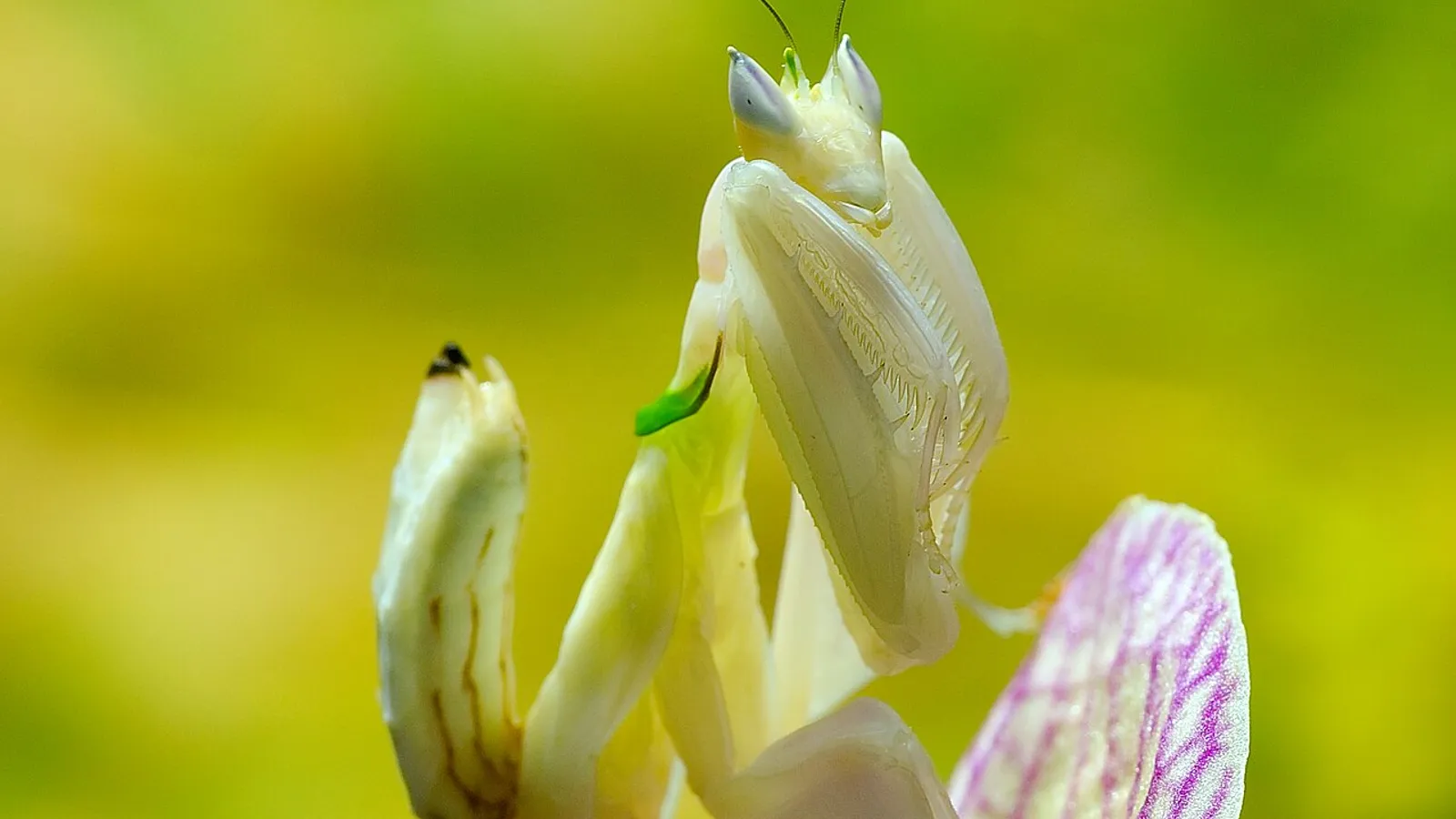
— Where the name comes from
Hymenopus is “membrane-footed”, from hymḗn, the membrane, and poús, the foot: the legs carry flat rounded expansions that look like petals. Coronatus is Latin, “crowned”, after the ridge on the head. Mantis, the name of the order, is the Greek for “seer, prophet”: anyone seeing the insect motionless with its forelegs clasped thought of someone praying or consulting the sky.
— Facts
- Group
- Insects · Insecta
- Order
- Mantises
- Habitat
- Flowering shrubs of the rainforest
- Range
- Malaysia, Indonesia, Thailand, Sumatra
- Size
- Female 6–7 cm, male 2.5–3 cm
- Diet
- Pollinating insects, above all bees and butterflies
- Lifespan
- 6–8 months for the male, up to a year for the female
— Characteristics
- 01
The female is twice the male’s size, among the largest such gaps in insects.
- 02
It shifts colour from white to pink according to the flower it sits on.
- 03
The legs mimic petals, not the body as a whole.
— What sets it apart
It does not hide in the flower: it acts as the flower. Experiments have shown that pollinators are drawn to this mantis more than to the real flowers growing beside it — the first documented case of a predator attracting prey by being more flower than the flower, and it manages it because it reflects ultraviolet in the pattern bees read as “nectar here”. The mantis need not lie in wait on a flowering plant: a leaf will do, and the customers come by themselves.
