
Gray fox
Urocyon cinereoargenteus
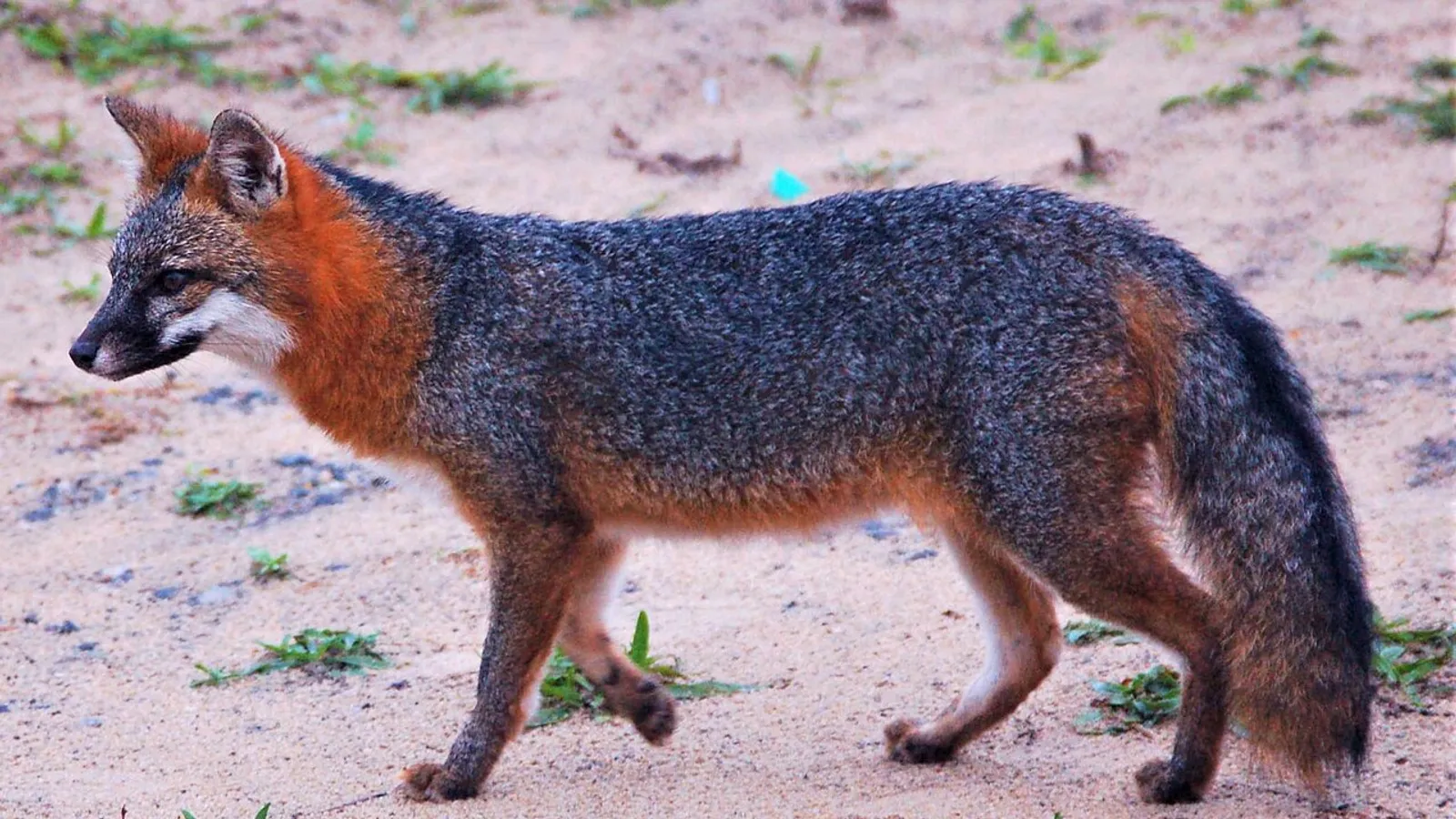
— Where the name comes from
Urocyon is “tail-dog”, from the Greek ourá and kýōn, for the strip of stiff black hair that runs the length of the tail to its tip. Cinereoargenteus adds the Latin cinereus, “ash-coloured”, and argenteus, “silvery”. Neither name says the most remarkable thing about this animal, which is what it does with trees.
— Facts
- Group
- Mammals · Mammalia
- Order
- Carnivores
- Habitat
- Deciduous woodland, scrub, chaparral, field margins
- Range
- From southern Canada to Venezuela, with a gap across the Great Plains
- Size
- 48–69 cm of body, 3.5–7 kg
- Diet
- Omnivore — rodents, rabbits, insects, and a great deal of fruit
- Lifespan
- 6–8 years in the wild
— Characteristics
- 01
It has curved, semi-retractile claws, unique among canids.
- 02
It belongs to the oldest living lineage of canids known.
- 03
In summer fruit can make up more than half its diet.
— What sets it apart
It is the only American canid that genuinely climbs trees, and not in emergencies: it goes up hugging the trunk with its forelegs and pushing with the hind ones, as a cat does, and once aloft moves from branch to branch to sleep, to hide or to gather fruit. No other dog, wolf or fox in the world has the curved claws that allow it — which fits the fact that its lineage split from all other canids nearly ten million years ago.
