
Adder
Vipera berus
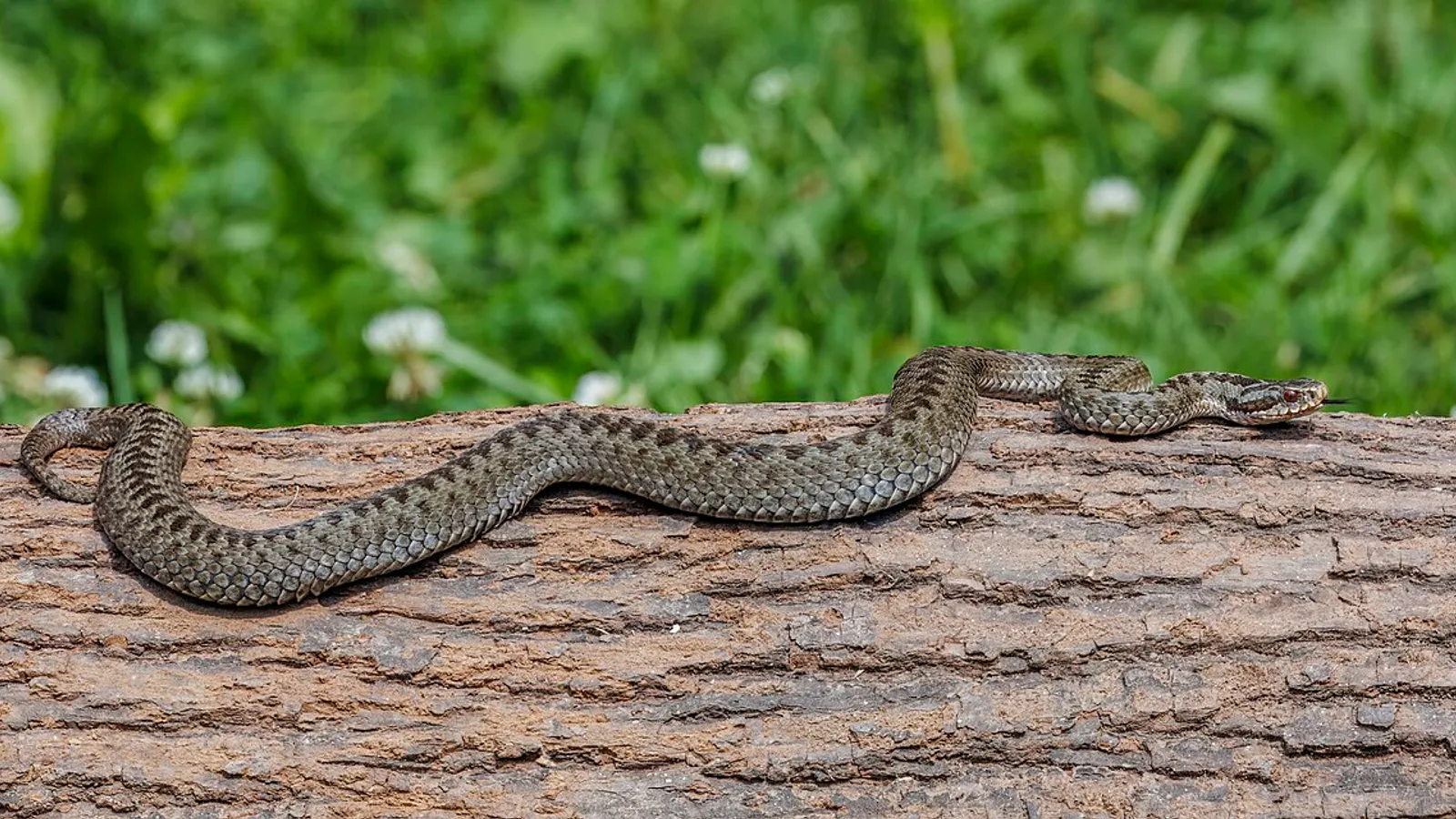
— Where the name comes from
The Latin vipera is traditionally explained as a contraction of vivipara, “bearing live young”: the Romans had noticed that the adder lays no eggs. The etymology is disputed but the observation is exact.
— Facts
- Group
- Reptiles · Reptilia
- Order
- Squamates
- Habitat
- Heath, clearings, scree, peat bog
- Range
- From Britain to Siberia; the northernmost snake in the world
- Size
- 50–70 cm
- Diet
- Carnivore — small mammals, lizards
- Lifespan
- 10–15 years
— Characteristics
- 01
A dark zigzag along the back, and a vertical pupil.
- 02
The venom is haemotoxic; bites to humans are rarely fatal.
- 03
Overwinters communally in deep dens below the frost.
— What sets it apart
It is the only snake found beyond the Arctic Circle. To manage it, it gave up eggs: the female keeps the embryos inside her body and basks to incubate them, moving about like a thermostat. At those latitudes a single brood can take two or three years of stored energy. The adder is not aggressive: it bites whoever treads on it, and spends its life avoiding being found.
