
Blue shark
Prionace glauca
— Where the name comes from
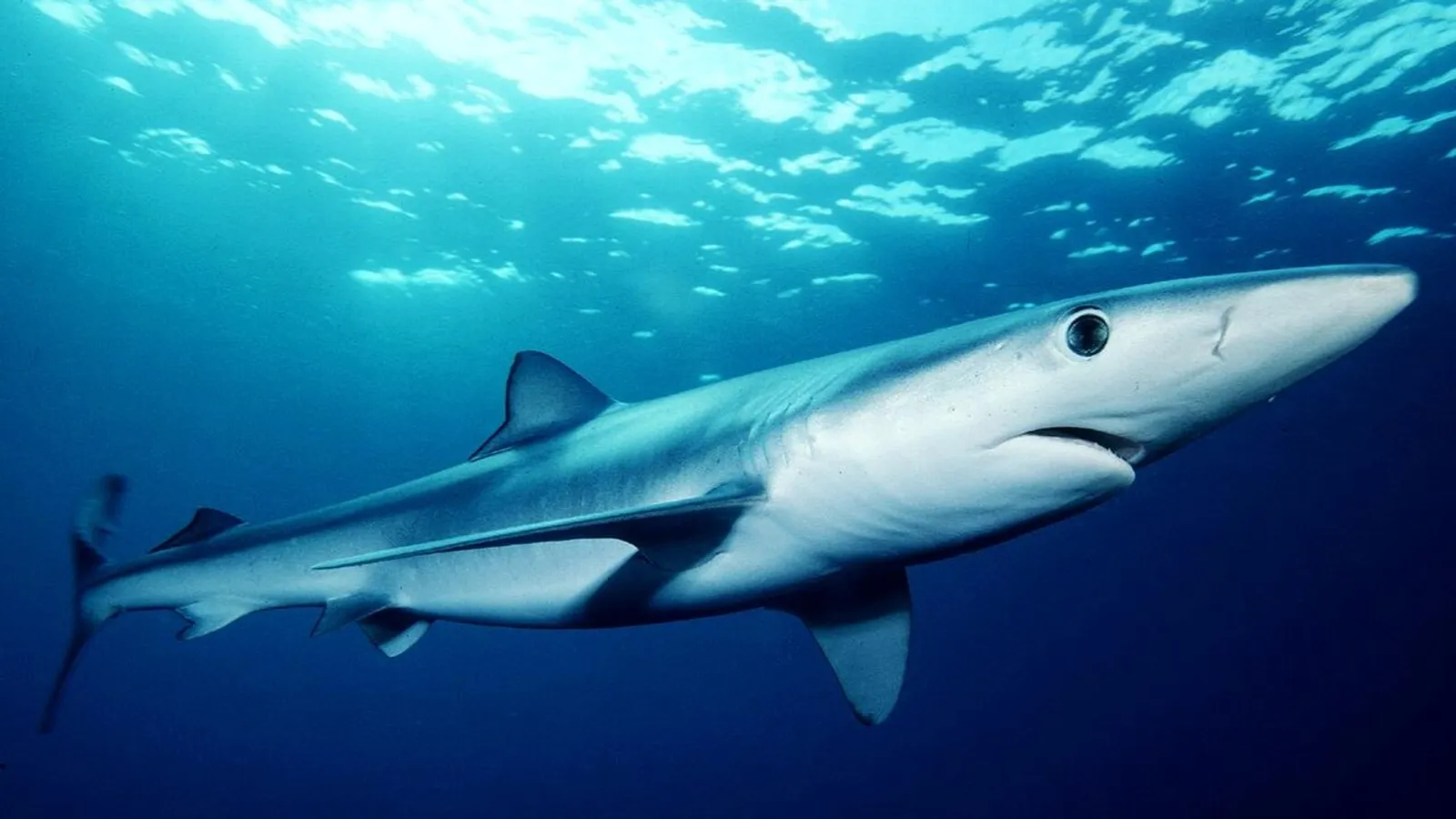
Prionace is Greek for “saw point”, from príōn, saw, and akís, point, from the teeth; glauca, from the Greek glaukós, “blue-green”, from the splendid colour of the back. The Italian verdesca comes from that same shifting blue. It is perhaps the most beautifully coloured shark, and one of the most widespread in the oceans.
— Facts
- Group
- Fish · Actinopterygii · Chondrichthyes
- Order
- Ground sharks
- Habitat
- Open sea, from the surface to hundreds of metres down
- Range
- All temperate and tropical oceans
- Size
- 2–3 m, up to 3.8 m
- Diet
- Carnivore — squid and small shoaling fish
- Lifespan
- 15–20 years
— Characteristics
- 01
The back is a deep blue, the flanks iridescent, the belly white: perfect camouflage in open water.
- 02
It makes transoceanic migrations of thousands of kilometres, riding the currents.
- 03
A female can give birth to as many as a hundred young in a single litter.
— What sets it apart
The blue shark is among the most abundant and most heavily fished sharks in the world: millions end up in nets every year, often only for their fins. Yet it stays little known to the public because it lives offshore, far from the coast. It is also a tireless traveller: using the great ocean currents as conveyor belts, it crosses entire oceans, from European seas to the Caribbean, in circling migrations of thousands of kilometres.
