
Black-and-white ruffed lemur
Varecia variegata
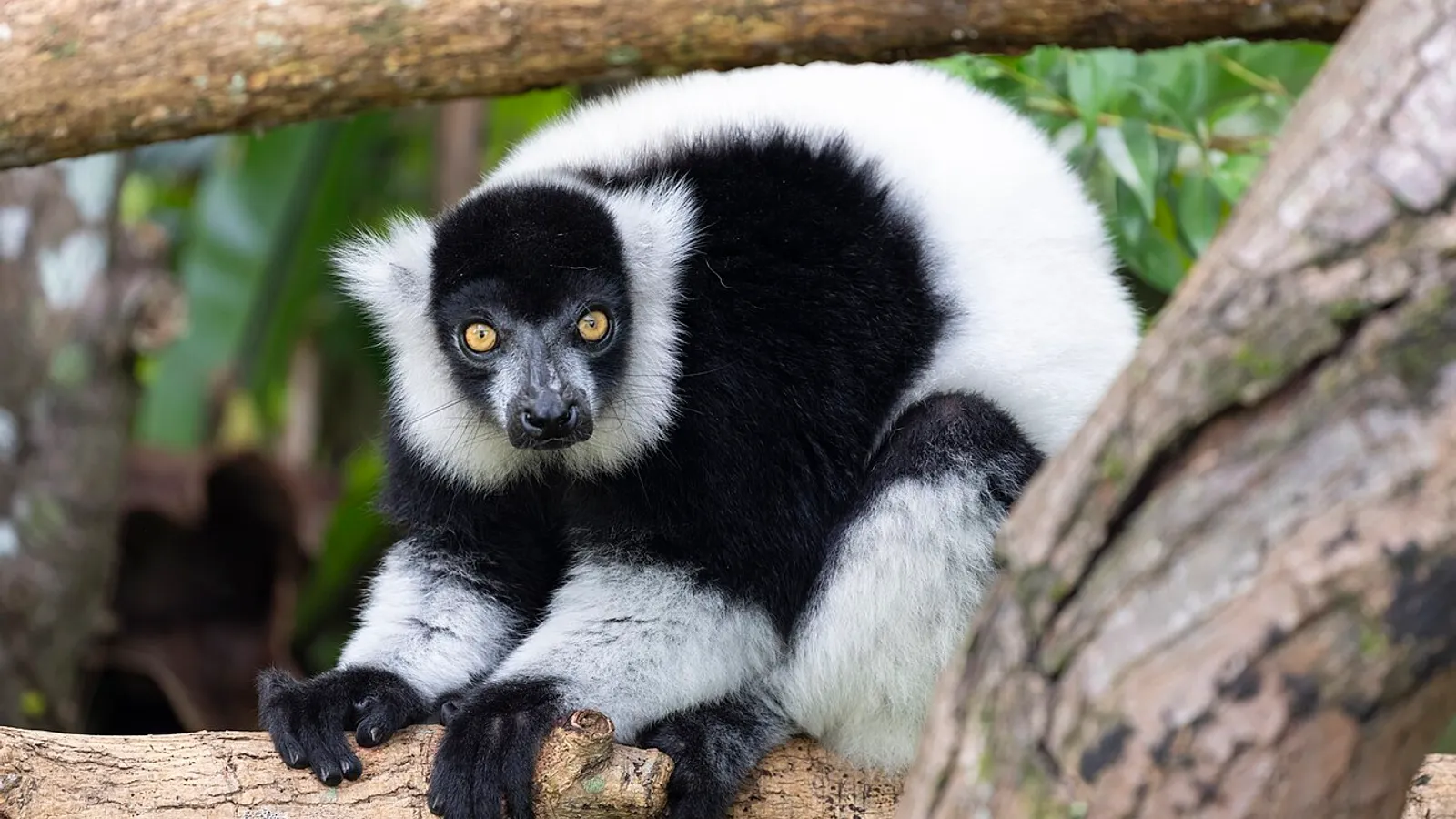
— Where the name comes from
Varecia latinises varika, the Malagasy name for the lemurs of this group; variegata is the Latin “variegated”, for the coat of large black and white patches sharply divided. It is related to all the other lemurs of Madagascar, descended from a handful of primates that reached the island on rafts of vegetation some fifty million years ago.
— Facts
- Group
- Mammals · Mammalia
- Order
- Primates
- Habitat
- High canopy of the eastern rainforest
- Range
- Endemic to eastern Madagascar
- Size
- 50–55 cm of body plus 60–65 cm of tail, 3.1–4.1 kg
- Diet
- Frugivore — fruit for over 90%, plus nectar and pollen
- Lifespan
- 19 years in the wild, over 35 in captivity
— Characteristics
- 01
It is the only primate that builds a true nest and leaves its young inside it.
- 02
It bears two or three twins, against the single infant that is the primate norm.
- 03
It has an extremely loud alarm call, coordinated across the whole group.
— What sets it apart
It is the largest pollinator in the world. The flowers of the traveller’s palm, Ravenala madagascariensis, are enclosed in leathery bracts that no insect and no bird can open: only this lemur has the strength to force them apart with its hands and a tongue long enough to reach the nectar, and it comes away with face and fur loaded with pollen. A plant has entrusted its reproduction to a four-kilo primate, and if the lemur goes the palm is left with nobody.
