
European peacock
Aglais io
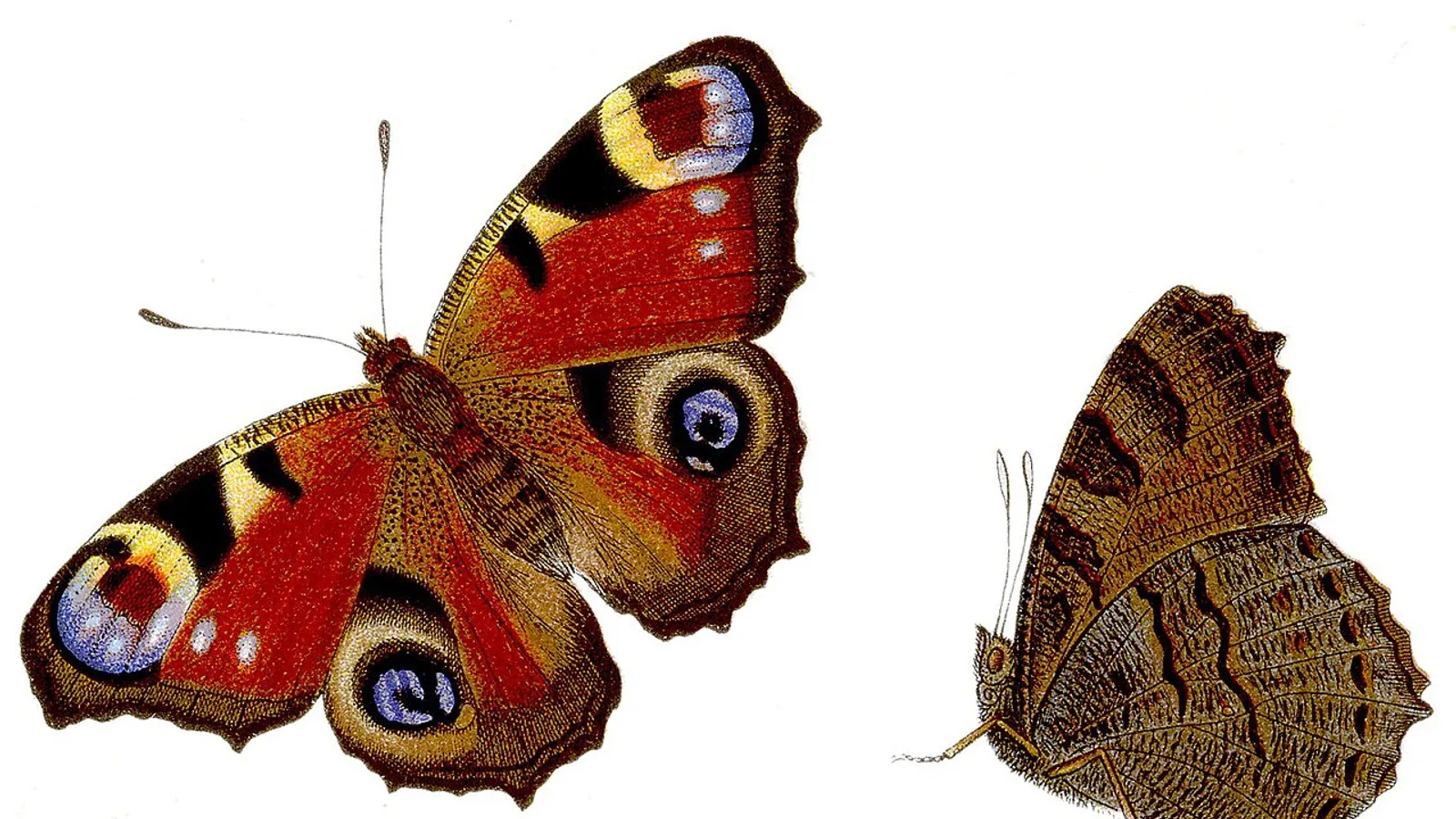
— Where the name comes from
Aglais recalls the Greek aglaḯa, splendour, one of the Graces; io is the nymph loved by Zeus and turned into a heifer. The English name, peacock butterfly, comes from the four great eyespots on the wings, one at each corner, that mimic eyes. It is one of the most familiar butterflies in European gardens.
— Facts
- Group
- Insects · Insecta
- Order
- Butterflies and moths
- Habitat
- Gardens, clearings, woodland edges, farmland
- Range
- Europe and temperate Asia
- Size
- 5–6 cm wingspan
- Diet
- Nectar as an adult; the caterpillar eats nettle
- Lifespan
- Up to a year, overwintering as an adult
— Characteristics
- 01
Four vividly coloured eyespots mimic the eyes of a large animal, unnerving predators.
- 02
Closed, it shows a black underside: it looks like a dead leaf, invisible.
- 03
It overwinters as an adult in sheltered places and reappears on the first warm days.
— What sets it apart
The peacock butterfly holds two opposite strategies in one body: at rest it closes its wings and becomes a dead leaf, black and anonymous; but if a bird comes near it snaps them open, showing four huge coloured “eyes”, and even makes them hiss by rubbing the wings together. To a predator it is as though the face of a much larger animal had suddenly appeared. Experiments show that birds faced with those false eyes really do back away: a bluff that saves a life.
