Keel-billed toucan
Ramphastos sulfuratus
— Where the name comes from
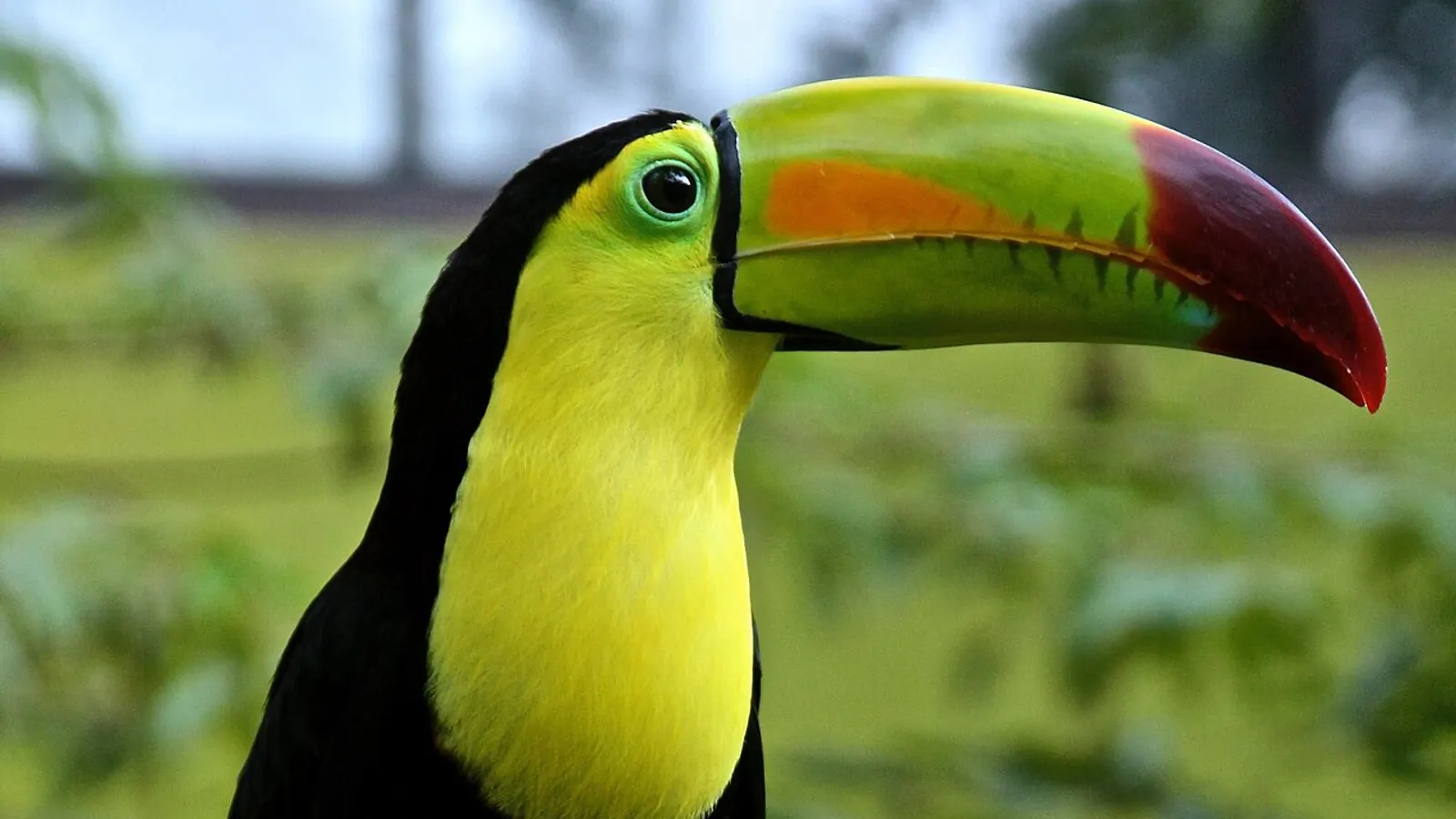
Ramphastos comes from the Greek rhámphos, “beak”: the toucan genus could hardly be named for anything else. Sulfuratus is Latin, “sulphur-coloured”, for the bright yellow throat and breast. The Italian carenato, “keeled”, describes the beak, deep and flattened at the sides like a boat’s keel; toucan comes from Tupi, the indigenous language of Brazil, by way of Portuguese.
— Facts
- Group
- Birds · Aves
- Order
- Woodpeckers and toucans
- Habitat
- Lowland rainforest and wooded edges
- Range
- From southern Mexico to northern Colombia and Venezuela
- Size
- 42–55 cm, beak up to 15 cm, about 400 g
- Diet
- Mainly fruit; insects, eggs, lizards
- Lifespan
- 15–20 years
— Characteristics
- 01
Its beak is green, orange and red, and weighs very little: inside it is a sponge of keratin.
- 02
It flies poorly, in short bursts, and gets about by hopping between branches.
- 03
It lives in small groups that sleep together in the same tree hole.
— What sets it apart
The huge beak looks like useless weight, and is in fact light and useful. It is a scaffold of hollow fibres wrapped in a thin shell, and it lets the bird reach fruit at the tips of branches too slender for its body. In toucans it also works as a radiator: rich in blood vessels, it sheds heat when it is hot and holds it in at night. To sleep in a narrow hole, where several squeeze in together, the toucan turns its head and lays its beak along its back, then flips its tail forward to cover it: it becomes a ball of feathers.