
Smooth newt
Lissotriton vulgaris
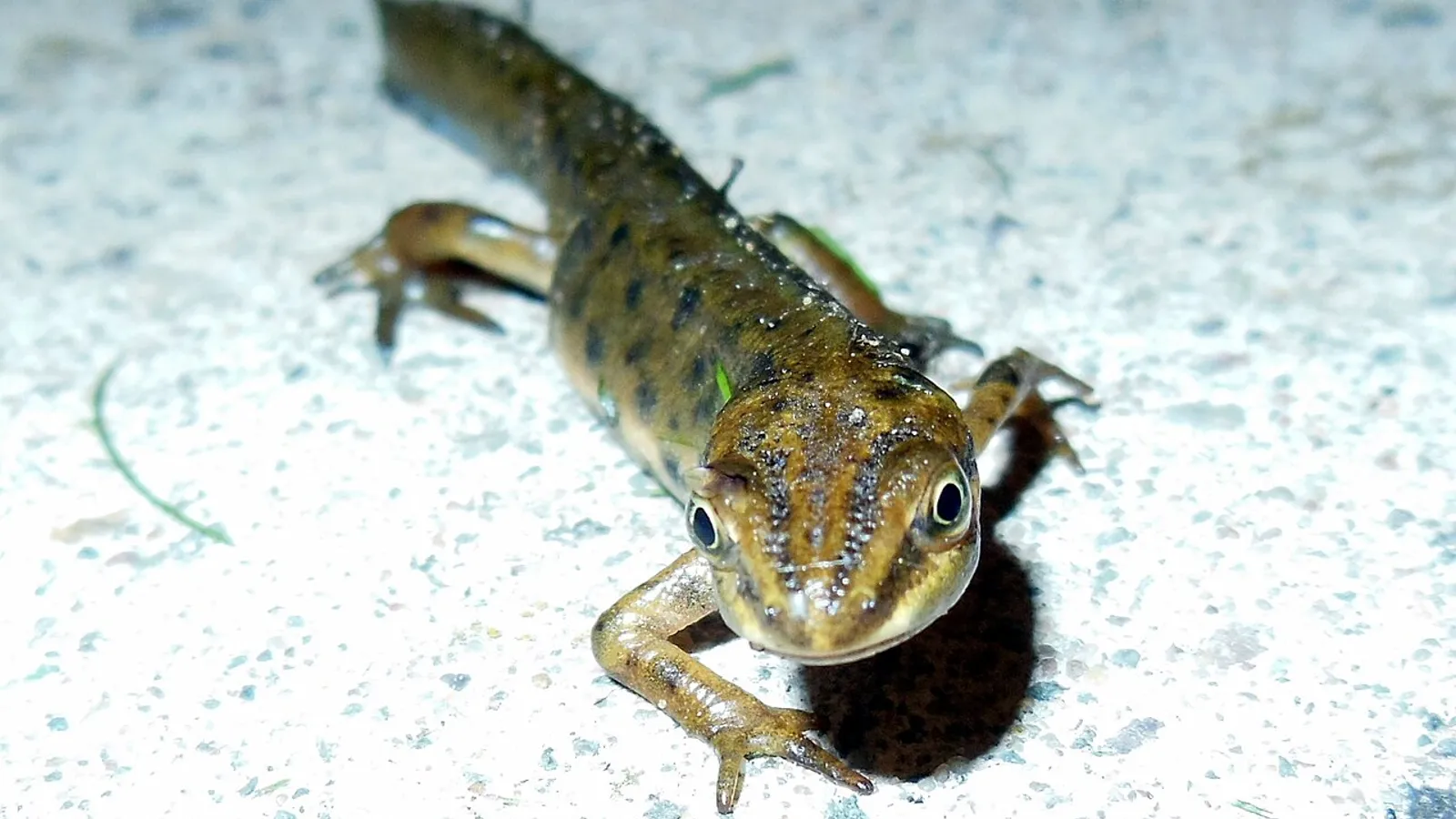
— Where the name comes from
Lissotriton is “smooth newt”, from lissós: the skin, unlike the crested newt’s, is velvety and without granulation. Vulgaris means “common”, and so it is — the most widespread tailed amphibian in Europe, and the one nearly everyone has seen at least once in a farm pond or a garden tub.
— Facts
- Group
- Amphibians · Amphibia
- Order
- Salamanders
- Habitat
- Ponds, ditches, tanks, garden pools, damp meadows
- Range
- Europe and western Asia, from Ireland to Siberia
- Size
- 7–11 cm, 2–4 g
- Diet
- Mosquito larvae, water fleas, small snails, frog spawn
- Lifespan
- 14 years
— Characteristics
- 01
In spring the male grows a wavy crest and fringes on his toes.
- 02
The female folds a submerged leaf around each egg, one at a time.
- 03
Out of season it lives on land and turns dull and velvety.
— What sets it apart
It lays its eggs one at a time, and it takes weeks. The female grips a submerged leaf with her hind feet, sets a single egg on it and folds the leaf around, gluing it shut: then she finds another leaf and starts again, two or three hundred times over. It is painstaking work no frog would dream of — frogs lay thousands of eggs in masses in a night — and it exists to hide each young separately, so that no predator can find them all at once.
