
Java mouse-deer
Tragulus javanicus
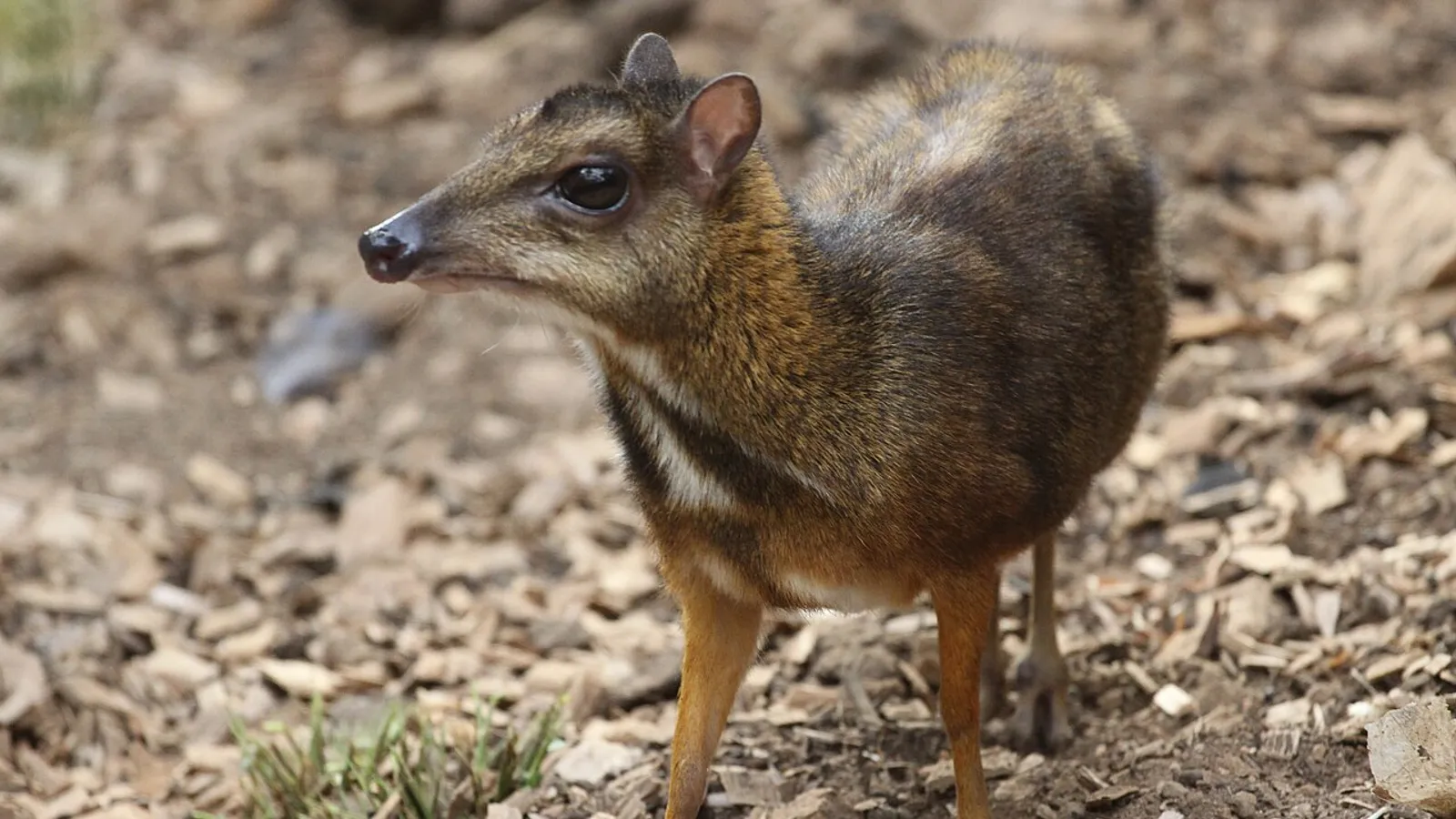
— Where the name comes from
Tragulus is the Latin diminutive of tragus, “goat”: “little goat”. Javanicus points to Java. In English it is the mouse-deer, and in French the chevrotain, “little roe deer” — three languages trying three different diminutives, all wrong, because it is neither deer nor goat nor mouse: it is the only living representative of a very ancient family, the tragulids, separated from all other ruminants for fifty million years.
— Facts
- Group
- Mammals · Mammalia
- Order
- Even-toed ungulates
- Habitat
- Dense rainforest understorey
- Range
- Java and perhaps Bali, in Indonesia
- Size
- 40–48 cm of body, 1.5–2.5 kg
- Diet
- Herbivore — fallen fruit, leaves, shoots
- Lifespan
- 12 years in captivity
— Characteristics
- 01
It is among the smallest ungulates in the world: it weighs about as much as a rabbit.
- 02
It has neither horns nor antlers; the male has protruding upper canines.
- 03
Its stomach has three chambers instead of four: an incomplete ruminant.
— What sets it apart
In Malay and Indonesian folklore it is the sang kancil, the trickster: the smallest and weakest creature of the forest, who defeats tigers and crocodiles by cunning. In the most famous story it must cross a crocodile-infested river, and persuades the crocodiles to line up to be counted, because the king is said to be sending food for all — then it hops across their backs one by one and reaches the far bank. It is the same archetype as the European fox and the African spider Anansi, applied to a two-kilo ungulate.
