American robin
Turdus migratorius
— Where the name comes from
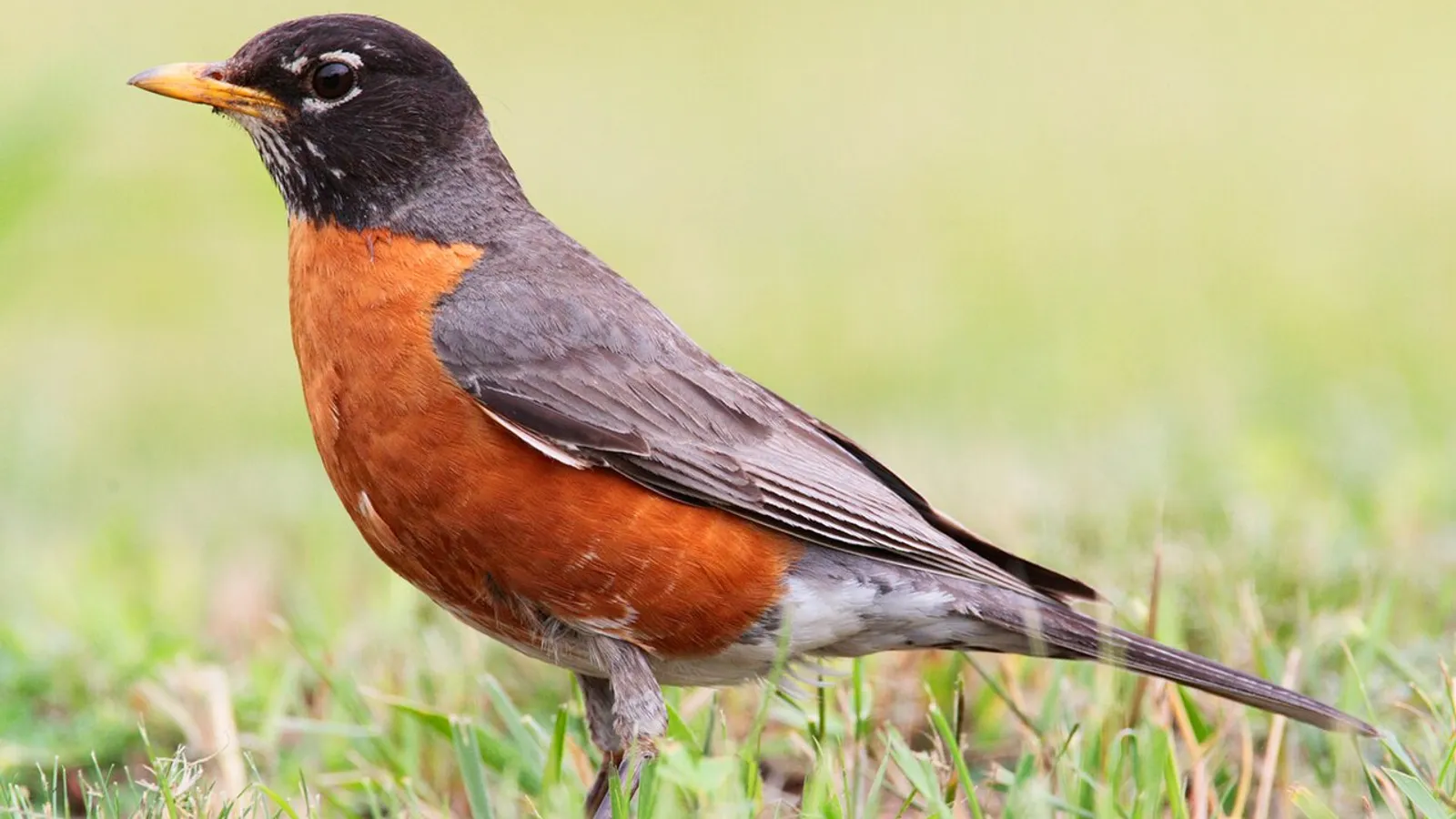
Turdus is Latin for thrush, migratorius means “migratory”, though many southern populations are resident. In English it is the American robin: English settlers named it after their robin for its reddish breast, although it is a thrush, almost twice the size.
— Facts
- Group
- Birds · Aves
- Order
- Passerines
- Habitat
- Woodland, wooded grassland, lawns, gardens and city parks
- Range
- North America, from Alaska to Mexico
- Size
- 23–28 cm, 72–94 g
- Diet
- Earthworms, insects, berries and fruit
- Lifespan
- 2 years on average, 14 the record
— Characteristics
- 01
It has a red-orange breast and a dark head.
- 02
It hunts earthworms on lawns by running, stopping and tilting its head.
- 03
Its eggs are so distinctive a blue that they have given their name to a colour.
— What sets it apart
For North Americans it is the herald of spring, and its dawn song is the first to be heard in town. Its eggs are such a characteristic sky blue that robin’s egg blue has become the name of a shade used by designers and jewellers. It also has a less poetic role: studies of West Nile virus in the United States showed that the American robin is the favourite host of the mosquitoes that carry it, and that a good share of human infections pass through it.