
Common shrew
Sorex araneus
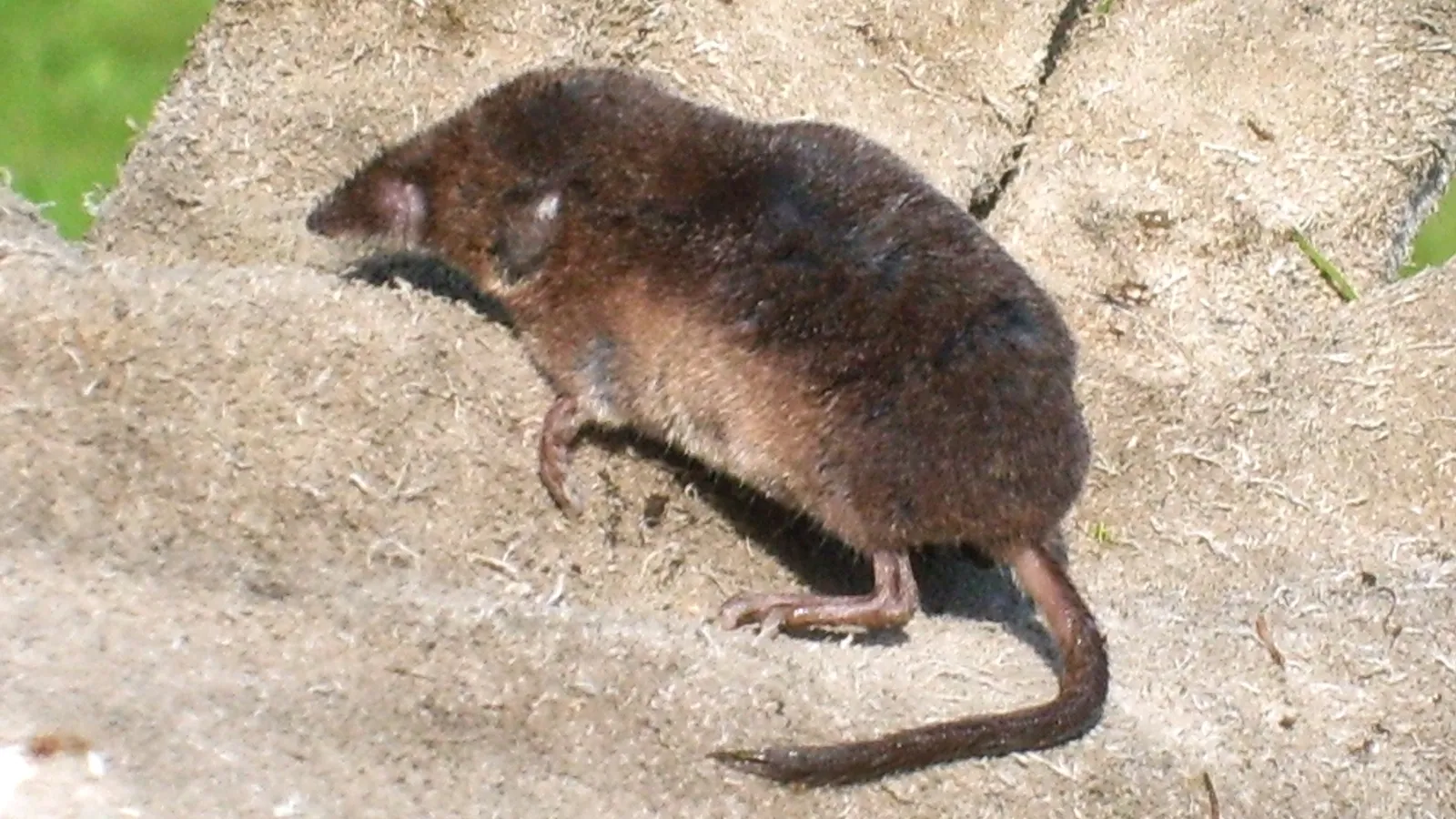
— Where the name comes from
Sorex is the Latin for shrew, and araneus means “spider”: the ancients believed it venomous like an arachnid, and the name fixed the belief. They were not entirely wrong — the saliva of several shrews contains toxic proteins that paralyse their prey. The Italian name fuses mouse and spider for the same reason, and in English “shrew” became the insult for a quarrelsome woman, which Shakespeare put in the title of a comedy.
— Facts
- Group
- Mammals · Mammalia
- Order
- Hedgehogs and moles
- Habitat
- Woodland, hedgerows, damp meadows, gardens with deep leaf litter
- Range
- Northern and central Europe, western Siberia
- Size
- 5.5–8.5 cm of body, 5–14 g
- Diet
- Insectivore — soil invertebrates, up to 90% of its own weight a day
- Lifespan
- About 15 months
— Characteristics
- 01
It starves in a few hours if it does not eat: its metabolism allows no pauses.
- 02
The heart beats up to a thousand times a minute.
- 03
It is not a rodent: it is related to hedgehogs and moles, and has teeth tipped red with iron.
— What sets it apart
In autumn its skull shrinks, brain included, and in spring it grows back. It is called the Dehnel phenomenon, after the Polish biologist who described it in 1949, and for decades nobody believed it: the braincase loses up to a fifth of its volume, the brain mass up to a quarter, and then it all reforms. It is the only known way to lower the energy cost of an animal that can neither put on fat nor hibernate — to shrink, organ by organ, and then grow large again.
