
Cairo spiny mouse
Acomys cahirinus
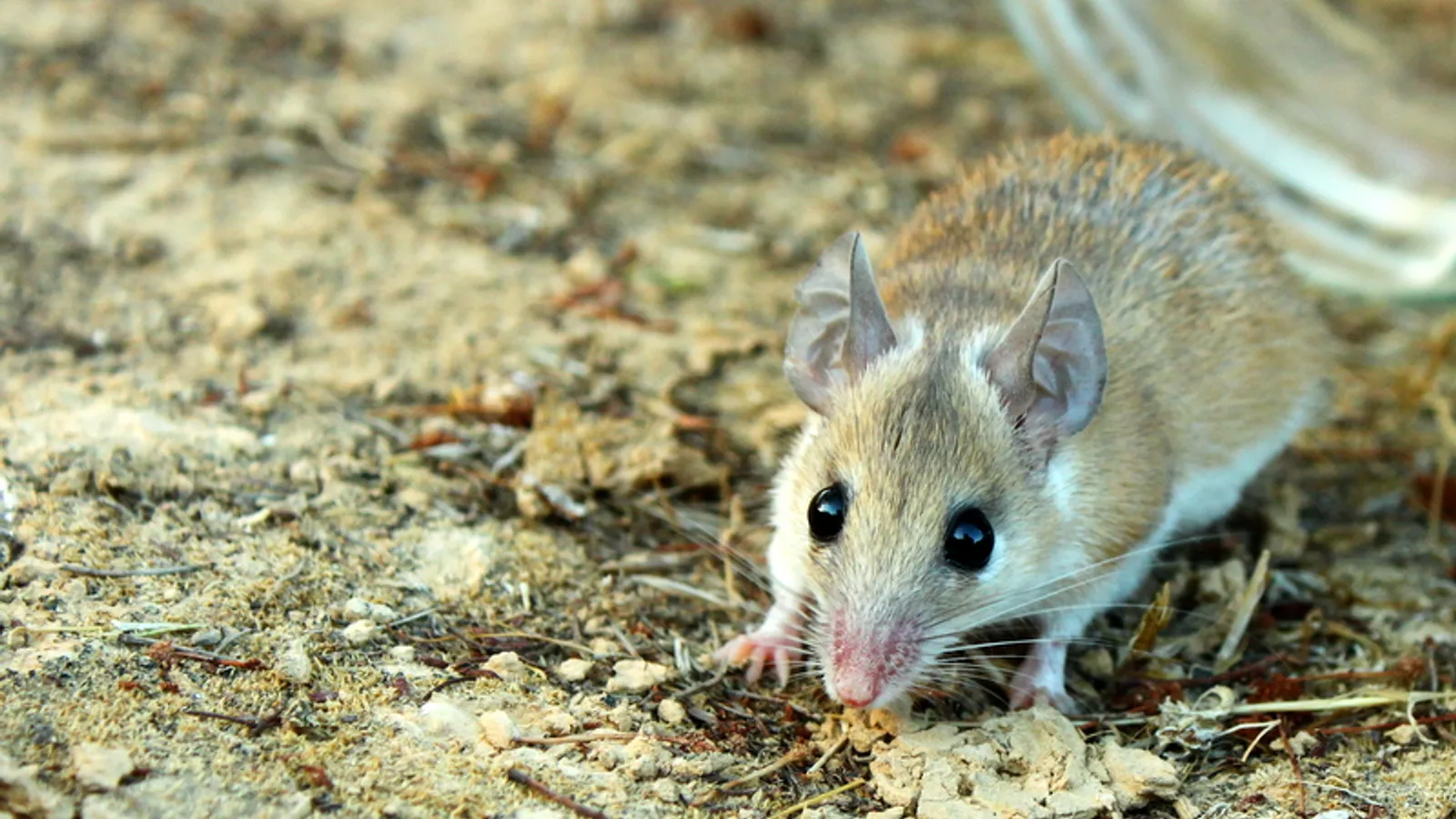
— Where the name comes from
Acomys is “pointed mouse”, from the Greek akís, the point, for the hairs of the back stiffened into fine spines like a hedgehog’s in miniature. Cahirinus simply means “of Cairo”, the city the described specimens came from. The name is purely descriptive and gives no hint of the extraordinary thing about this animal.
— Facts
- Group
- Mammals · Mammalia
- Order
- Rodents
- Habitat
- Rocky desert, wadis, villages, tombs and ruins
- Range
- Egypt and north-eastern Africa, the Middle East
- Size
- 9–13 cm of body, tail 5–12 cm, 30–70 g
- Diet
- Seeds, insects, snails, dry plant matter
- Lifespan
- 4 years in captivity
— Characteristics
- 01
The females of a group attend one another’s births and help.
- 02
The young are born already furred and their eyes open within days.
- 03
It lives in social colonies in rock crevices and abandoned houses.
— What sets it apart
If a predator seizes it, the skin comes off. The spiny mouse can lose up to sixty per cent of the skin on one flank and run away naked — and then regrow it entirely, with follicles, glands and hair, without a scar. It is the only mammal known to be capable of complete skin regeneration, something believed reserved to salamanders, and since the discovery in 2012 laboratories studying human wound healing have kept colonies of it to work out where that ability we have lost comes from.
