
Atlantic bluefin tuna
Thunnus thynnus
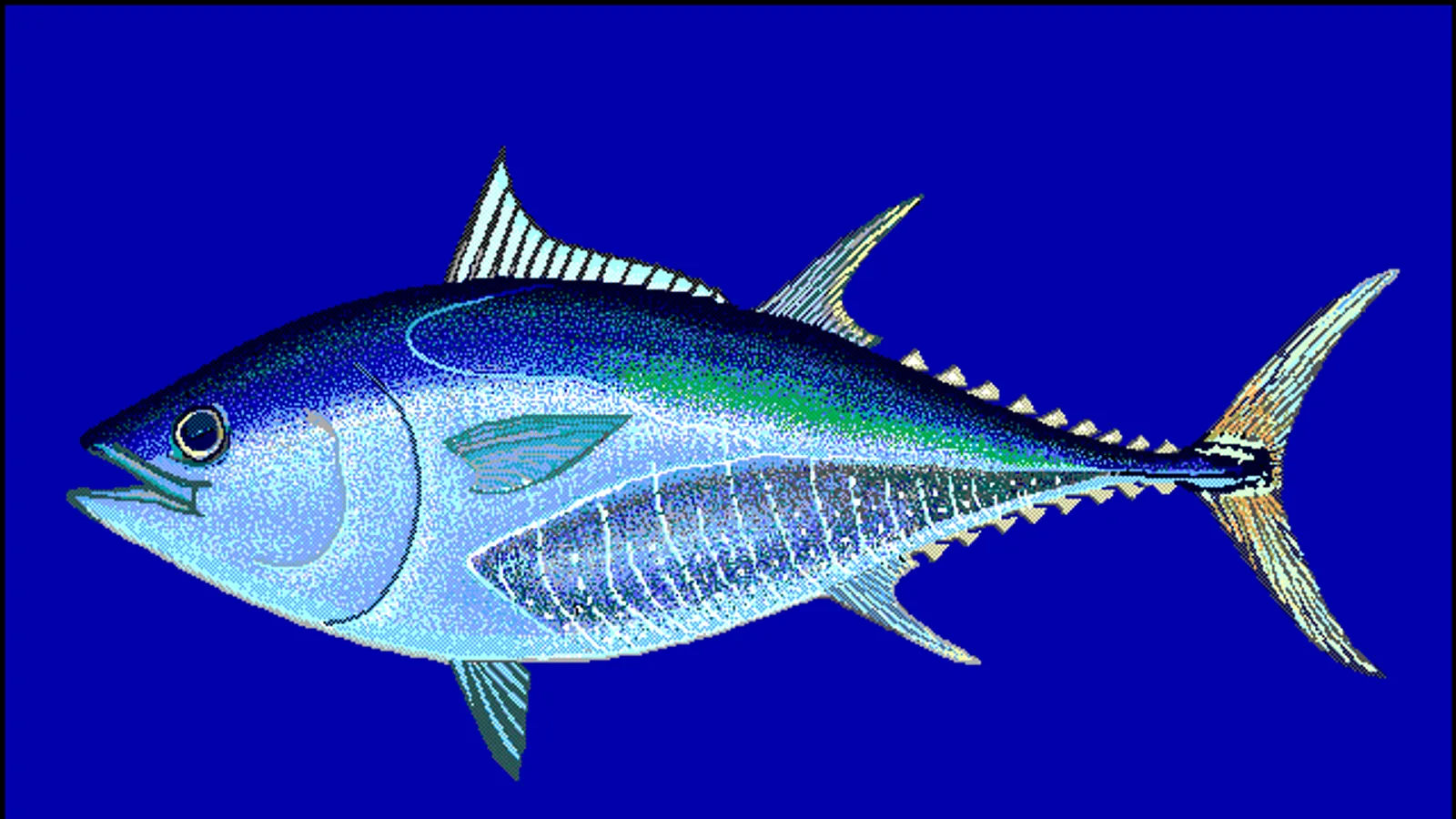
— Where the name comes from
Thunnus is from the Greek thýnnos, perhaps from thýnō, “I dart”, for the fish’s headlong rush. “Tuna” descends from the same Greco-Latin root. It is the giant of the mackerel family, and for millennia the mainstay of Mediterranean fishing, from the Phoenician tuna traps to today.
— Facts
- Group
- Fish · Actinopterygii · Chondrichthyes
- Order
- Mackerels and tunas
- Habitat
- Open sea, from the surface to deep water
- Range
- The North Atlantic and the Mediterranean
- Size
- 2–2.5 m, up to 3 m and over 600 kg
- Diet
- Carnivore — shoaling fish, squid, crustaceans
- Lifespan
- 35–40 years
— Characteristics
- 01
It is warm-blooded: it keeps its body up to 10 °C above the water, pure power.
- 02
It swims without pause all its life: it must move to drive water over its gills.
- 03
It crosses the Atlantic and returns to the Mediterranean to spawn, always in the same places.
— What sets it apart
The bluefin tuna is a perfect swimming machine: the streamlined body folds fins and eyes into grooves to offer no resistance, and a heat-exchange system keeps the muscles warm, giving it the power of an open-sea predator. Driven to the brink by overfishing — a single fish can fetch record sums on the Japanese market — it has returned in recent years to healthier numbers thanks to strict quotas: one of the rare recent successes in fisheries management.
