
Nile tilapia
Oreochromis niloticus
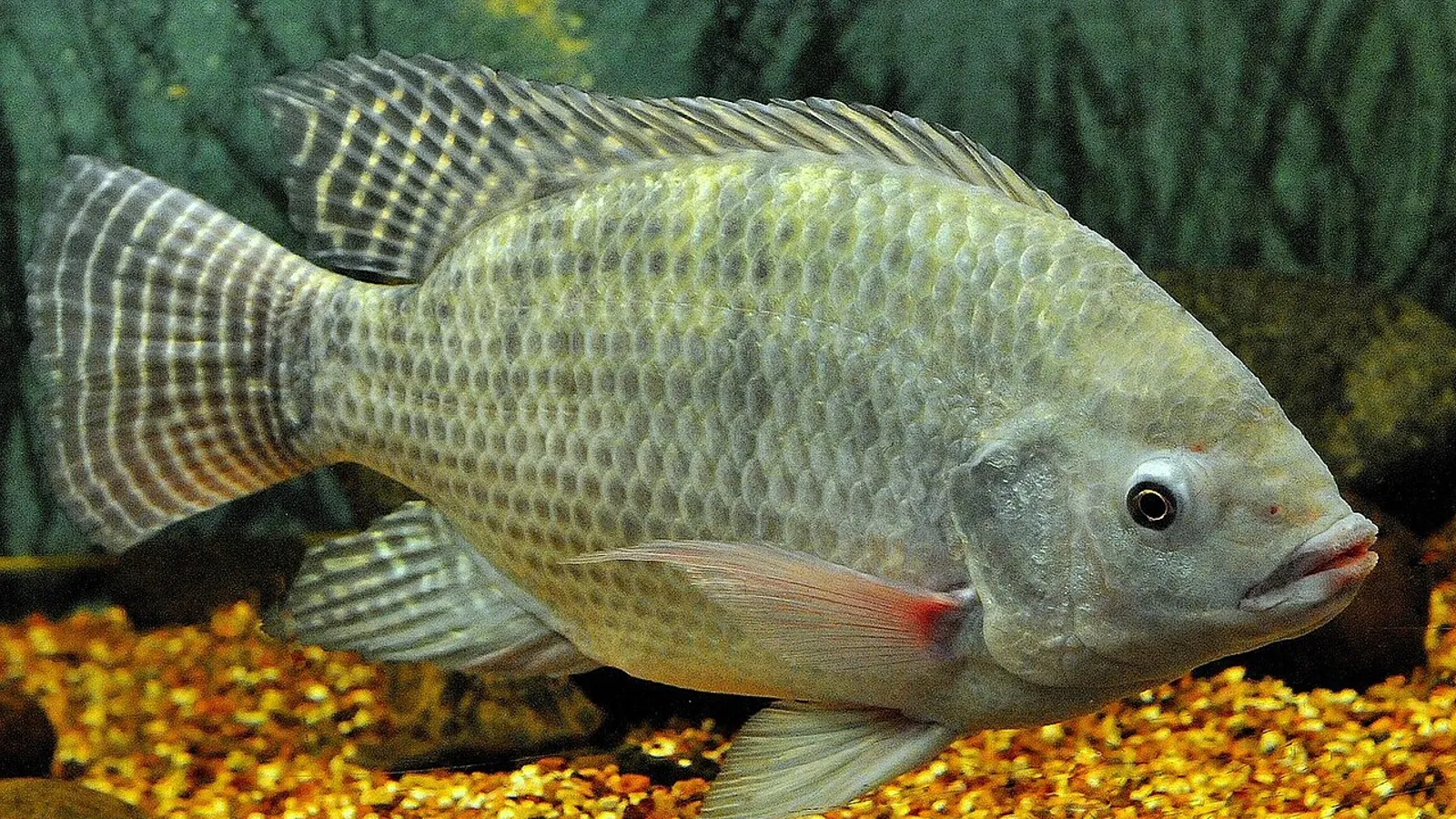
— Where the name comes from
Oreochromis is “mountain chromis”, from óros and chrómis, which in Greek named an unidentified fish; niloticus says the Nile. Tilapia comes instead from the Tswana thiape, “fish”, passed into scientific Latin through colonial naturalists: it is one of the few African words to enter ichthyological nomenclature.
— Facts
- Group
- Fish · Actinopterygii · Chondrichthyes
- Order
- Cichlids
- Habitat
- Rivers, lakes, canals, rice fields, brackish water
- Range
- Africa and the Middle East; introduced throughout the tropics
- Size
- 25–40 cm, up to 60 cm; 0.5–4 kg
- Diet
- Algae, plankton, detritus, plant matter
- Lifespan
- 10 years
— Characteristics
- 01
The female broods the eggs and then the fry inside her mouth.
- 02
It grows fast on algae, that is at the lowest rung of the food chain.
- 03
It tolerates warm, brackish, oxygen-poor water.
— What sets it apart
It is the second most farmed fish on the planet after the carp, and the reason is that it eats algae: producing a kilo of tilapia costs a fraction of what a kilo of salmon costs, since salmon must be fed on other fish. It appears in Egyptian tombs four thousand years ago as a hieroglyph for renewal, because the young emerging from the mother’s mouth looked like a rebirth; and in the Sea of Galilee, where it is very common, it has been called St Peter’s fish for centuries.
