
Greek tortoise
Testudo graeca
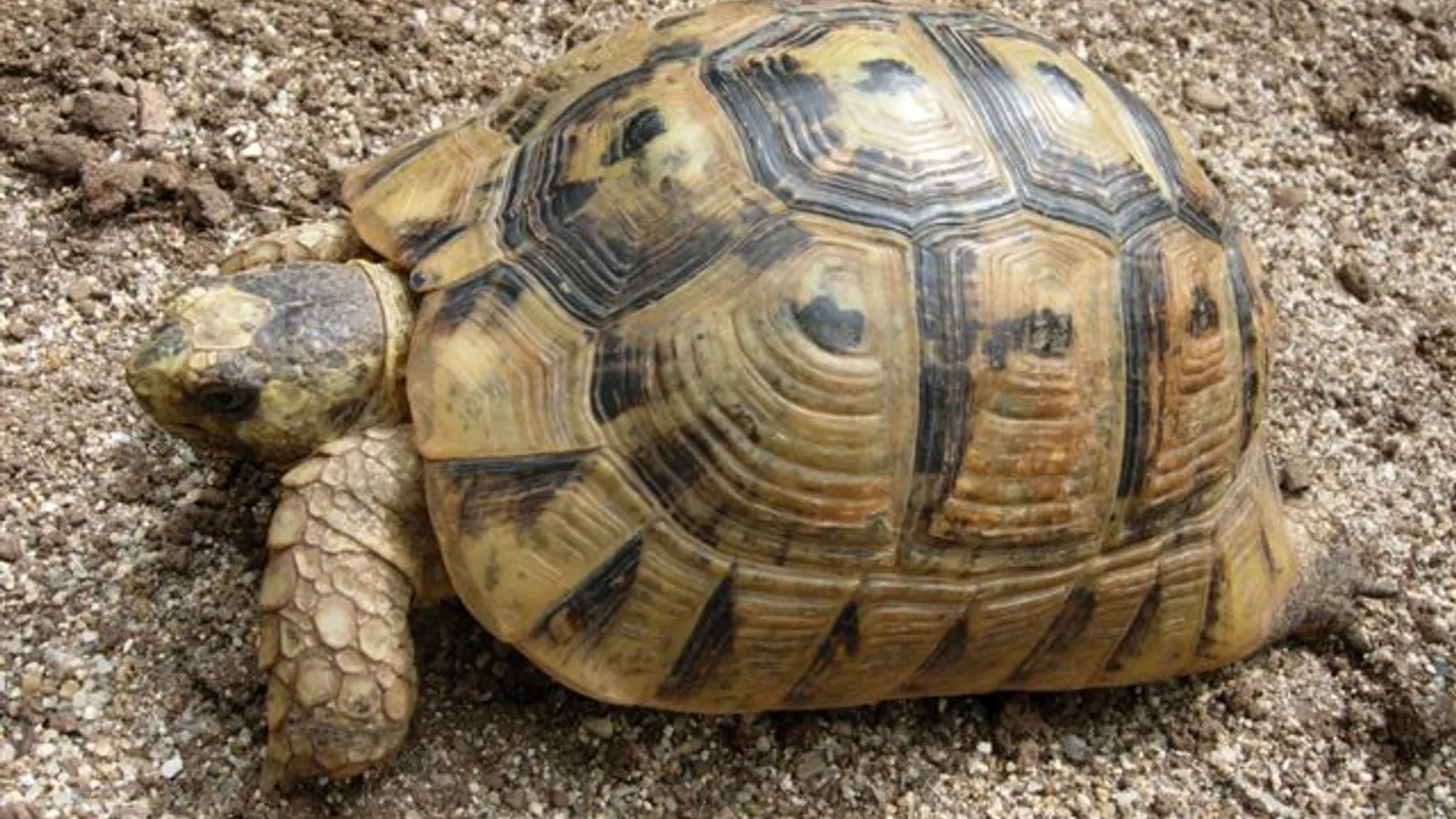
— Where the name comes from
Graeca does not indicate Greece — the species lives from Morocco to Iran and is less common in Greece than its relative — but the pattern of the shell: to Linnaeus the yellow and black tiles recalled Greek mosaics. The Italian common name then cemented the geographical confusion, and to this day many people look for it in Greece because of what it is called.
— Facts
- Group
- Reptiles · Reptilia
- Order
- Turtles and tortoises
- Habitat
- Arid steppe, garrigue, coastal dunes, abandoned farmland
- Range
- North Africa, southern Spain, the Balkans, Turkey, the Caucasus, Iran
- Size
- 18–30 cm of carapace, 1–3.5 kg
- Diet
- Grasses, legumes, flowers, fruit
- Lifespan
- over 100 years
— Characteristics
- 01
It has a horny spur on each thigh, which distinguishes it from its relative.
- 02
It has no horny sheath at the tip of the tail.
- 03
In the hottest areas it aestivates underground instead of hibernating in winter.
— What sets it apart
In the twentieth century it was exported by the million: Britain alone imported as many as two hundred thousand a year from North Africa, sold in shops for a few shillings each. They arrived packed in holds without water, and it is reckoned most died before their first English winter. The trade was closed in 1984, by which time whole Moroccan and Algerian populations had been emptied out: an animal as long-lived as a person, sold as a seasonal toy.
