
Mound-building termite
Macrotermes bellicosus
— Where the name comes from
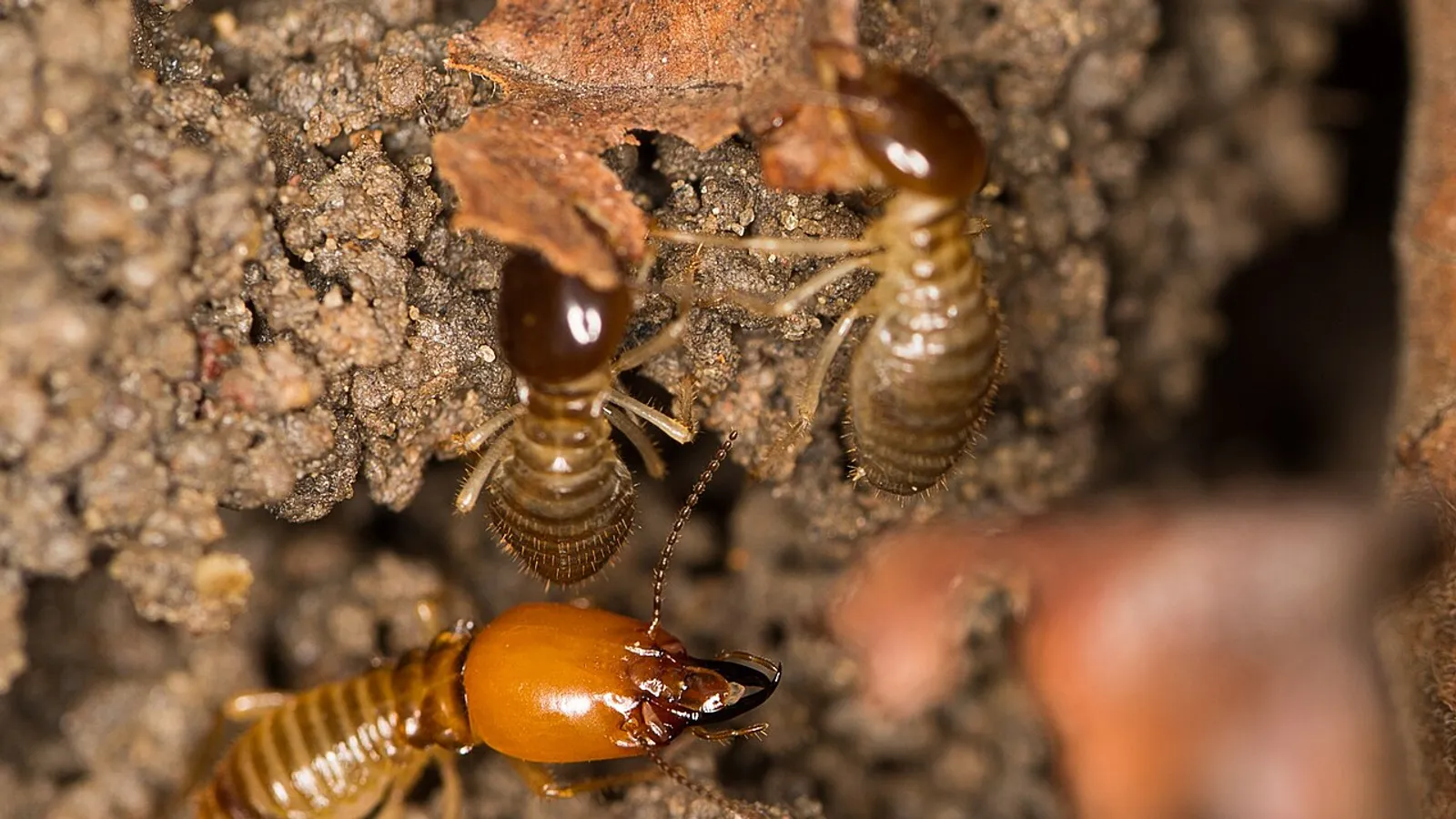
Termes in Latin was the woodworm, the grub that gnaws wood, and comes from the verb terere, to wear away: the same root that gives “detritus” and terebra, the drill. Macro- names the size, bellicosus the aggression of the soldiers, whose mandibles can cut the skin of a finger. The Italian name comes from the shape of the nest, which has spires and buttresses like a Gothic church.
— Facts
- Group
- Insects · Insecta
- Order
- Cockroaches and termites
- Habitat
- Savannah and thicket; nests in towers of kneaded earth
- Range
- Sub-Saharan Africa, from Senegal to East Africa
- Size
- Workers 3–4 mm, the queen up to 10 cm
- Diet
- Cellulose, digested with the help of a fungus farmed in the nest
- Lifespan
- The queen up to twenty years; the colony longer still
— Characteristics
- 01
The mound reaches nine metres and weighs tens of tonnes.
- 02
They are not ants: they are social cockroaches, and DNA has confirmed it.
- 03
The queen lays as many as thirty thousand eggs a day.
— What sets it apart
The termite mound is a machine for breathing. The colony does not digest cellulose itself: in dedicated chambers it farms a fungus that does the job for it, and that fungus produces so much heat that the nest would be unliveable if the air did not circulate. The spires and chimneys work as a lung: the alternation of sun and night drives the warm air upwards and draws it back in cool through the porous walls, and the result is an internal temperature steady around thirty degrees while outside it swings by twenty. Architects have copied it — the Eastgate Centre in Harare is air-conditioned on the same principle and uses a fraction of the energy of a comparable building.
