
Hawksbill sea turtle
Eretmochelys imbricata
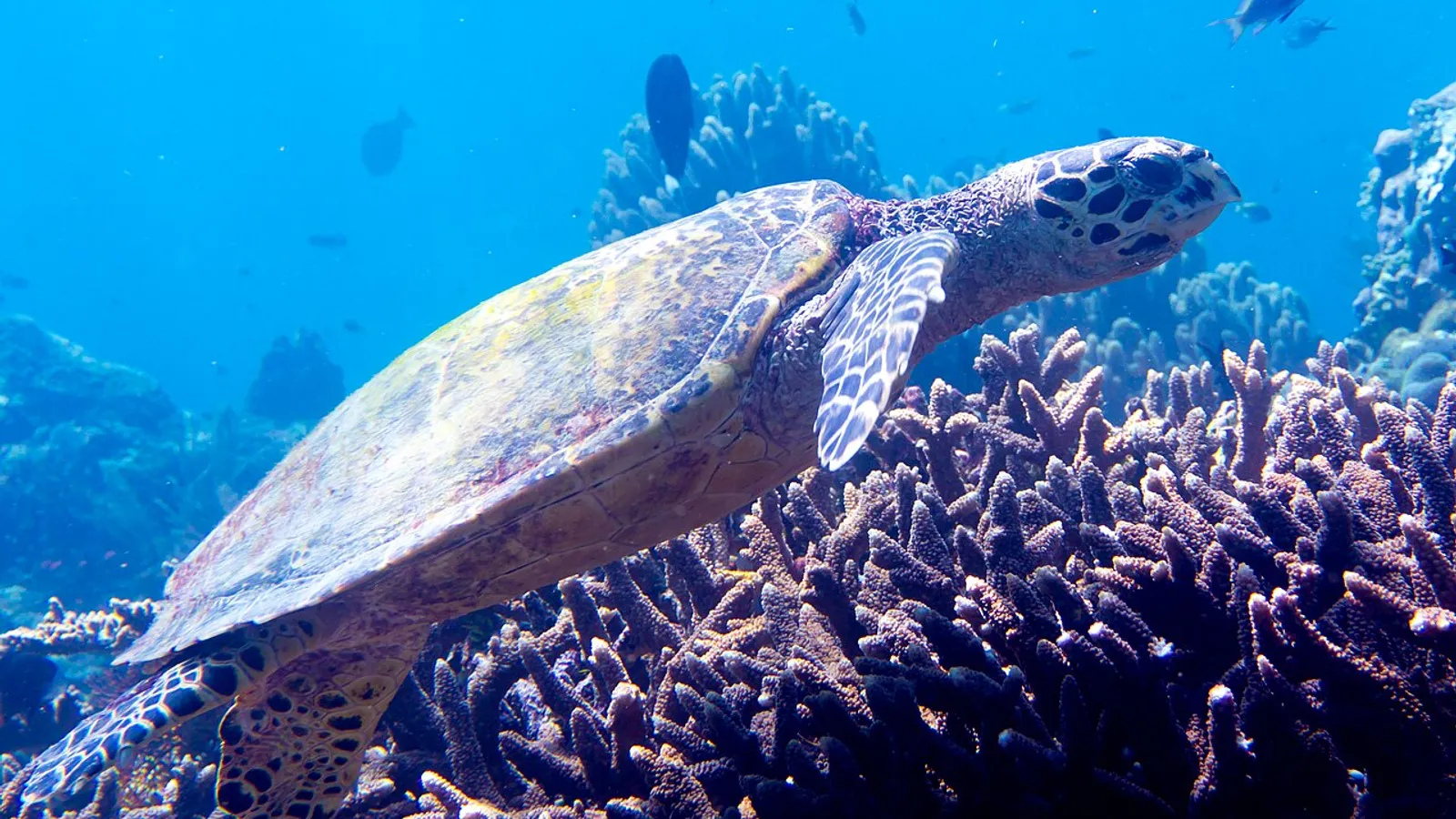
— Where the name comes from
Eretmochelys is “oar turtle”, from eretmón: the forelimbs are paddles. Imbricata comes from imbrex, the roof tile, and describes the scutes of the carapace overlapping one another like tiles — an arrangement unique among sea turtles, and precisely the one that made it precious.
— Facts
- Group
- Reptiles · Reptilia
- Order
- Turtles and tortoises
- Habitat
- Coral reefs, seagrass beds, lagoons
- Range
- Tropical seas worldwide
- Size
- 60–90 cm of carapace, 45–80 kg
- Diet
- Sponges, jellyfish, anemones, molluscs
- Lifespan
- 50 years
— Characteristics
- 01
It eats toxic sponges that almost no other animal can digest.
- 02
The narrow hooked beak lets it rummage in crevices in the coral.
- 03
Its flesh can be poisonous to people because of that diet.
— What sets it apart
Before plastic, there was this. Its shell, heated, softens and can be moulded, glued and polished: combs, spectacles, fans, inlay, boxes, handles — for two thousand years everything we now make in resin was made from this turtle. Japan alone imported the shells of nearly two million animals between 1950 and 1992. The trade has been banned since 1977, the species remains critically endangered, and in houses across half the world there are still objects made out of it.
