
Goliath birdeater
Theraphosa blondi
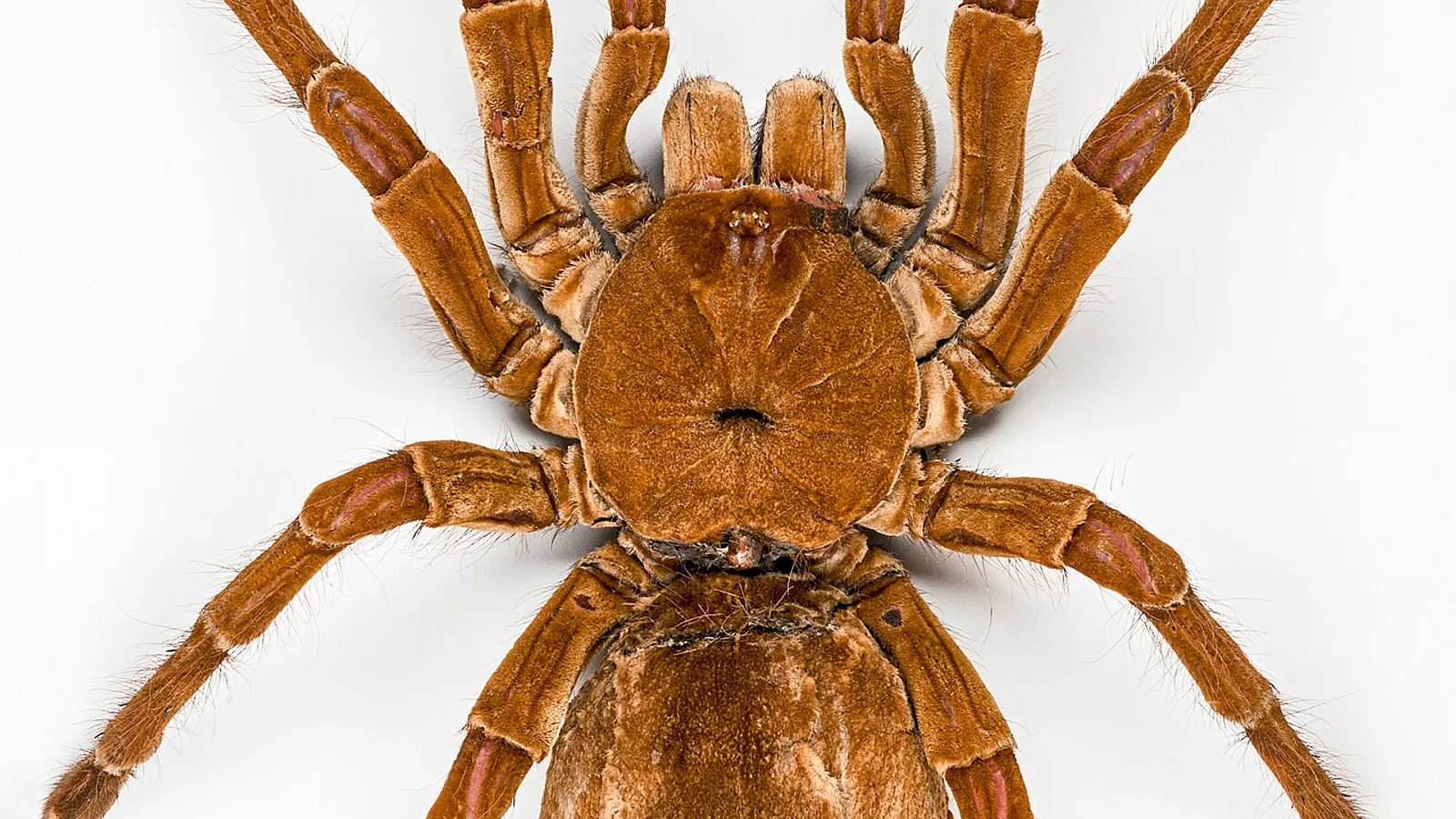
— Where the name comes from
Theraphosa recalls the Greek for “bearer of the wild beast”; blondi honours the naturalist Blond. The common name, Goliath birdeater, comes from an old engraving that showed it devouring a hummingbird. It is the largest and heaviest spider in the world.
— Facts
- Group
- Arachnids · Arachnida
- Order
- Spiders
- Habitat
- Burrows dug into the damp rainforest floor
- Range
- The forests of northern South America: the Guianas, Suriname, Venezuela, Brazil
- Size
- Up to 30 cm across the legs, over 170 g
- Diet
- Carnivore — insects, worms, small vertebrates
- Lifespan
- Females up to 20 years; males far less
— Characteristics
- 01
It is the most massive spider on the planet, with a leg span the size of a hand.
- 02
Despite the name it rarely eats birds: it hunts mostly insects and worms.
- 03
It defends itself by flicking urticating hairs from its abdomen, which irritate the attacker’s eyes and skin.
— What sets it apart
The Goliath birdeater defends itself without biting: threatened, it rubs its hind legs against its abdomen and releases a cloud of microscopic barbed hairs that lodge in an attacker’s skin and mucous membranes, causing itching and burning for days. If that is not enough, it rubs its legs together to produce a hiss audible metres away. The bite, impressive as it looks, carries weak venom: its real weapons are irritation and noise, not poison.
