
Bull shark
Carcharhinus leucas
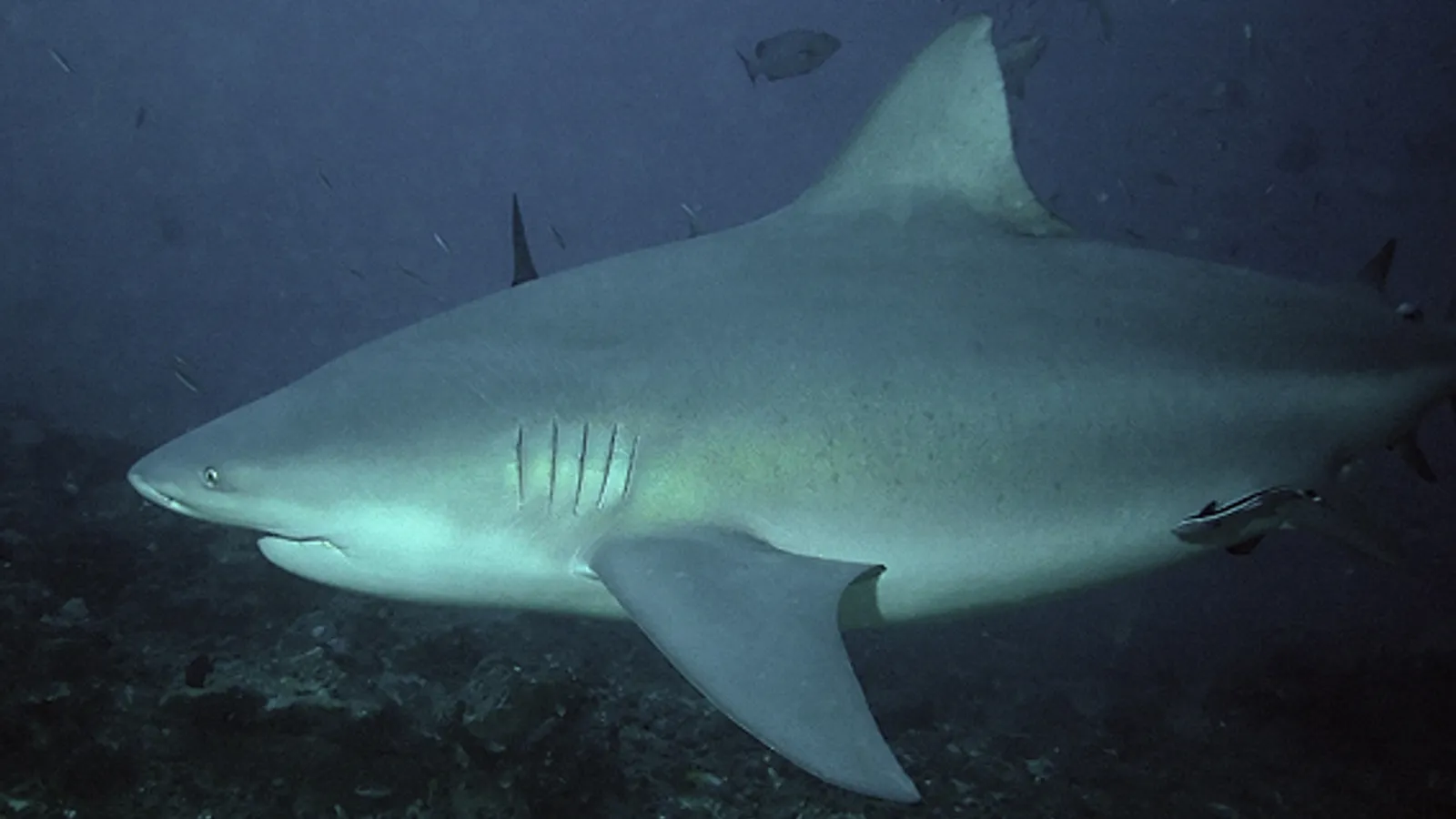
— Where the name comes from
Carcharhinus joins kárcharos, sharp, to rhínē, the rasp: it is the genus of the requiem sharks. Leucas comes from leukós, white, for the belly. In English it is the bull shark, which in Italian names another species entirely: it is one of the commonest confusions for anyone reading about sharks in two languages.
— Facts
- Group
- Fish · Actinopterygii · Chondrichthyes
- Order
- Ground sharks
- Habitat
- Turbid coasts, estuaries, rivers, lakes connected to the sea
- Range
- Tropical and subtropical seas worldwide
- Size
- 2.2–3.5 m, 130–300 kg
- Diet
- Fish, rays, turtles, other sharks, birds, carrion
- Lifespan
- 30 years
— Characteristics
- 01
It runs up rivers for thousands of kilometres.
- 02
It tolerates fresh water better than any other large shark.
- 03
It frequents shallow, turbid water where visibility is a few centimetres.
— What sets it apart
It has been caught in the Mississippi as far up as Illinois, in the Amazon three thousand six hundred kilometres from the sea, and in Lake Nicaragua, where for decades a separate freshwater species was believed to live. It manages it with kidneys and a rectal gland that regulate how much salt to keep, and the consequence is that it is the one large shark you can meet in a river: a good share of the attacks attributed to other species, in murky water near shore, are probably its.
