
Corn snake
Pantherophis guttatus
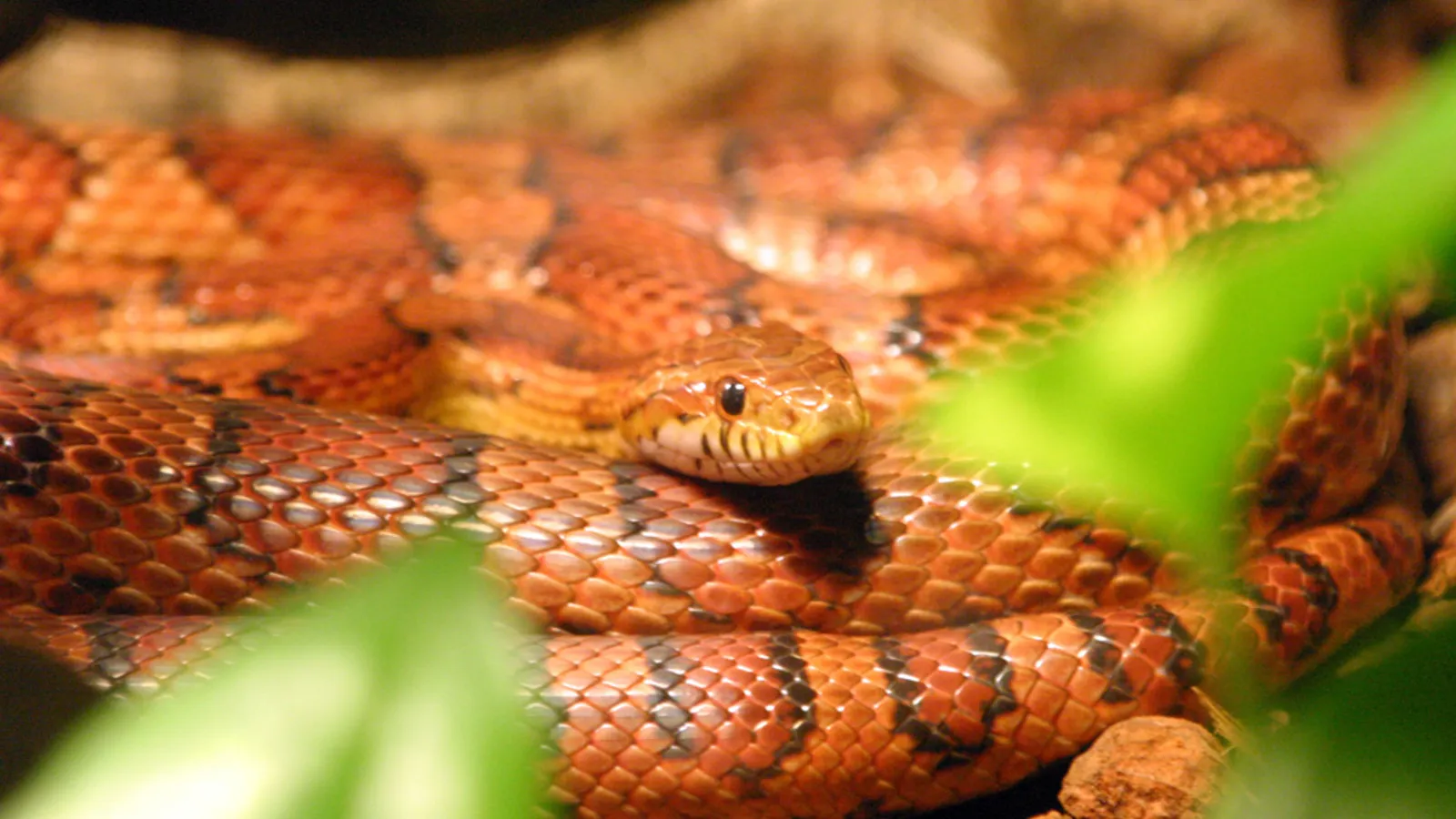
— Where the name comes from
Pantherophis is “panther snake”, for the blotches of the back; guttatus means “droplet-marked”. The English name, corn snake, has two explanations and both hold: the black-and-white chequered belly resembles Indian corn, and the snake frequented the cribs where it found mice. Either way, corn comes into it.
— Facts
- Group
- Reptiles · Reptilia
- Order
- Squamates
- Habitat
- Fields, open woodland, barns, granaries, abandoned houses
- Range
- The south-eastern United States
- Size
- 90–120 cm, up to 180 cm; 250–900 g
- Diet
- Mice, rats, lizards, birds, eggs
- Lifespan
- 15 years, over 20 in captivity
— Characteristics
- 01
It is not venomous: it kills by coiling around its prey.
- 02
It vibrates its tail in dry leaves, imitating the sound of a rattlesnake.
- 03
It climbs well and frequents lofts.
— What sets it apart
It is the most widely kept snake in the world, and the reason is that it behaves itself. Mild, robust, of manageable size and willing to eat frozen mice without fuss, since the 1970s it has been the reptile most people start with; over eight hundred colour varieties have been selected since, from pure white to fluorescent orange, none of which exists in the wild. In the fields of Florida, meanwhile, it goes on doing what it always did: keeping the mice down in the barns.
