
Brown tree snake
Boiga irregularis
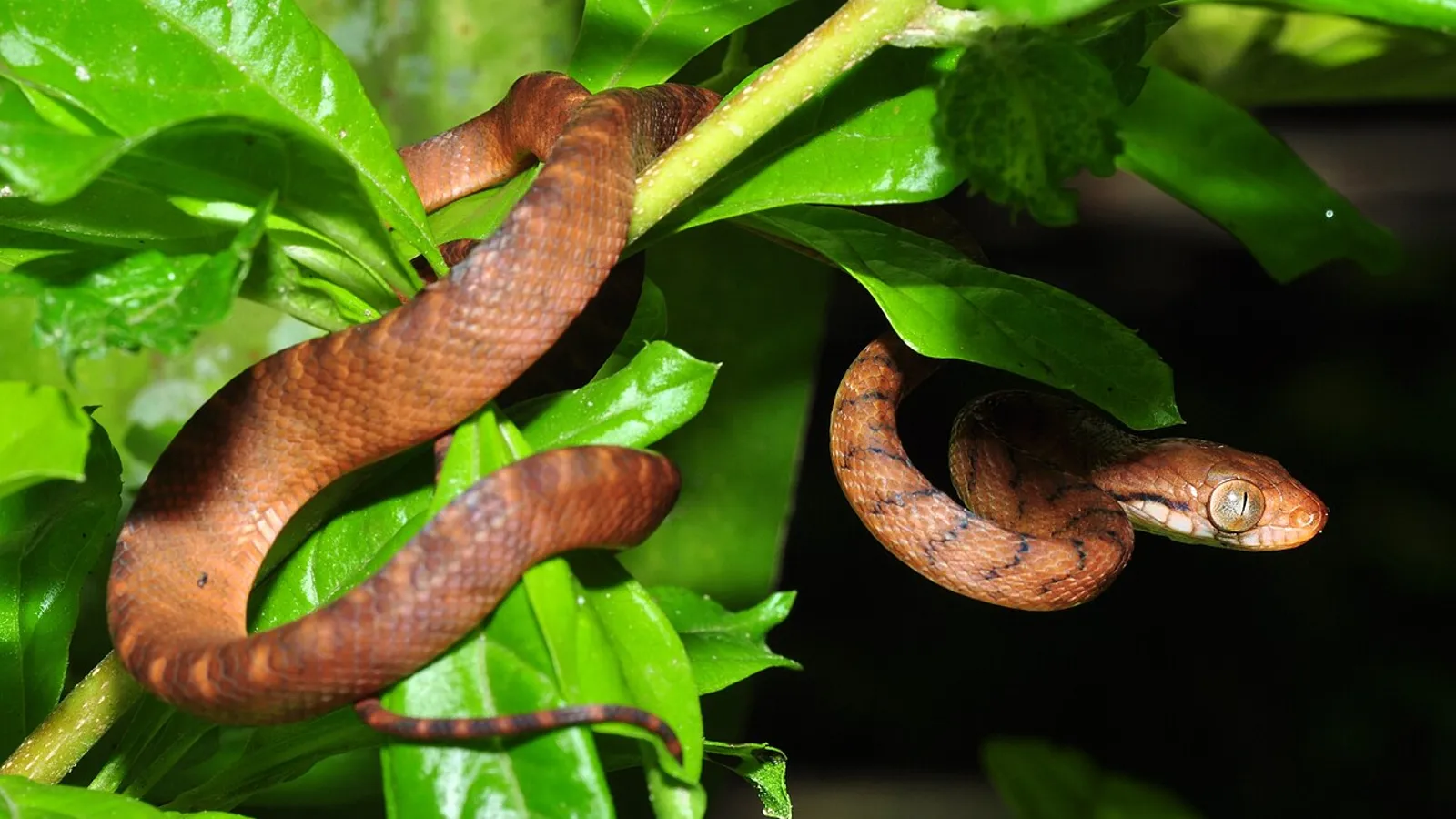
— Where the name comes from
Boiga is the Latinisation of an Indian vernacular name for these snakes; irregularis refers to the dark bands of the back, laid down without any order. It is an animal nobody notices in its native range, and which elsewhere became the most famous case of biological invasion of the twentieth century.
— Facts
- Group
- Reptiles · Reptilia
- Order
- Squamates
- Habitat
- Forest, scrub, gardens, buildings
- Range
- Northern Australia, New Guinea, the Solomons; introduced to Guam
- Size
- 150–200 cm, up to 300 cm; 300–600 g
- Diet
- Birds, eggs, lizards, bats, rodents
- Lifespan
- 12 years
— Characteristics
- 01
It has rear fangs and a weak venom, harmless to people.
- 02
It is nocturnal and spends the day coiled in tree cavities.
- 03
It climbs power cables and vertical pipes with ease.
— What sets it apart
It reached Guam in military holds after the Second World War, on an island where no snake had ever existed. Within forty years it wiped out ten of the island’s twelve forest bird species, some of which existed nowhere else on Earth; without birds the spiders multiplied forty-fold and the trees stopped being pollinated. The snakes also climb pylons, causing repeated blackouts, and to contain them dead mice stuffed with paracetamol — lethal to them — are dropped from helicopters.
