
Atlantic salmon
Salmo salar
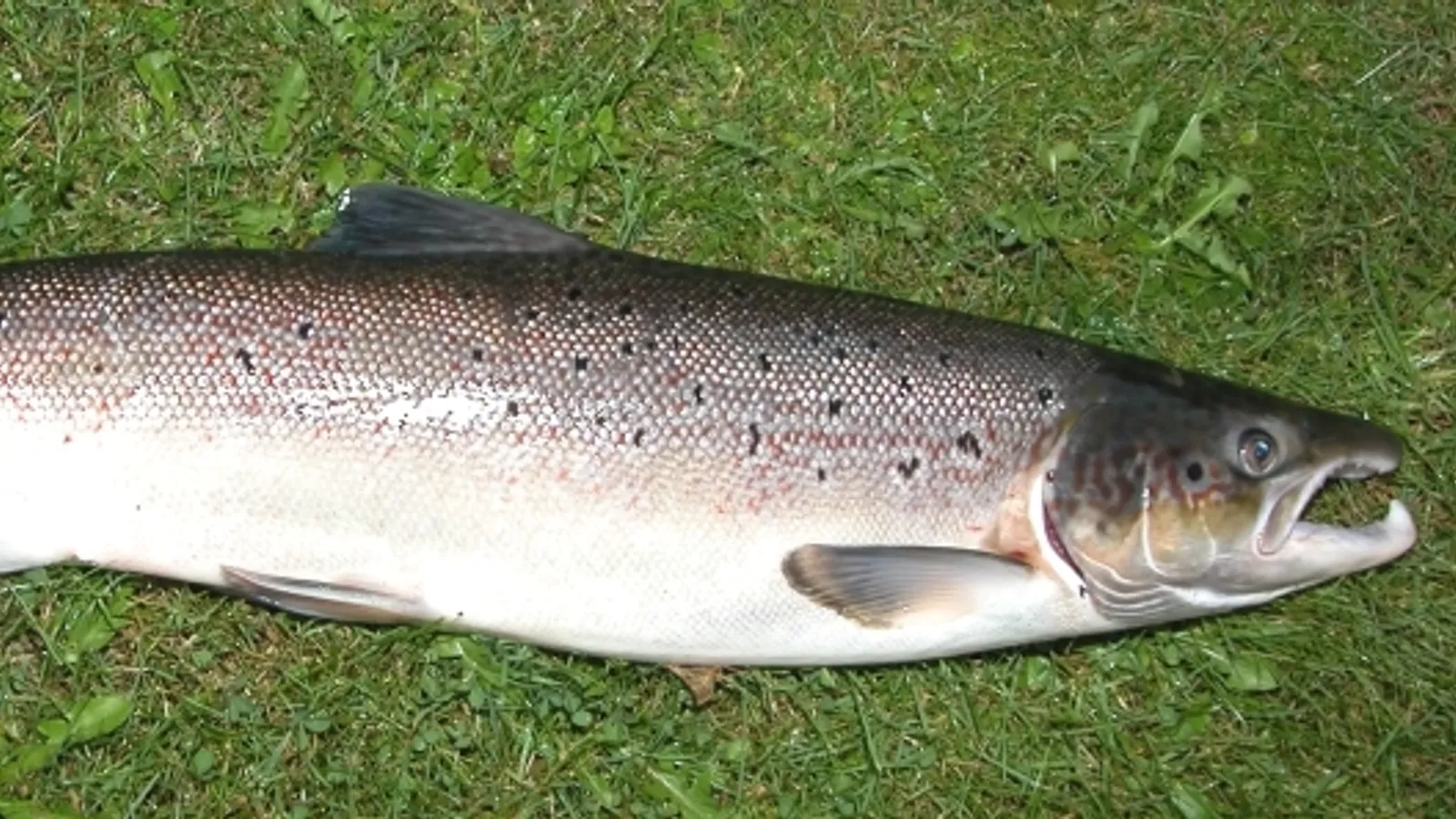
— Where the name comes from
Salmo probably derives from the Latin salire, “to leap”: the fish that climbs the waterfalls. Salar, in the Latin of Ausonius, was already the name of the salmon. The name holds the image of the leap against the current.
— Facts
- Group
- Fish · Actinopterygii · Chondrichthyes
- Order
- Salmonids
- Habitat
- Born and dies in the river, lives at sea
- Range
- The North Atlantic and its tributary rivers
- Size
- 70–150 cm, up to 40 kg
- Diet
- Carnivore — at sea, fish and crustaceans
- Lifespan
- 4–6 years
— Characteristics
- 01
Anadromous: it moves from fresh water to salt and back again.
- 02
Remodels gills and kidneys to cope with the change in salinity.
- 03
Climbs fierce currents with leaps of over 3 m.
— What sets it apart
The salmon finds its native river by smell: as a young fish it memorised the chemical signature of the water and follows it for hundreds of kilometres upstream. Then it climbs, spawns and in most cases dies. The bodies decomposing upriver release ocean nitrogen and phosphorus into the forest: marine nitrogen can be measured in the growth rings of the trees along the banks. The salmon carries the ocean into the mountains, and pays for it with its life.
