
Barn swallow
Hirundo rustica
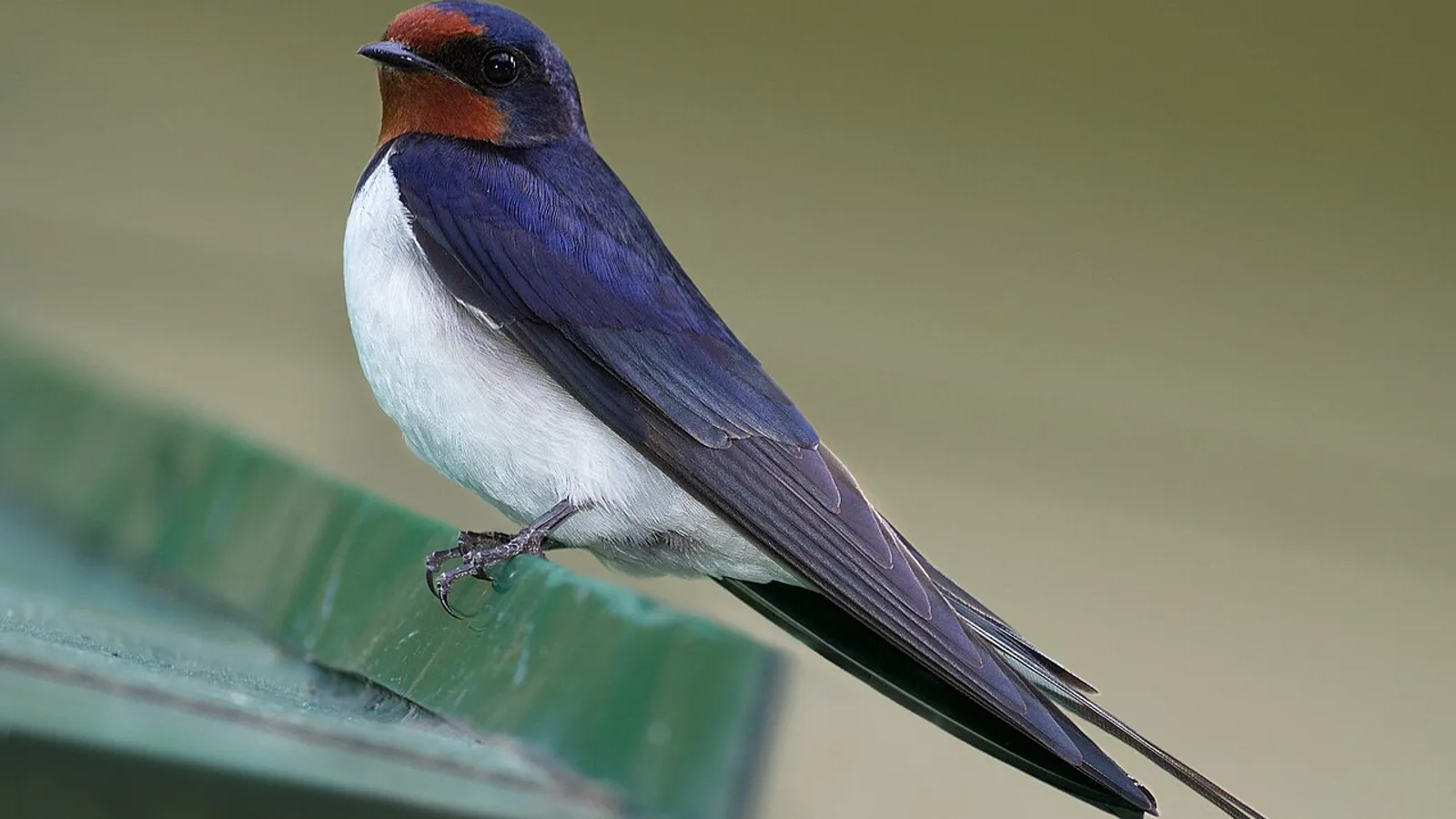
— Where the name comes from
Hirundo is the Latin name of the swallow; rustica, “of the countryside”, from the barns and stables where it nests. The Italian rondine derives from that same hirundo through the diminutive hirundinem. Its arrival has always been the announcement of spring across the northern hemisphere.
— Facts
- Group
- Birds · Aves
- Order
- Passerines
- Habitat
- Open farmland, farms, stables, under eaves and bridges
- Range
- The northern hemisphere; winters in Africa, South America and southern Asia
- Size
- 17–19 cm, wingspan 32–35 cm
- Diet
- Insectivore — insects caught exclusively on the wing
- Lifespan
- 4–8 years
— Characteristics
- 01
The forked tail, with its two elongated outer feathers, makes it unmistakable in flight.
- 02
It builds a cup nest from hundreds of pellets of mud worked with saliva.
- 03
It drinks and bathes by skimming the water in flight, never landing.
— What sets it apart
The swallow spends almost its whole life in the air: it eats, drinks and mates in flight, and every year covers up to ten thousand kilometres between Europe and southern Africa, often returning to the very same nest as the year before. Females, it turns out, choose the males with the longest and most symmetrical tail: that fork is not only for flying better, it is also a courtship ornament. The swallow’s tail is at once a rudder and a declaration of love.
