
Giant white-tailed rat
Uromys caudimaculatus
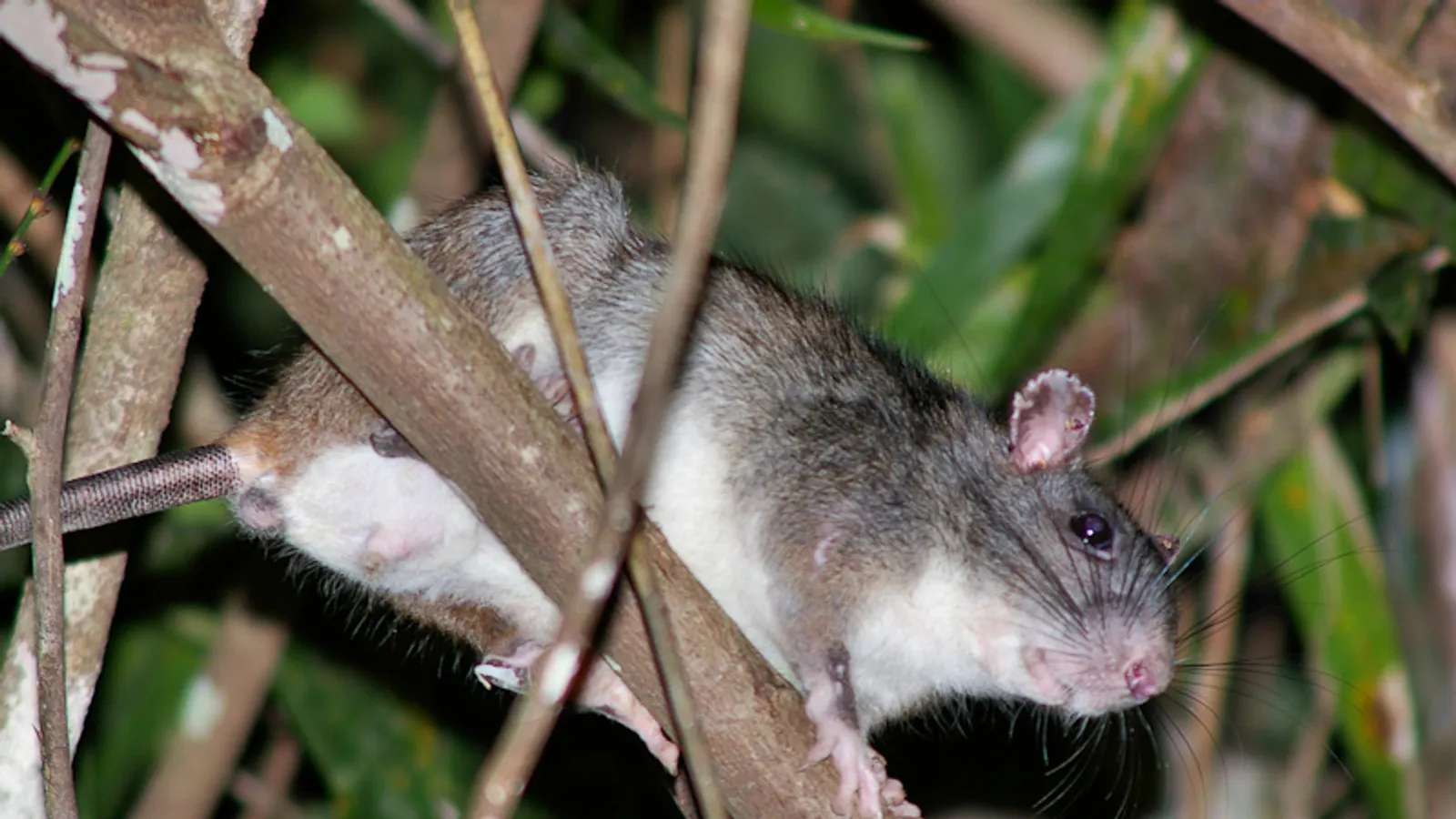
— Where the name comes from
Uromys is “tailed mouse”, from ourá and mŷs, because the tail is its distinguishing feature: bare, and covered in scales that do not overlap like tiles but sit side by side like tesserae, whence caudimaculatus, “spotted-tailed”, and the Italian name that speaks of mosaic. The last third is pure white.
— Facts
- Group
- Mammals · Mammalia
- Order
- Rodents
- Habitat
- Tropical rainforest, mangroves, plantations
- Range
- Northern Queensland, New Guinea, nearby islands
- Size
- 25–35 cm of body, tail as long again, 500–900 g
- Diet
- Nuts, fruit, insects, eggs, small vertebrates
- Lifespan
- 5 years
— Characteristics
- 01
It bites open the hardest nuts of the Australian forest.
- 02
It lives in trees and nests in cavities several metres up.
- 03
Its prehensile tail steadies it while it gathers fruit on thin branches.
— What sets it apart
It is the only animal able to open the seed of the Queensland nut, and for that reason the plant depends on it. The rat carries the fruits away, eats some and buries others far from the parent tree; the forgotten nuts germinate. In forest fragments where the rat has gone, the regeneration of those plants stops almost entirely: a relationship between a rodent and a tree welded over millions of years, broken in one generation.
