
Greater bandicoot rat
Bandicota indica
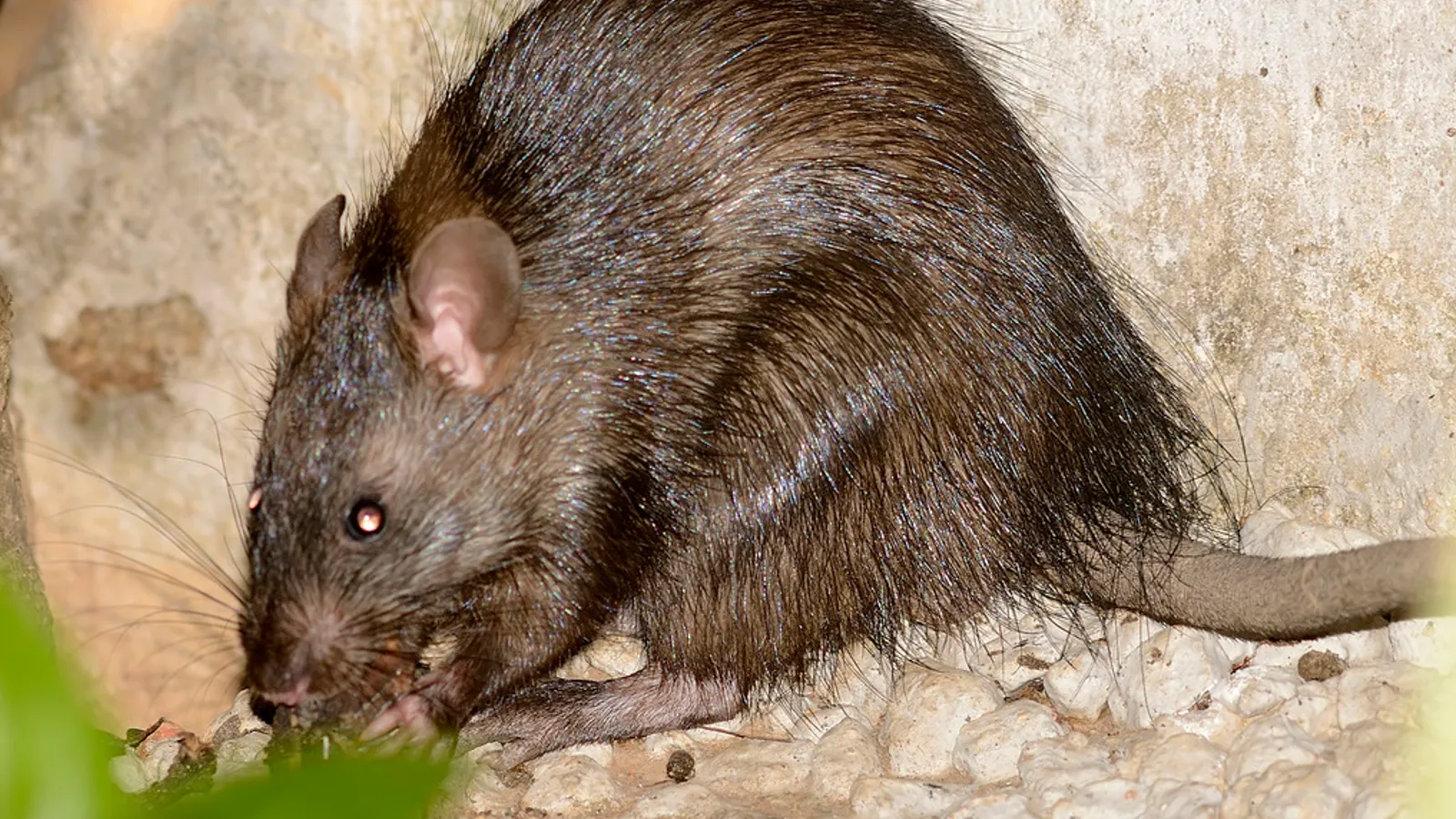
— Where the name comes from
Bandicota comes from the Telugu pandi-kokku, “pig-rat”, for its bulk and for the grunt it gives when annoyed. The English in India transcribed it as bandicoot, and when they reached Australia they gave the same name to certain marsupials that had nothing to do with it: since then “bandicoot” has named two entirely unrelated groups of animals, and this rodent is the one that had the name first.
— Facts
- Group
- Mammals · Mammalia
- Order
- Rodents
- Habitat
- Rice fields, irrigated land, embankments, warehouses, cities
- Range
- From India to South-East Asia and Taiwan
- Size
- 19–33 cm of body, tail nearly as long, 500–1,000 g
- Diet
- Rice, grain, roots, crabs, insects
- Lifespan
- 2 years
— Characteristics
- 01
It digs deep burrows into paddy embankments, weakening them.
- 02
When threatened it raises its hair, grunts and leaps forward.
- 03
In some regions of India and South-East Asia it is eaten regularly.
— What sets it apart
In Asian rice fields the damage it does is measured in percentage points of the national harvest, and the most effective countermeasures are not poisons but timing: if all the farmers of an area transplant their rice in the same week, the peak of available food lasts too short a time for the rat population to explode. This is ecologically based rodent management, developed in Vietnam and the Philippines, and it works better than rodenticides because it acts on reproduction rather than on mortality.
