
Wasp spider
Argiope bruennichi
— Where the name comes from
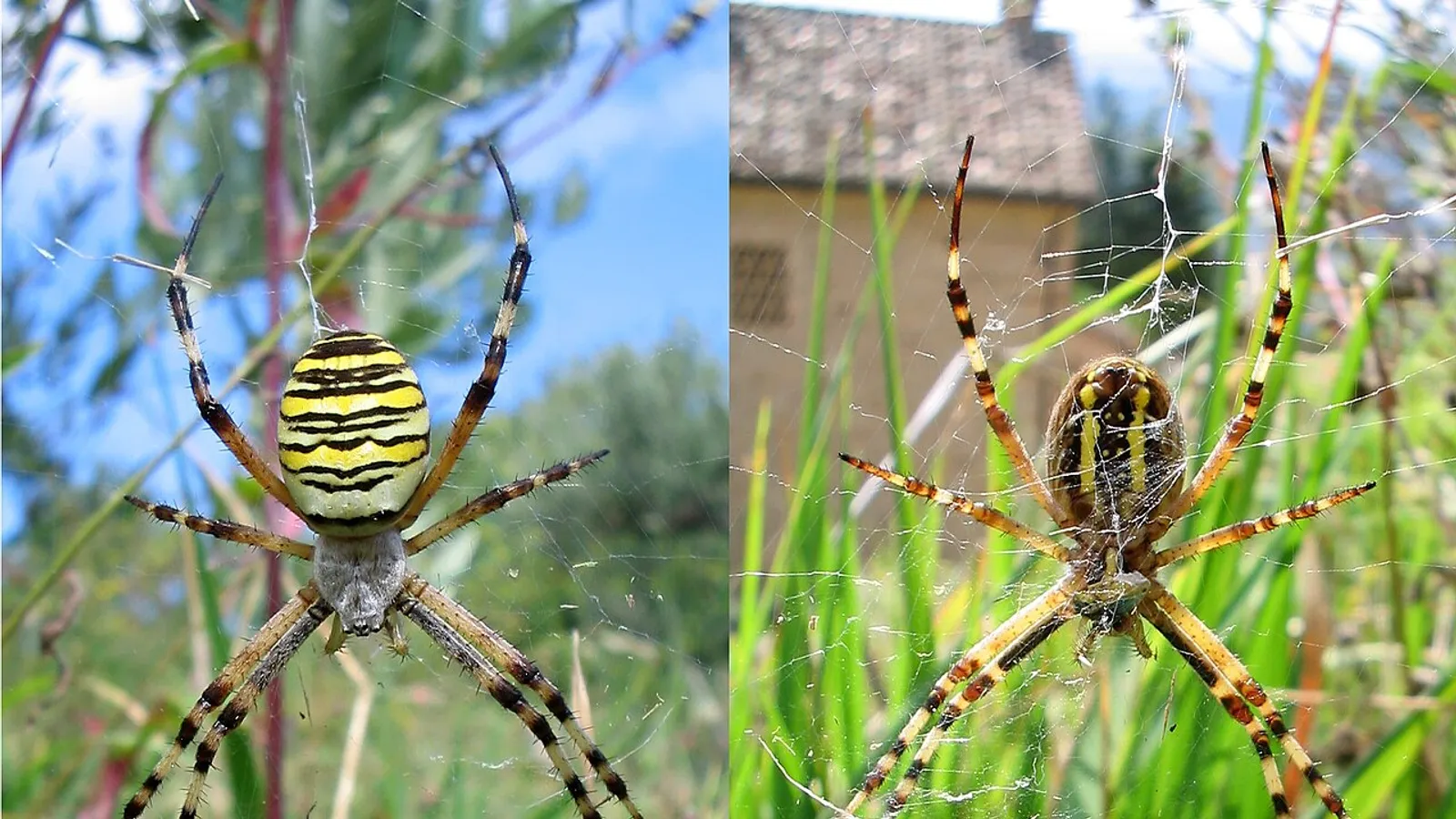
Argiope is Greek, “bright-faced”, from argós, shining, and ṓps, eye or face; bruennichi honours the Danish naturalist Morten Brünnich. The common name comes from the female’s yellow and black bands, which mimic a wasp. It is one of the most striking and recognisable spiders in Europe.
— Facts
- Group
- Arachnids · Arachnida
- Order
- Spiders
- Habitat
- Tall grass, waste ground, sunny meadows
- Range
- Europe, North Africa, Asia; spreading northwards
- Size
- 1.5 cm for the female, under half a centimetre for the male
- Diet
- Carnivore — grasshoppers, crickets and other insects
- Lifespan
- One season
— Characteristics
- 01
The yellow and black bands fake the livery of a wasp to put predators off.
- 02
It weaves a conspicuous zigzag of silk into the web, the stabilimentum, whose function is debated.
- 03
The female is enormous next to the male, who risks his life to mate.
— What sets it apart
The wasp spider signs its web with a whitish zigzag of silk, the stabilimentum, whose purpose is still argued over: perhaps it reflects ultraviolet and attracts insects, perhaps it makes the web visible to birds so they do not blunder through it. The tiny male plays a lethal game: he mates while the female is still soft after moulting, the one moment she cannot eat him, and often deliberately snaps off his own organ inside her, as a plug that stops other males from following — the last act of his short life.
