
Spring peeper
Pseudacris crucifer
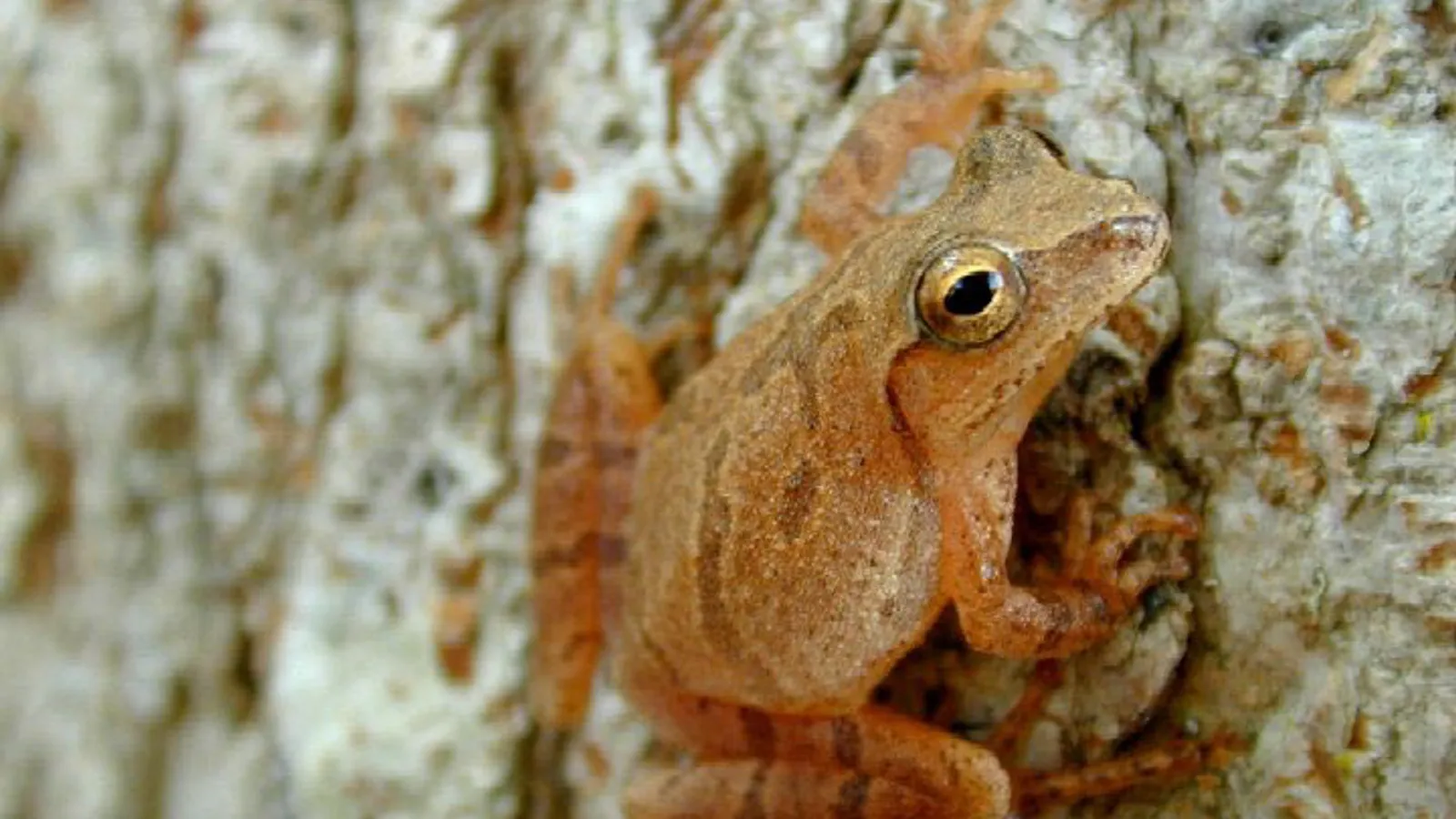
— Where the name comes from
Pseudacris is “false locust”, from pseudḗs and akrís: the chorus of these animals was taken by the first settlers for an insect. Crucifer, “cross-bearer”, refers to the dark X on its back. The English name, spring peeper, looks at the call — a high piping repeated about once a second.
— Facts
- Group
- Amphibians · Amphibia
- Order
- Frogs and toads
- Habitat
- Damp woodland, temporary pools, ponds with shrubs
- Range
- Eastern North America, from Canada to Florida
- Size
- 2–3.5 cm, 3–5 g
- Diet
- Ants, spiders, midges, mites
- Lifespan
- 3 years
— Characteristics
- 01
It weighs about as much as a paper clip and can be heard a kilometre off.
- 02
It survives partial freezing, like the wood frog.
- 03
It starts calling in late winter, often with snow still at the pond edge.
— What sets it apart
A chorus of these animals around a pond reaches sound levels comparable to a chainsaw a few metres away, and anyone standing in the middle struggles to be heard. The male produces that piping by contracting the muscles of his vocal sac as many as ten thousand times in an evening, an enormous effort for a four-gram animal: whoever calls loudest and longest is in the best condition, and the females choose on that. In North America, the first peeper heard is the popular definition of the start of spring.
