
European tree frog
Hyla arborea
— Where the name comes from
Hyla is from the Greek hýlē, the wood: the frog of the trees. Arborea, Latin, “tree-dwelling”, says it again. The Italian raganella is a diminutive of rana, but also names the wooden rattle that imitates its call: the animal’s name passed to the object that reproduces its voice.
— Facts
- Group
- Amphibians · Amphibia
- Order
- Frogs and toads
- Habitat
- Bushes, reedbeds and trees beside ponds and marshes
- Range
- Central and southern Europe
- Size
- 3–5 cm
- Diet
- Insectivore — flies, spiders, beetles
- Lifespan
- 5–10 years
— Characteristics
- 01
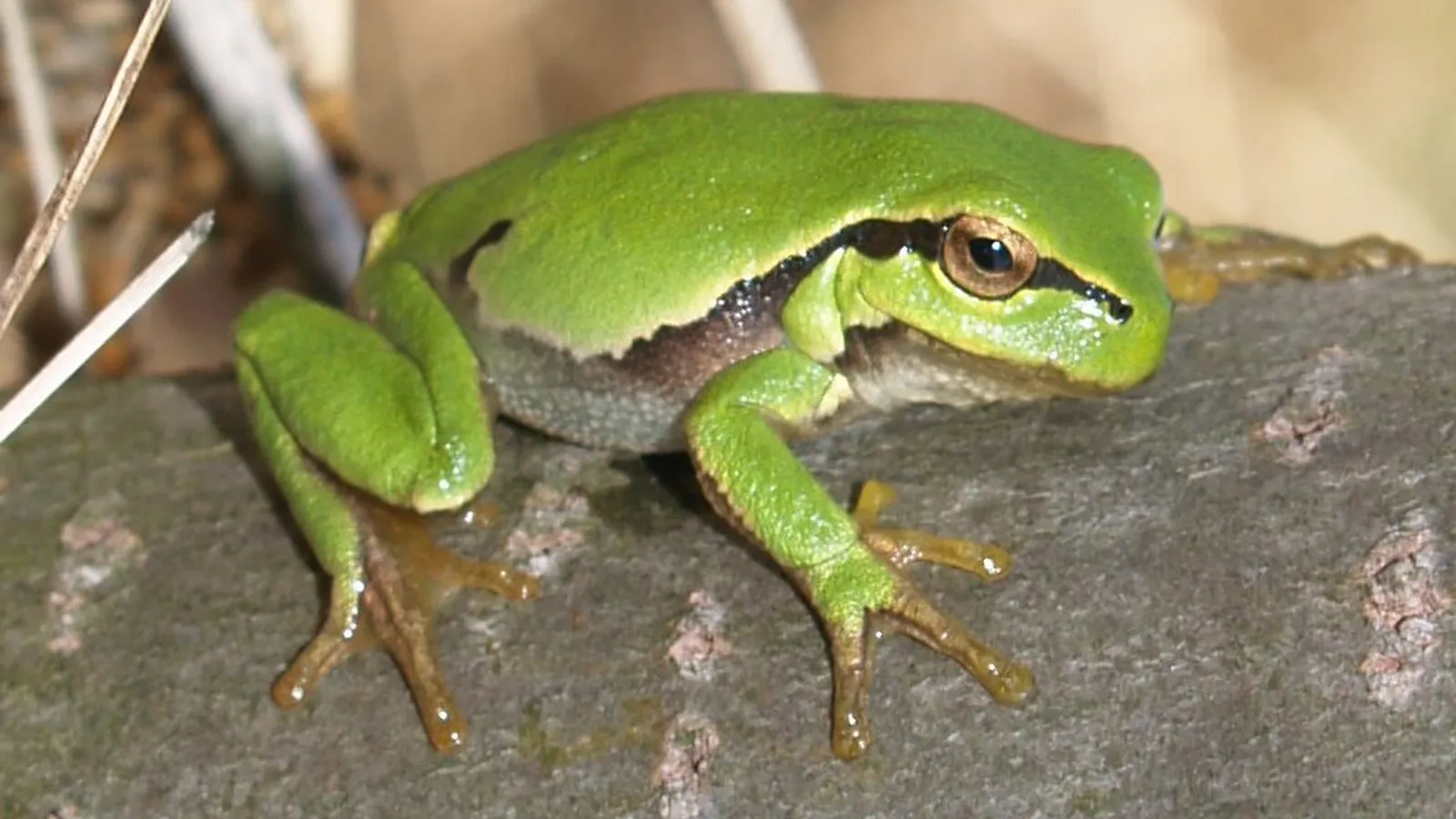
Adhesive discs on the toes let it climb leaves and stems.
- 02
It shifts in shade from bright green to brown according to temperature and mood.
- 03
The male inflates a single vocal sac under the throat: the chorus carries for hundreds of metres.
— What sets it apart
The tree frog is tiny, but its song is out of all proportion: the male inflates under his throat a vocal sac the size of his head, which works as a sounding box, and on spring evenings dozens of them form deafening choruses audible far off. That croaking gave its name to the wooden rattle which, in old Easter rites, replaced the silenced bells: the raganella. The object bears the name of the animal whose voice it imitates.
