
Resplendent quetzal
Pharomachrus mocinno
— Where the name comes from
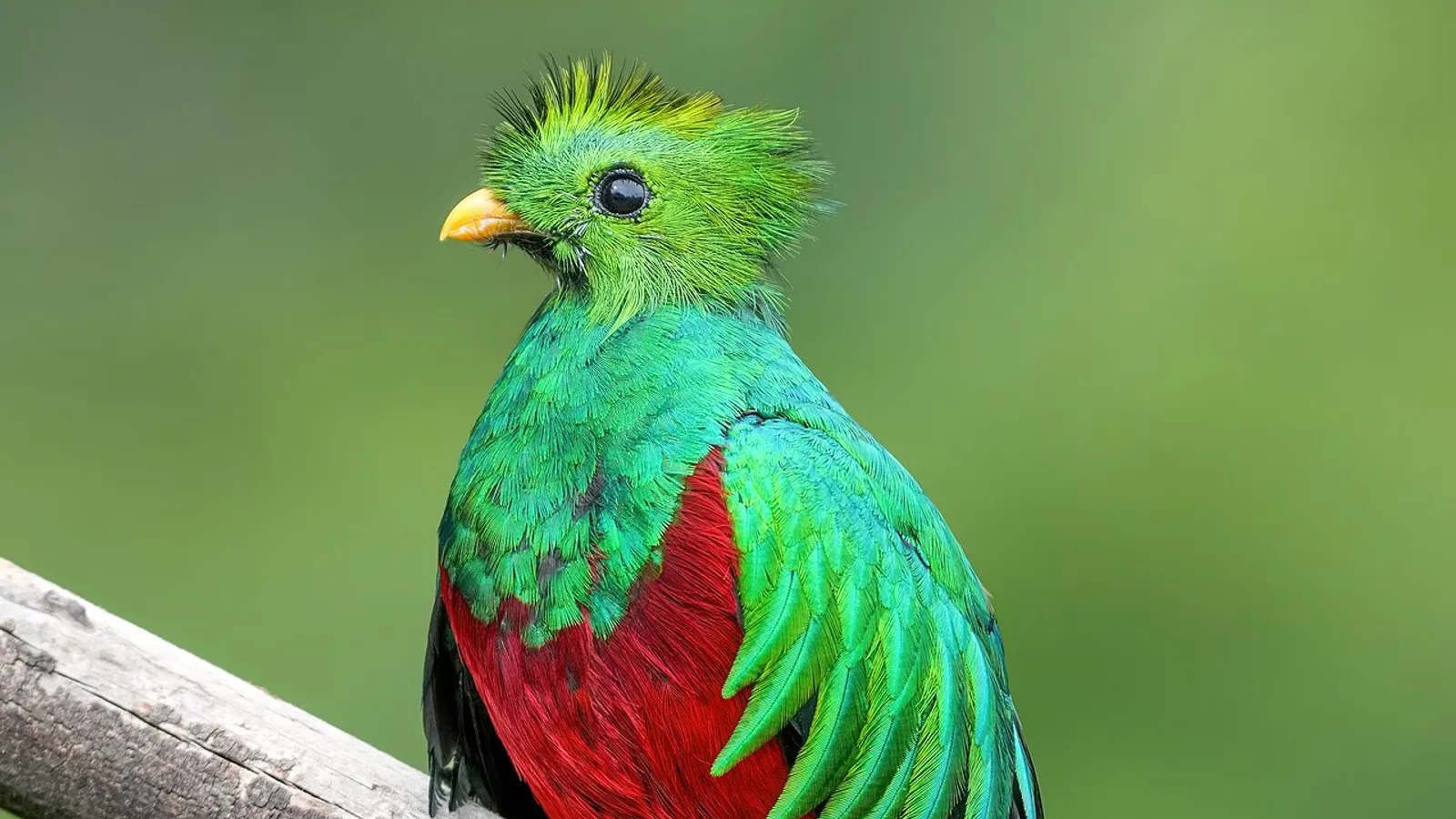
Pharomachrus is “long-cloaked”, from pháros, the mantle, and makrós: the green feathers of the male’s rump exceed a metre and fall behind him like a train. Mocinno recalls the Mexican naturalist José Mariano Mociño. Quetzal comes from the Nahuatl quetzalli, which means both “tail feather” and “precious thing”: in the language of the Aztecs the two ideas were one.
— Facts
- Group
- Birds · Aves
- Order
- Trogons and quetzals
- Habitat
- Montane cloud forest between 1,200 and 3,000 metres
- Range
- From southern Mexico to Panama
- Size
- 36–40 cm, plus a metre of tail feathers in the male, 180–210 g
- Diet
- Laurel fruit, insects, lizards, frogs
- Lifespan
- 10 years in the wild
— Characteristics
- 01
It nests in rotten trunks, enlarging old woodpecker holes.
- 02
The pair incubates in turn: the male leaves his tail feathers hanging outside.
- 03
It swallows fruit whole and regurgitates the stone, sowing the forest.
— What sets it apart
Among the Maya and the Aztecs its feathers were worth more than gold and their export was regulated like a currency; killing the bird was punishable by death, and hunters caught it, drew the long feathers and released it so that it would grow them again. Guatemala named its currency the quetzal and put the bird on its flag as a symbol of liberty, for a reason that is both poetic and true: in captivity this bird stops eating and dies, and nobody has ever managed to keep one caged for long.
