
European polecat
Mustela putorius
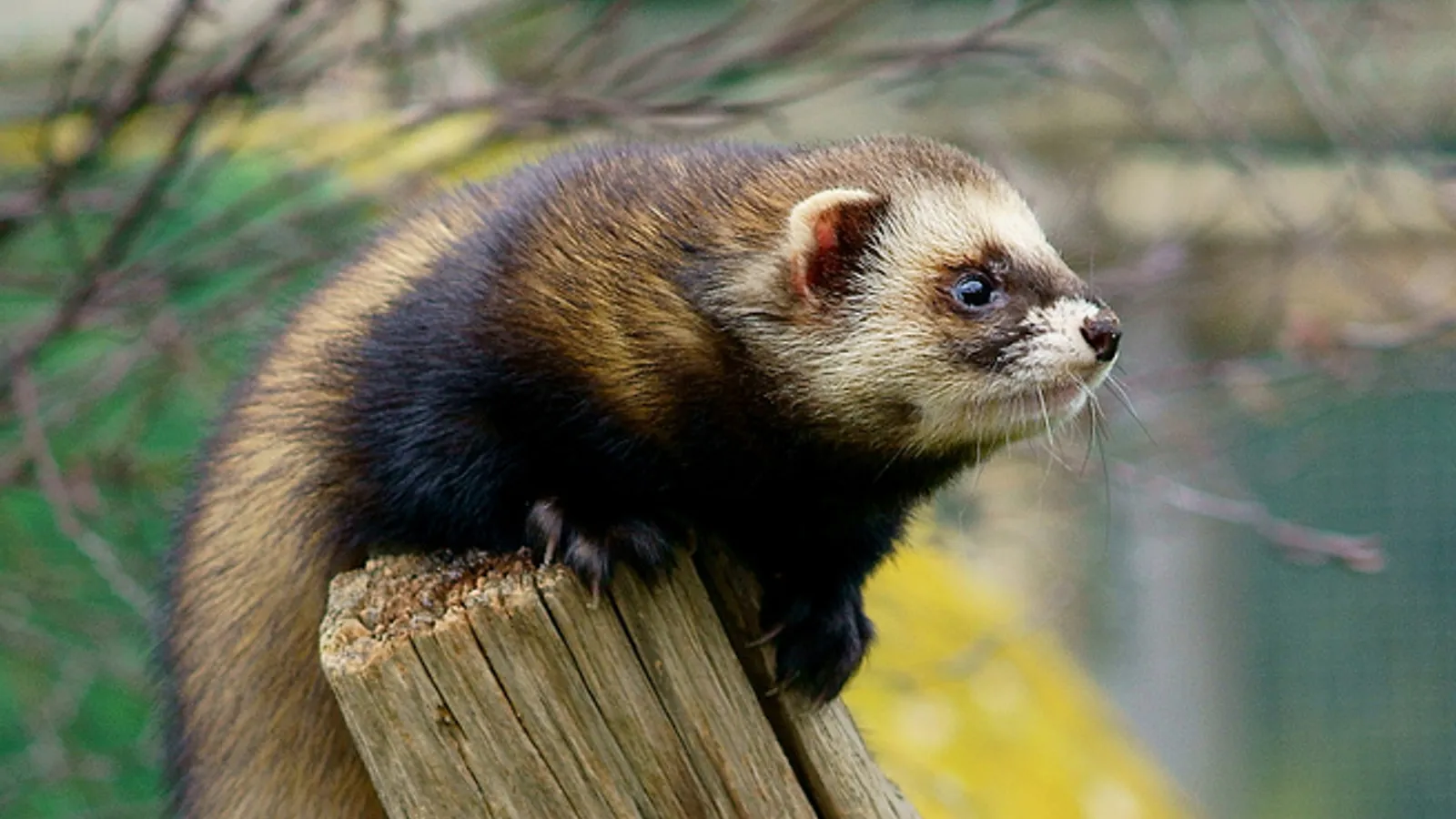
— Where the name comes from
Putorius comes from the Latin putor, “stench”, from the same root as putrid: the name states the one thing everybody remembers about this animal. The anal glands, common to all mustelids, here produce a particularly acrid secretion released when the animal is frightened. From this species, domesticated, descends the ferret — and in scientific Latin the link has stayed transparent.
— Facts
- Group
- Mammals · Mammalia
- Order
- Carnivores
- Habitat
- Damp woodland, riverbanks, reedbeds, farmland with hedges and outbuildings
- Range
- Europe, from the Iberian peninsula to the Urals; found the length of Italy
- Size
- 30–46 cm long plus 12–19 of tail, 0.5–1.7 kg
- Diet
- Carnivore — amphibians above all, rodents, birds, eggs
- Lifespan
- 5–8 years
— Characteristics
- 01
The dark face mask, with a pale forehead and pale ear rims, is its unmistakable mark.
- 02
It stockpiles live frogs in its den, paralysed by a bite to the nape, as a winter store.
- 03
It is the wild ancestor of the ferret, domesticated at least two thousand years ago.
— What sets it apart
Its spray is no match for the American skunks’, which strike accurately at several metres: here it is a last-instant defence, a passive release when the animal is seized. And yet it was enough to name the species in almost every European language, and in Italian to make an insult of it. Of an elegant, nocturnal carnivore, hugely useful against rodents, Europe decided to remember the smell.
